THE ADVENTURE COLLECTIVE® · Independent discovery and booking for outdoor travel

A full-day transfer from Antalya brings you to Pamukkale’s white travertine terraces and the ruins of Hierapolis. This practical guide explains what to expect—walking rules, ticketing, and tips for timing your visit.
A full-day transfer from Antalya brings you to Pamukkale’s white travertine terraces and the ruins of Hierapolis. This practical guide explains what to expect—walking rules, ticketing, and tips for timing your visit.
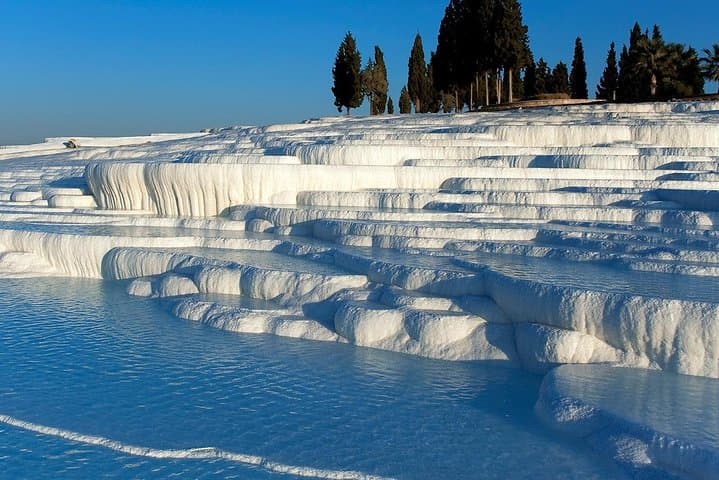
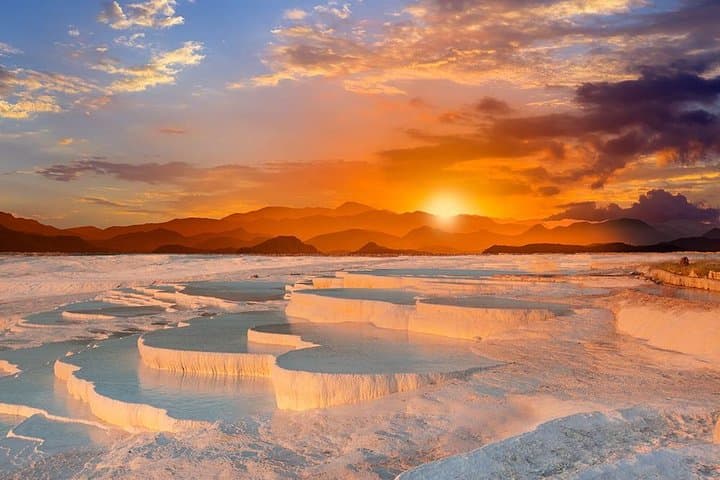
You arrive as sunlight washes the white slopes—terraces of mineral-rich water catching the light like a slow-motion waterfall frozen in chalk.
Verified experiences and guided adventures in the surrounding area.
Operated by Attalos Travel · Pamukkale, Denizli Province
You arrive as sunlight washes the white slopes—terraces of mineral-rich water catching the light like a slow-motion waterfall frozen in chalk.
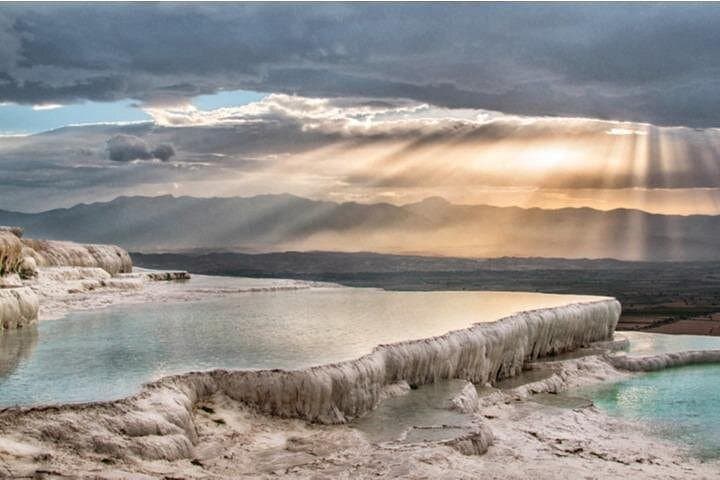
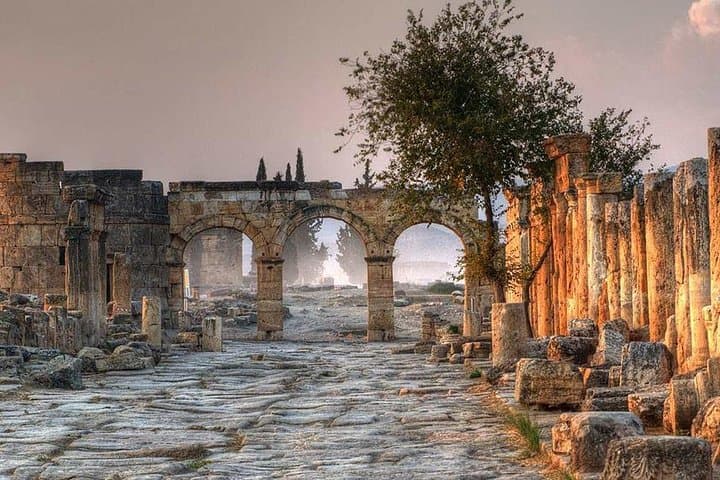
Pamukkale’s travertines are the visible result of millennia: thermal springs depositing calcium carbonate that hardens into the stepped pools visitors walk beside today. Above the terraces sit the ruins of Hierapolis, a Greco-Roman spa city founded around the hot springs; its theater, colonnaded streets and necropolis give the place an archaeological heartbeat that contrasts with the soft hiss of flowing water.
Geology here is immediate and tactile: warm springs bubble from faults, depositing layers that build terraces and small basins. Culturally, the springs fed an economy of healing and pilgrimage for centuries—Roman bath culture left stonework you can still trace with a fingertip. Locals keep a pragmatic stewardship: boardwalks and restricted zones limit wear while allowing viewing and barefoot walking where permitted.
Practical guidance: tours from Antalya are long days (roughly 12–14 hours round trip). Entrance to the travertines and Hierapolis is ticketed; Cleopatra’s Pool has a separate fee for swimming among submerged columns. Expect uneven limestone surfaces—most terraces require removing shoes and walking barefoot on designated paths. Bring a towel if you plan to swim, high-SPF sun protection, and a refillable water bottle; summer heat is intense, spring and fall are ideal for cooler walking. Photography is excellent at sunrise or late afternoon when shadows define the terraces. If mobility is limited, check accessibility options in advance—some areas and transport are accessible, but key terraces remain best experienced on foot.
easy.
12–14 hours.
Light to moderate—able to stand and walk on uneven stone for several hours; not strenuous hiking.
The drive is about 3.5–4.5 hours each way depending on traffic and route—expect a full day for a guided transfer.
Swimming is restricted on most terraces to protect formations; Cleopatra Pool (Hierapolis Antique Pool) offers paid swimming among submerged ruins.
Some viewpoints and paths are accessible but the main travertine terraces require walking barefoot on uneven surfaces; contact operators in advance for specific accommodations.
There are cafes and a restaurant near the site; many day tours include lunch in a local restaurant en route or at the site.
Hierapolis grew as a Roman spa town built atop thermal springs; its bath complex and theater reflect centuries of healing and civic life tied to the water.
Visitor management balances access with protection—stay on boardwalks and follow barefoot rules to reduce erosion and preserve mineral deposits.
Attalos Travel operates guided outdoor trips and adventures with an emphasis on safety, stewardship, and memorable experiences.
You arrive as sunlight washes the white slopes—terraces of mineral-rich water catching the light like a slow-motion waterfall frozen in chalk.
You arrive as sunlight washes the white slopes—terraces of mineral-rich water catching the light like a slow-motion waterfall frozen in chalk.
Pamukkale’s travertines are the visible result of millennia: thermal springs depositing calcium carbonate that hardens into the stepped pools visitors walk beside today. Above the terraces sit the ruins of Hierapolis, a Greco-Roman spa city founded around the hot springs; its theater, colonnaded streets and necropolis give the place an archaeological heartbeat that contrasts with the soft hiss of flowing water.
Geology here is immediate and tactile: warm springs bubble from faults, depositing layers that build terraces and small basins. Culturally, the springs fed an economy of healing and pilgrimage for centuries—Roman bath culture left stonework you can still trace with a fingertip. Locals keep a pragmatic stewardship: boardwalks and restricted zones limit wear while allowing viewing and barefoot walking where permitted.
Practical guidance: tours from Antalya are long days (roughly 12–14 hours round trip). Entrance to the travertines and Hierapolis is ticketed; Cleopatra’s Pool has a separate fee for swimming among submerged columns. Expect uneven limestone surfaces—most terraces require removing shoes and walking barefoot on designated paths. Bring a towel if you plan to swim, high-SPF sun protection, and a refillable water bottle; summer heat is intense, spring and fall are ideal for cooler walking. Photography is excellent at sunrise or late afternoon when shadows define the terraces. If mobility is limited, check accessibility options in advance—some areas and transport are accessible, but key terraces remain best experienced on foot.