THE ADVENTURE COLLECTIVE® · Independent discovery and booking for outdoor travel

A full-day escape from Marrakech brings you to Ouzoud, North Africa’s highest cascade. This guide explains the drive, viewpoints, local culture and what to pack so you can make the most of your day at the falls.
A full-day escape from Marrakech brings you to Ouzoud, North Africa’s highest cascade. This guide explains the drive, viewpoints, local culture and what to pack so you can make the most of your day at the falls.
The minivan eases out of Marrakech before the city has fully warmed, the Atlas foothills sharpening on the horizon as olive groves and ochre villages slide past the window. By the time the road dips toward the ravine that holds Ouzoud, the cadence of the ride has changed: engines lower, conversations thin, and the first roar of falling water threads through the bus. Stepping out, cool spray and the garlic-sweet smell of wet rock meet you—the falls demand attention before you even see them.
Verified experiences and guided adventures in the surrounding area.
Operated by PALM BLADI VOYAGES · Ouzoud, Marrakesh-Safi
The minivan eases out of Marrakech before the city has fully warmed, the Atlas foothills sharpening on the horizon as olive groves and ochre villages slide past the window. By the time the road dips toward the ravine that holds Ouzoud, the cadence of the ride has changed: engines lower, conversations thin, and the first roar of falling water threads through the bus. Stepping out, cool spray and the garlic-sweet smell of wet rock meet you—the falls demand attention before you even see them.
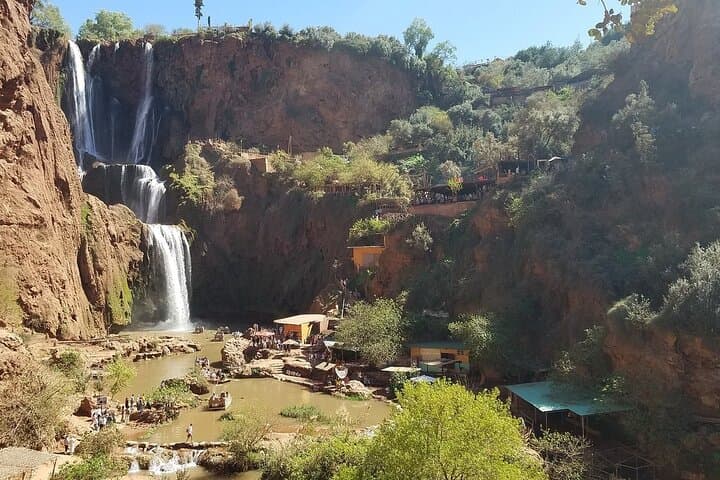
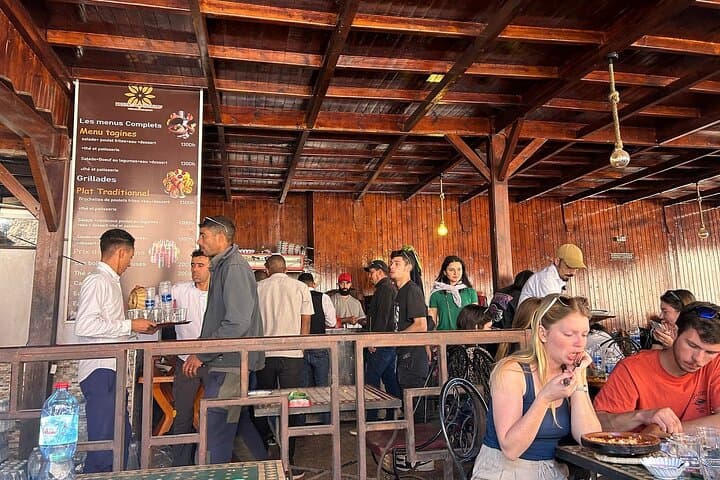
Geologically, Ouzoud is a cut in the Middle Atlas made of weathered red sandstone and limestone; the river has carved a steep series of steps that drop in dramatic tiers over 100 meters. The name Ouzoud comes from the Amazigh word for olive, a reminder that olive groves have long shaped the valley’s economy. Small stone mills and terraced farms cling to the slopes; cafés and family-run restaurants occupy the rims, where diners watch the cascades while tajines steam on low fires.
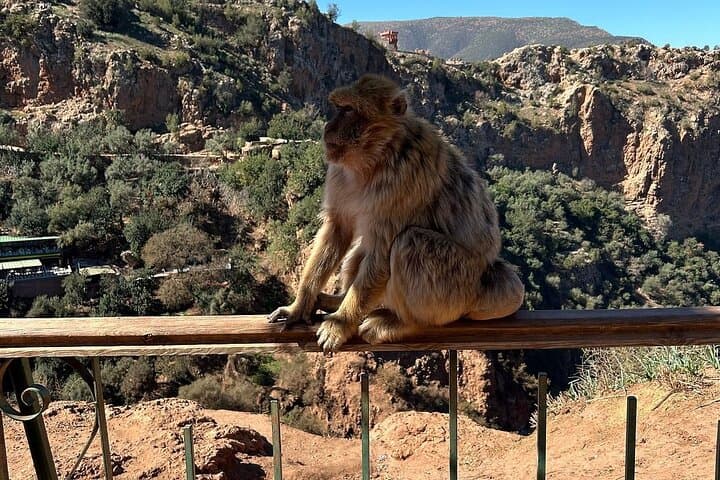
The site is as much cultural as natural. Local Berber communities have farmed here for generations, and the falls have become a regional gathering place—weekends fill with Moroccan families, and vendors sell fresh orange juice and local pastries from stands on the approach trail. Barbary macaques, cheeky and habituated, patrol the paths; guides will warn you to keep pockets zipped and cameras ready but respectful. The area’s modest tourism infrastructure—paths, viewpoints, and waterside terraces—makes a day trip from Marrakech practical without feeling overbuilt.
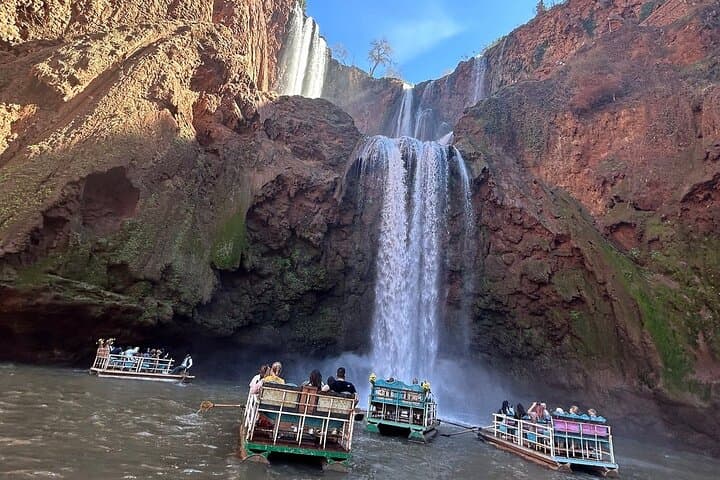
Practical guidance: tours typically leave Marrakech around 8:00 and return by early evening; expect a 3‑hour drive each way (about 150 km). Once at Ouzoud you’ll have roughly four hours to explore: follow the switchback trail to the base for the most powerful perspective, walk the rim trail to catch upper-tier cascades and panoramic views, and consider a short boat trip (additional cost) that brings you close to the lower falls on calmer days.
Footwear matters—the trails are rocky and can be slippery near the water. Bring swimwear if you plan to paddle in the pools, though currents can be stronger than they look; lifeguards are not present. Sun protection, plenty of water, and modest clothing are recommended for cultural respect and comfort. If you want a quieter visit, aim for a weekday morning outside of the late spring and high summer holidays.
A day at Ouzoud is straightforward but sensory: the river dares you closer, the monkeys test your patience, and the terraces invite a slow meal. For travelers based in Marrakech who want an easy, full-day encounter with Morocco’s wild water, it’s hard to beat.
easy.
8–9 hours.
Light stamina for short hikes and stair sections; accessible to most fitness levels.
Expect about 150 km and roughly three hours each way depending on traffic and stops.
Yes—there are pools suitable for swimming near the base, but currents vary; swim at your own risk and avoid strong flow sections.
There’s no national park fee for casual visitors, but some viewpoints and local boats charge a small fee; bring cash.
Lower viewpoints and terraces near restaurants are relatively accessible, but the main trail down to the base involves many steps and uneven surfaces.
No; independent visits are possible, but a guided tour simplifies transport and local logistics and can enhance cultural context.
Spring and autumn offer moderate temperatures and fuller flows; early morning weekdays reduce crowds during peak season.
The falls sit in a valley long farmed by Amazigh (Berber) communities; traditional stone mills and terraces remain visible around the ravine.
Litter and unregulated feeding of monkeys are ongoing issues; stick to marked paths, carry out waste, and support local businesses that follow sustainable practices.
PALM BLADI VOYAGES operates guided outdoor trips and adventures with an emphasis on safety, stewardship, and memorable experiences.
The minivan eases out of Marrakech before the city has fully warmed, the Atlas foothills sharpening on the horizon as olive groves and ochre villages slide past the window. By the time the road dips toward the ravine that holds Ouzoud, the cadence of the ride has changed: engines lower, conversations thin, and the first roar of falling water threads through the bus. Stepping out, cool spray and the garlic-sweet smell of wet rock meet you—the falls demand attention before you even see them.
The minivan eases out of Marrakech before the city has fully warmed, the Atlas foothills sharpening on the horizon as olive groves and ochre villages slide past the window. By the time the road dips toward the ravine that holds Ouzoud, the cadence of the ride has changed: engines lower, conversations thin, and the first roar of falling water threads through the bus. Stepping out, cool spray and the garlic-sweet smell of wet rock meet you—the falls demand attention before you even see them.
Geologically, Ouzoud is a cut in the Middle Atlas made of weathered red sandstone and limestone; the river has carved a steep series of steps that drop in dramatic tiers over 100 meters. The name Ouzoud comes from the Amazigh word for olive, a reminder that olive groves have long shaped the valley’s economy. Small stone mills and terraced farms cling to the slopes; cafés and family-run restaurants occupy the rims, where diners watch the cascades while tajines steam on low fires.
The site is as much cultural as natural. Local Berber communities have farmed here for generations, and the falls have become a regional gathering place—weekends fill with Moroccan families, and vendors sell fresh orange juice and local pastries from stands on the approach trail. Barbary macaques, cheeky and habituated, patrol the paths; guides will warn you to keep pockets zipped and cameras ready but respectful. The area’s modest tourism infrastructure—paths, viewpoints, and waterside terraces—makes a day trip from Marrakech practical without feeling overbuilt.
Practical guidance: tours typically leave Marrakech around 8:00 and return by early evening; expect a 3‑hour drive each way (about 150 km). Once at Ouzoud you’ll have roughly four hours to explore: follow the switchback trail to the base for the most powerful perspective, walk the rim trail to catch upper-tier cascades and panoramic views, and consider a short boat trip (additional cost) that brings you close to the lower falls on calmer days.
Footwear matters—the trails are rocky and can be slippery near the water. Bring swimwear if you plan to paddle in the pools, though currents can be stronger than they look; lifeguards are not present. Sun protection, plenty of water, and modest clothing are recommended for cultural respect and comfort. If you want a quieter visit, aim for a weekday morning outside of the late spring and high summer holidays.
A day at Ouzoud is straightforward but sensory: the river dares you closer, the monkeys test your patience, and the terraces invite a slow meal. For travelers based in Marrakech who want an easy, full-day encounter with Morocco’s wild water, it’s hard to beat.