THE ADVENTURE COLLECTIVE® · Independent discovery and booking for outdoor travel

Leave Marrakech for a day and find Ouzoud’s thundering tiers, olive-scented trails and curious macaques. This practical guide explains what to expect, how to prepare, and where to get the best views.
Leave Marrakech for a day and find Ouzoud’s thundering tiers, olive-scented trails and curious macaques. This practical guide explains what to expect, how to prepare, and where to get the best views.
On a clear morning a minibus slips away from the narrow lanes of Marrakech, the city’s ochre walls shrinking behind you as the road folds into olive-sculpted hills. The engine hum is a promise: in three hours the town noise gives up to water. At Ouzoud, the canyon announces itself before the falls do — a cool mist that moves downhill, tasting of wet stone and crushed herbs.
Verified experiences and guided adventures in the surrounding area.
Operated by Marrakech Budget Tours · Ouzoud, Azilal Province
On a clear morning a minibus slips away from the narrow lanes of Marrakech, the city’s ochre walls shrinking behind you as the road folds into olive-sculpted hills. The engine hum is a promise: in three hours the town noise gives up to water. At Ouzoud, the canyon announces itself before the falls do — a cool mist that moves downhill, tasting of wet stone and crushed herbs.
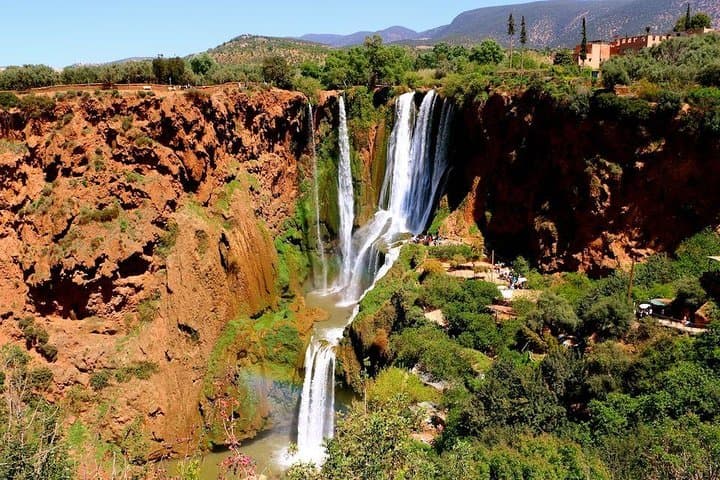
The falls drop in stepped curtains of white into the riverbed of the El Abid, carving terraces through Miocene-era limestone and older schist. These cliffs have guided human traffic for centuries: Berber hamlets dot the approach, their flat roofs offering shade and a lived-in geometry to the slope. Locals in the Tanaghmeilt area have farmed olives here for generations; you’ll pass groves whose trunks are older than the asphalt road.
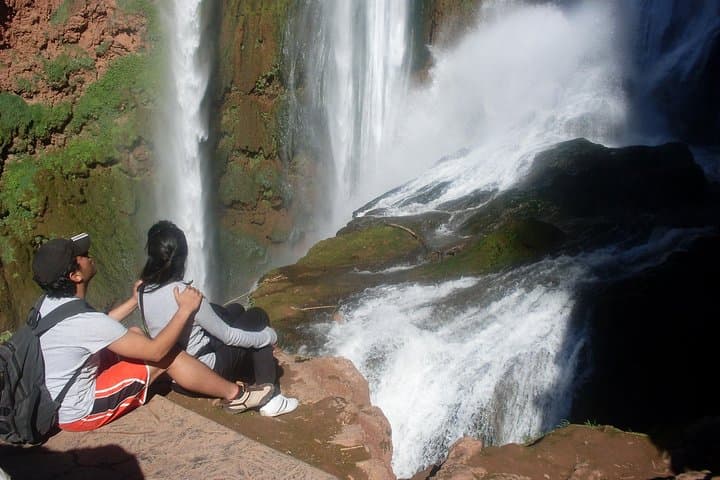
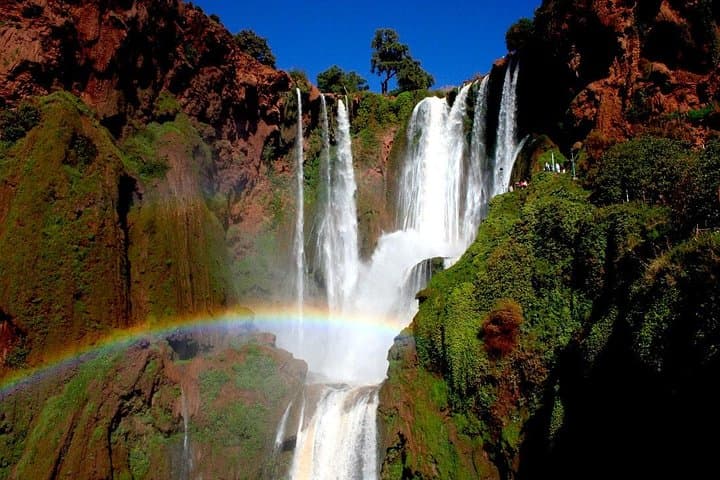
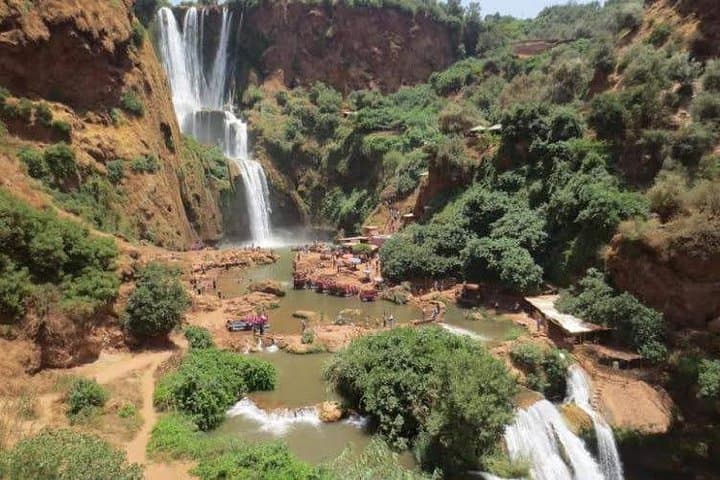
The main attraction is muscular and immediate. From lookout platforms you watch water detach from the cliff and fling itself into green pools, then scatter into rainbows. Barbary macaques live in small bands on the canyon edges, bold and curious; they add an unpredictable, lively element to the scene. Downstream, the river dares you with shallow pools and quiet swims where the water runs clear enough to read your toes.
Culturally the site is part natural spectacle and part village market: cafés with tin cups of mint tea perch on the rim, and artisans sell carved olive-wood trinkets. The day-trip format — pick-up from Marrakech, air-conditioned transport, and a four-hour window at the falls — makes this a manageable escape for travelers limited on time.
Practicalities matter. Wear shoes with good tread: the main trails are steep, and paths slick with spray. Bring a swimsuit if you plan to swim; currents near the plunge pools can be stronger than they look. Cash (dirhams) is useful for small purchases and tipping local guides who offer to lead short walks. Expect a 6–8 hour round trip from Marrakech once you account for pickups and traffic.
Timing helps frame the experience: mornings are quieter on the viewpoints; late afternoon casts the falls in warm light that photographers like. If you’re traveling in summer, bring sunscreen and a light cover; in winter pack a fleece — mornings near the water can be unexpectedly cool. Respect the macaques: don’t feed them and keep bags zipped. This is a hands-on place but one that rewards simple preparation with a day of accessible wilderness, local rhythm, and a chance to swim under one of Morocco’s most energetic cascades.
moderate.
6–8 hours.
Moderate fitness for short steep walks and uneven terrain; able to climb steps and handle short hikes.
Expect about 2.5–3 hours each way depending on traffic; most operators schedule a 6–8 hour round trip including time at the falls.
Yes—there are calm downstream pools suitable for swimming, but avoid the base of the main plunge where currents are stronger and access can be slippery.
Yes; basic cafés and restroom facilities are available near the main viewpoints and along the village access paths, usually for a small fee.
Most shared day trips include hotel or riad pickup; confirm your pickup point and time when booking and be ready 10–15 minutes early.
The primary paths include steps and some steep stretches; it’s manageable for most travelers with moderate fitness but not recommended for those with serious mobility issues.
Carry Moroccan dirhams for food, tips, and purchases—cards aren’t always accepted by small vendors in and around the falls.
The falls cut through Miocene limestone and older schist; the area’s Berber communities have farmed olives and terraced these slopes for generations.
Visitors should avoid feeding wildlife, use designated paths to limit erosion, and support local vendors to strengthen community-based tourism.
Marrakech Budget Tours operates guided outdoor trips and adventures with an emphasis on safety, stewardship, and memorable experiences.
On a clear morning a minibus slips away from the narrow lanes of Marrakech, the city’s ochre walls shrinking behind you as the road folds into olive-sculpted hills. The engine hum is a promise: in three hours the town noise gives up to water. At Ouzoud, the canyon announces itself before the falls do — a cool mist that moves downhill, tasting of wet stone and crushed herbs.
On a clear morning a minibus slips away from the narrow lanes of Marrakech, the city’s ochre walls shrinking behind you as the road folds into olive-sculpted hills. The engine hum is a promise: in three hours the town noise gives up to water. At Ouzoud, the canyon announces itself before the falls do — a cool mist that moves downhill, tasting of wet stone and crushed herbs.
The falls drop in stepped curtains of white into the riverbed of the El Abid, carving terraces through Miocene-era limestone and older schist. These cliffs have guided human traffic for centuries: Berber hamlets dot the approach, their flat roofs offering shade and a lived-in geometry to the slope. Locals in the Tanaghmeilt area have farmed olives here for generations; you’ll pass groves whose trunks are older than the asphalt road.
The main attraction is muscular and immediate. From lookout platforms you watch water detach from the cliff and fling itself into green pools, then scatter into rainbows. Barbary macaques live in small bands on the canyon edges, bold and curious; they add an unpredictable, lively element to the scene. Downstream, the river dares you with shallow pools and quiet swims where the water runs clear enough to read your toes.
Culturally the site is part natural spectacle and part village market: cafés with tin cups of mint tea perch on the rim, and artisans sell carved olive-wood trinkets. The day-trip format — pick-up from Marrakech, air-conditioned transport, and a four-hour window at the falls — makes this a manageable escape for travelers limited on time.
Practicalities matter. Wear shoes with good tread: the main trails are steep, and paths slick with spray. Bring a swimsuit if you plan to swim; currents near the plunge pools can be stronger than they look. Cash (dirhams) is useful for small purchases and tipping local guides who offer to lead short walks. Expect a 6–8 hour round trip from Marrakech once you account for pickups and traffic.
Timing helps frame the experience: mornings are quieter on the viewpoints; late afternoon casts the falls in warm light that photographers like. If you’re traveling in summer, bring sunscreen and a light cover; in winter pack a fleece — mornings near the water can be unexpectedly cool. Respect the macaques: don’t feed them and keep bags zipped. This is a hands-on place but one that rewards simple preparation with a day of accessible wilderness, local rhythm, and a chance to swim under one of Morocco’s most energetic cascades.