THE ADVENTURE COLLECTIVE® · Independent discovery and booking for outdoor travel

Swap Marrakech’s medina for a day in the Atlas foothills at Ouzoud Falls—one of Morocco’s most dramatic cascades. Expect a scenic 2.5–3 hour drive, a guided loop to top and base viewpoints, a boat ride near the plunge, and time to swim or relax with lunch overlooking the falls.
Swap Marrakech’s medina for a day in the Atlas foothills at Ouzoud Falls—one of Morocco’s most dramatic cascades. Expect a scenic 2.5–3 hour drive, a guided loop to top and base viewpoints, a boat ride near the plunge, and time to swim or relax with lunch overlooking the falls.
You step out of the minivan and the air is cooler, scented with olive leaves and river spray. Ahead, the El Abid River drops in a broad, tiered curtain—Ouzoud’s main fall plunges roughly 110 meters—while stone paths wind down toward misty pools where locals swim and wooden boats bob near the spray.
Verified experiences and guided adventures in the surrounding area.
Operated by Tours Of Hassan · Ouzoud, Azilal Province
You step out of the minivan and the air is cooler, scented with olive leaves and river spray. Ahead, the El Abid River drops in a broad, tiered curtain—Ouzoud’s main fall plunges roughly 110 meters—while stone paths wind down toward misty pools where locals swim and wooden boats bob near the spray.
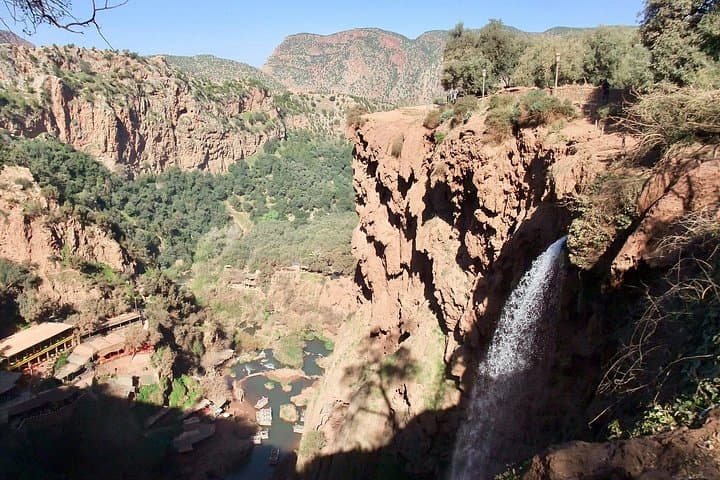
The falls sit in the Atlas foothills amid olive groves and small Berber villages. Geologically, the canyon was cut by the river through sedimentary rock, producing ledges and plunge pools that change with seasonal flows. Culturally, the settlement around Ouzoud has long been tied to olive cultivation; you’ll see orchards and terraces as you approach, with cafés and restaurants oriented toward the waterfall lookouts.
On this day trip expect a scenic 2.5–3 hour drive from Marrakech, a guided loop walk that takes you to the top and base viewpoints, and time for a short boat ride that brings you close to the falls’ mist. The hiking loop is generally 3–4 km on uneven paths and stone steps with about 100–200 m cumulative elevation change—manageable for most but slippery when wet.
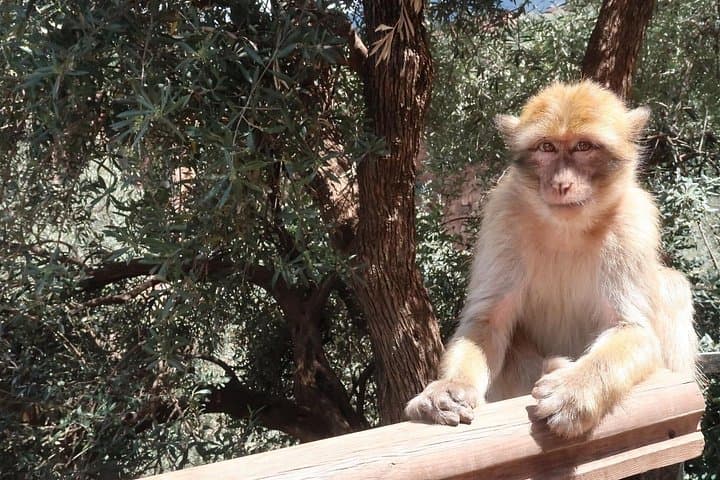
Practical notes: wear grippy shoes for steps and rocks, carry sun protection and water, and bring a small towel if you plan to swim or ride the boat. Morning pickups beat heat and crowds; mid-afternoon light is best for photos. Respect local vendors and the wildlife—feed no animals—and leave the pools clean for the next visitors.
easy.
9–12 hours.
Suitable for travelers in average fitness—short, uneven hikes and steps; not technical but requires balance on rocky paths.
The drive is roughly 150 km and typically takes 2.5–3 hours each way depending on traffic and stops.
Most organized day trips include a short traditional boat ride to the base; boats are shallow and guided—expect to get misted and follow crew safety guidance.
Yes—there are natural pools where locals and visitors swim; check water safety at the time and avoid strong currents near the plunge.
The main viewpoints are accessible via stepped paths; it’s family-friendly but be cautious with young children and those with mobility limits due to uneven terrain and steps.
The Ouzoud area has long been an agricultural region centered on olives; local villages developed around water access and terrace farming in the Atlas foothills.
Visitor pressure can strain trails and litter is a common issue—use marked paths, avoid feeding wildlife, and carry out any trash to protect pools and river habitat.
Tours Of Hassan operates guided outdoor trips and adventures with an emphasis on safety, stewardship, and memorable experiences.
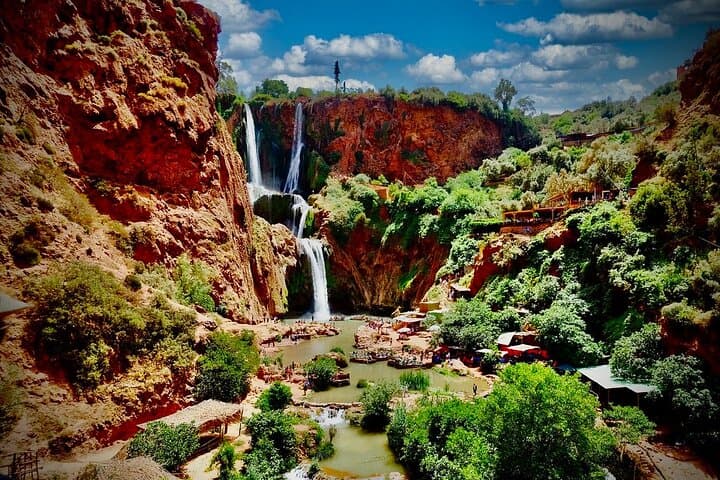
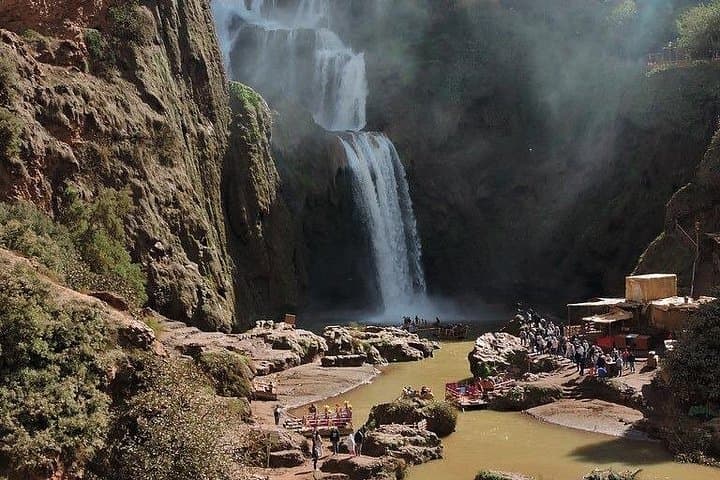
You step out of the minivan and the air is cooler, scented with olive leaves and river spray. Ahead, the El Abid River drops in a broad, tiered curtain—Ouzoud’s main fall plunges roughly 110 meters—while stone paths wind down toward misty pools where locals swim and wooden boats bob near the spray.
You step out of the minivan and the air is cooler, scented with olive leaves and river spray. Ahead, the El Abid River drops in a broad, tiered curtain—Ouzoud’s main fall plunges roughly 110 meters—while stone paths wind down toward misty pools where locals swim and wooden boats bob near the spray.
The falls sit in the Atlas foothills amid olive groves and small Berber villages. Geologically, the canyon was cut by the river through sedimentary rock, producing ledges and plunge pools that change with seasonal flows. Culturally, the settlement around Ouzoud has long been tied to olive cultivation; you’ll see orchards and terraces as you approach, with cafés and restaurants oriented toward the waterfall lookouts.
On this day trip expect a scenic 2.5–3 hour drive from Marrakech, a guided loop walk that takes you to the top and base viewpoints, and time for a short boat ride that brings you close to the falls’ mist. The hiking loop is generally 3–4 km on uneven paths and stone steps with about 100–200 m cumulative elevation change—manageable for most but slippery when wet.
Practical notes: wear grippy shoes for steps and rocks, carry sun protection and water, and bring a small towel if you plan to swim or ride the boat. Morning pickups beat heat and crowds; mid-afternoon light is best for photos. Respect local vendors and the wildlife—feed no animals—and leave the pools clean for the next visitors.