THE ADVENTURE COLLECTIVE® · Independent discovery and booking for outdoor travel

A day trip from Marrakech to Ouzoud Falls delivers tiered limestone cascades, rock pools, and bold Barbary macaques. This full-day hike blends easy trails, riverside cafes, and viewpoints — ideal for travelers who want a nature escape within a day of the city.
A day trip from Marrakech to Ouzoud Falls delivers tiered limestone cascades, rock pools, and bold Barbary macaques. This full-day hike blends easy trails, riverside cafes, and viewpoints — ideal for travelers who want a nature escape within a day of the city.
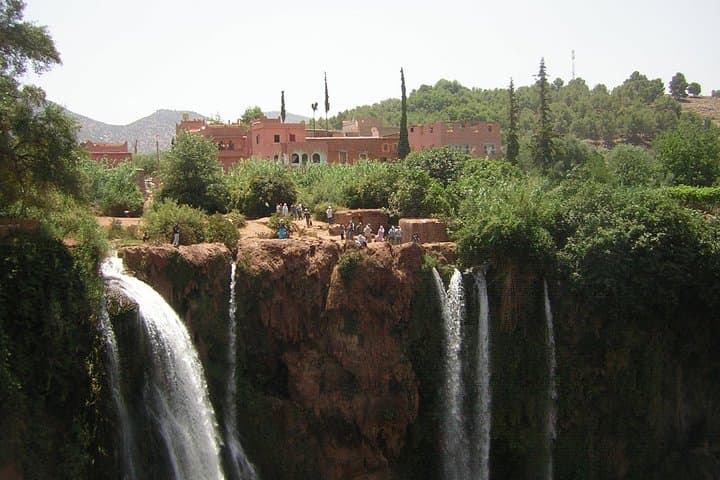
The minibus hums onto a narrow road and Marrakech bleeds away: red clay roofs, motorbikes, and the city’s dust give way to olive groves and terraced fields. By the time you step out at Ouzoud, the falls announce themselves before you see them — a constant, distant roar that tightens the chest and insists you hurry. Walkways skirt sheer drops, small cafes perch on ledges, and groups of Barbary macaques move like punctuation along the trails.
Verified experiences and guided adventures in the surrounding area.
Operated by Amodou Tours · Azilal, Béni Mellal-Khénifra
The minibus hums onto a narrow road and Marrakech bleeds away: red clay roofs, motorbikes, and the city’s dust give way to olive groves and terraced fields. By the time you step out at Ouzoud, the falls announce themselves before you see them — a constant, distant roar that tightens the chest and insists you hurry. Walkways skirt sheer drops, small cafes perch on ledges, and groups of Barbary macaques move like punctuation along the trails.
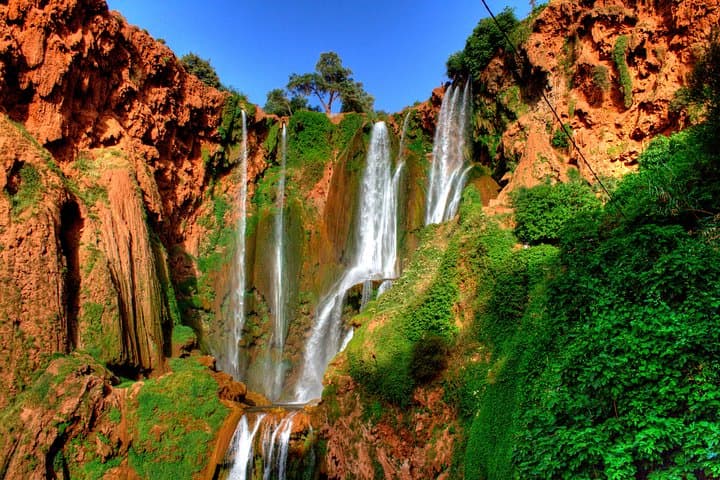
Ouzoud sits where the river cuts through Miocene limestone, carving stepped cascades that tumble roughly 110 meters in total. Locals here are primarily Amazigh (Berber) communities who have farmed olives and maintained the old water mills for generations; some of the stone troughs you’ll pass date back centuries and still turn when flows are high. The falls have been a rural lifeline and a seasonal watering place long before tourism arrived — the mills and riverside cafes are as much an argument for visiting as the plunge pools.
Geology shows in the cliffs: bands of hard caprock and softer layers beneath that give the falls their tiered profile. On bright days, rainbows form in the spray; in winter, flow can swell into a thunderous sheet. Wildlife is direct: the macaques are bold, raptors circle the gorge, and small kingfishers hunt the riffles. The human rhythm here is slower; elders run cafes, children ferry bread to tables, and guides lead short hikes along the rim.
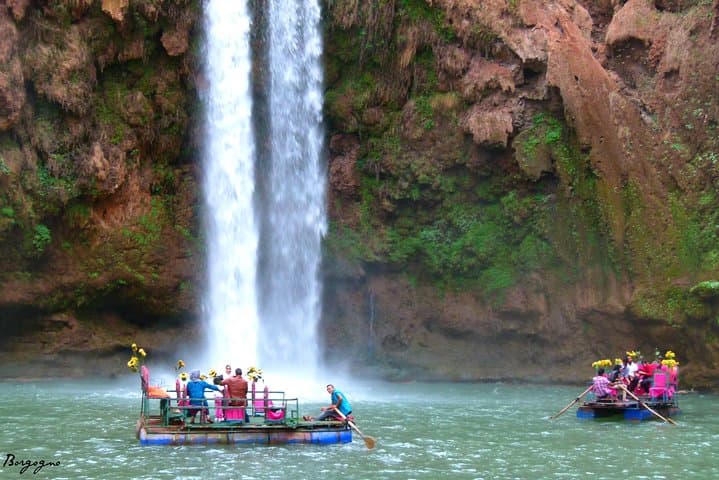
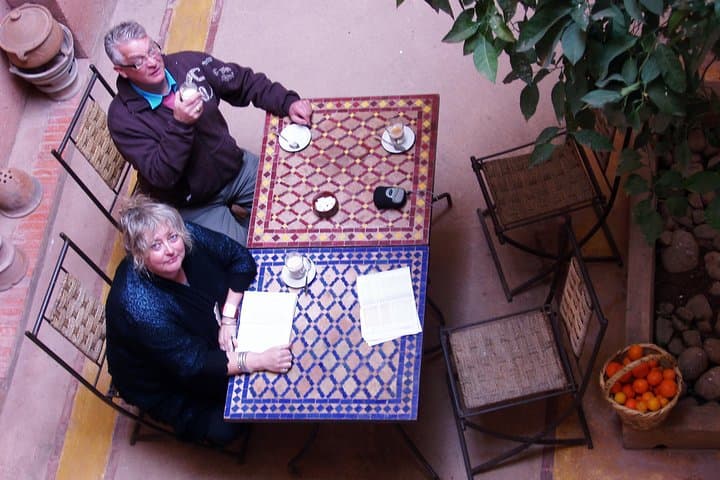
Practically, the tour is a full day — expect 8–10 hours including a roughly 2.5-hour drive each way from Marrakech. Paths are uneven stone with some steep steps; the walking is easy to moderate but wear good shoes and bring water. If you plan to swim, bring a quick dry change and sandals for slippery rocks. Lunch is typically at a riverside cafe (pay-as-you-go), where tagine and mint tea feel especially earned after the hike.
Timing matters: arrive mid-morning to avoid the largest tour groups and catch softer light for photos; late afternoon brings cooler air and better vantage for that rainbow shot. Be mindful of the macaques — don’t feed them and secure loose items. Respect the mills and local homes: small purchases at cafes and using marked paths supports the villages directly.
When you return to Marrakech in the early evening, the city will feel louder and closer; Ouzoud will have left a different tempo in your stride — a day where water, rock, and human craft all move you forward.
easy.
8–10 hours.
Suitable for most fitness levels; requires standing and walking on uneven paths and stairs for several hours.
Expect roughly 2.5 to 3 hours each way depending on traffic and stops along the route.
This tour itinerary lists admission as included for the waterfall area; confirm at booking for any updated policies.
Yes — there are shallow rock pools suitable for swimming; water can be cold and rocks are slippery, so exercise caution.
Barbary macaques are common and used to people; they can be bold, so observe without feeding or touching them.
The tour is rated easy and is generally suitable for families and older travelers, though expect stairs and uneven ground at viewpoints.
Pickup is typically from central riads or hotels in Marrakech — you should confirm your exact pickup point after booking.
Local Amazigh (Berber) communities have operated water mills and farmed the terraces around Ouzoud for centuries; many of the stone mills still line the riverbanks.
Tourism supports local economies but also pressures trails and wildlife; stay on marked paths, don’t feed monkeys, and buy local to support village businesses.
Amodou Tours operates guided outdoor trips and adventures with an emphasis on safety, stewardship, and memorable experiences.
The minibus hums onto a narrow road and Marrakech bleeds away: red clay roofs, motorbikes, and the city’s dust give way to olive groves and terraced fields. By the time you step out at Ouzoud, the falls announce themselves before you see them — a constant, distant roar that tightens the chest and insists you hurry. Walkways skirt sheer drops, small cafes perch on ledges, and groups of Barbary macaques move like punctuation along the trails.
The minibus hums onto a narrow road and Marrakech bleeds away: red clay roofs, motorbikes, and the city’s dust give way to olive groves and terraced fields. By the time you step out at Ouzoud, the falls announce themselves before you see them — a constant, distant roar that tightens the chest and insists you hurry. Walkways skirt sheer drops, small cafes perch on ledges, and groups of Barbary macaques move like punctuation along the trails.
Ouzoud sits where the river cuts through Miocene limestone, carving stepped cascades that tumble roughly 110 meters in total. Locals here are primarily Amazigh (Berber) communities who have farmed olives and maintained the old water mills for generations; some of the stone troughs you’ll pass date back centuries and still turn when flows are high. The falls have been a rural lifeline and a seasonal watering place long before tourism arrived — the mills and riverside cafes are as much an argument for visiting as the plunge pools.
Geology shows in the cliffs: bands of hard caprock and softer layers beneath that give the falls their tiered profile. On bright days, rainbows form in the spray; in winter, flow can swell into a thunderous sheet. Wildlife is direct: the macaques are bold, raptors circle the gorge, and small kingfishers hunt the riffles. The human rhythm here is slower; elders run cafes, children ferry bread to tables, and guides lead short hikes along the rim.
Practically, the tour is a full day — expect 8–10 hours including a roughly 2.5-hour drive each way from Marrakech. Paths are uneven stone with some steep steps; the walking is easy to moderate but wear good shoes and bring water. If you plan to swim, bring a quick dry change and sandals for slippery rocks. Lunch is typically at a riverside cafe (pay-as-you-go), where tagine and mint tea feel especially earned after the hike.
Timing matters: arrive mid-morning to avoid the largest tour groups and catch softer light for photos; late afternoon brings cooler air and better vantage for that rainbow shot. Be mindful of the macaques — don’t feed them and secure loose items. Respect the mills and local homes: small purchases at cafes and using marked paths supports the villages directly.
When you return to Marrakech in the early evening, the city will feel louder and closer; Ouzoud will have left a different tempo in your stride — a day where water, rock, and human craft all move you forward.