THE ADVENTURE COLLECTIVE® · Independent discovery and booking for outdoor travel

A day away from Marrakech delivers one of Morocco’s most dramatic water features: Ouzoud Falls. Expect olive-scented slopes, playful Barbary macaques, and a stair-stepped trail that leads to 110-meter cascades and cool plunge pools.
A day away from Marrakech delivers one of Morocco’s most dramatic water features: Ouzoud Falls. Expect olive-scented slopes, playful Barbary macaques, and a stair-stepped trail that leads to 110-meter cascades and cool plunge pools.
The road out of Marrakech peels away from ochre houses into low ridges of olive and carob trees, the Atlas mountains gathering like a suggestion on the horizon. By midmorning the air smells of dust and citrus; the vehicle sighs to a stop and a rim of whitewater appears through the trees. Ouzoud’s main cataract drops roughly 110 meters in a series of curtains and terraces, and the first sight is equal parts geological drama and animal theatre—Barbary macaques swinging from branches, then pausing to regard newcomers with comic curiosity.
Verified experiences and guided adventures in the surrounding area.
Operated by Morocco Desert Expeditions · Marrakech, Marrakech-Safi
The road out of Marrakech peels away from ochre houses into low ridges of olive and carob trees, the Atlas mountains gathering like a suggestion on the horizon. By midmorning the air smells of dust and citrus; the vehicle sighs to a stop and a rim of whitewater appears through the trees. Ouzoud’s main cataract drops roughly 110 meters in a series of curtains and terraces, and the first sight is equal parts geological drama and animal theatre—Barbary macaques swinging from branches, then pausing to regard newcomers with comic curiosity.
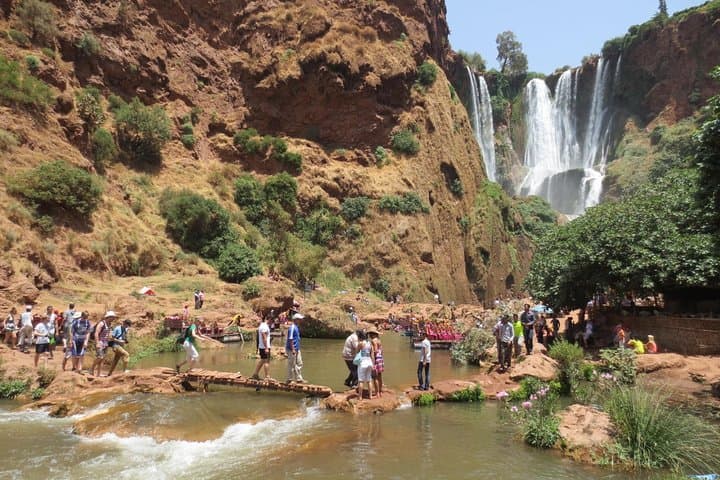
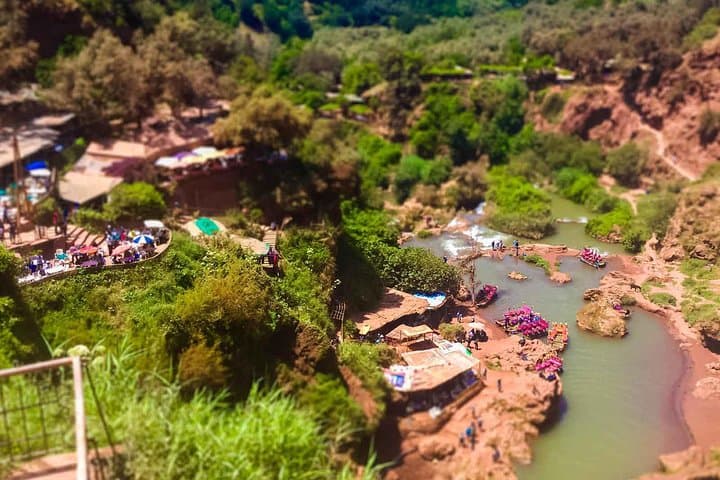
This is a Middle Atlas river played out in waterfalls. Millennia of limestone and tufa deposition have sculpted stepped drops and natural plunge pools; the cascades split into braided streams that feed small basins where locals once ground grain and now run cafés. The name Ouzoud comes from the Berber word for the olive groves that dominate the hillsides—trees that have framed the falls and fed generations. Today, terraces of cafes perch along narrow footpaths; guides point out geological seams and the old mills tucked into rock ledges.
Culture and landscape intersect here. Villages around Ouzoud are predominantly Amazigh (Berber), and a lunchtime tajine—rich, slow-cooked, and served in a shaded terrace facing the water—is almost obligatory. The macaques, locally called magots, are an enduring presence; their playful confidence underscores a deeper history of human-animal coexistence that’s at once charming and fragile.
Practical side: the standard day trip from Marrakech is about 150 km and roughly a 2.5–3 hour drive each way depending on traffic. The falls themselves are accessed via a 2–3 km network of trails and steps with approximately 100–120 m of elevation change if you descend to the base and climb back up. Trails vary from paved viewpoints to steep stone steps and muddy tracks near the water—expect some slippery sections and bring shoes with good grip.
Tips for planning: leave early to beat tour-bus crowds and late-afternoon haze; carry cash for small café lunches and local guides; respect signs and avoid feeding monkeys—their diet and behavior suffer when tourists intervene. If you want to swim, use the lower ponds where locals bathe, but be prepared for uneven rock and cold water.
A private tour with pickup and a local guide compresses logistics: air-conditioned transfer, guided walking time, and a tajine lunch are commonly included. For photographers, the falls reward both wide-angle panoramas and intimate shots of pools and monkeys; for hikers, the loop offers enough variety for a full, readable day without technical climbing. Leave no trace, pace the stair climbs, and let the river’s movement set the tempo—the falls are eager company and move you whether you follow or simply watch.
moderate.
8 hours.
Moderate fitness—able to manage 100–120 m of elevation change and stairs comfortably.
About 150 km; the drive typically takes 2.5–3 hours each way depending on stops and traffic.
Yes—there are paved viewpoints and gentle paths, but reaching the base involves steep steps, so assess mobility before descending.
Yes—there are lower pools where locals swim, but rock and current can be hazardous; enter cautiously and avoid jumping from ledges.
Barbary macaques are common and curious; they may approach but should not be fed or touched for safety and conservation reasons.
Many private day trips include a traditional tajine lunch at a terrace café; confirm inclusion when booking.
Spring and fall offer mild temperatures and fuller water flow; summer is hot but still popular, while winter can be cooler with higher runoff.
The falls sit in Amazigh (Berber) country; olive and carob cultivation shaped local settlement and gave the cascades their name.
Tourist pressure and feeding of monkeys harm local ecology—stick to paths, carry out trash, and don’t feed wildlife to support long-term health of the site.
Morocco Desert Expeditions operates guided outdoor trips and adventures with an emphasis on safety, stewardship, and memorable experiences.
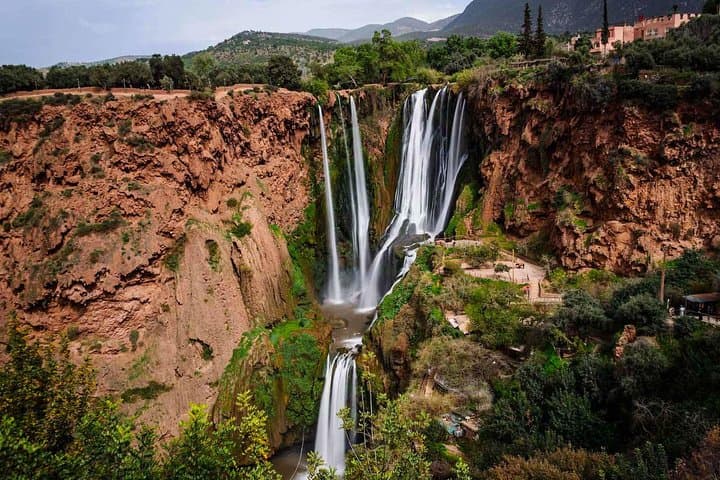
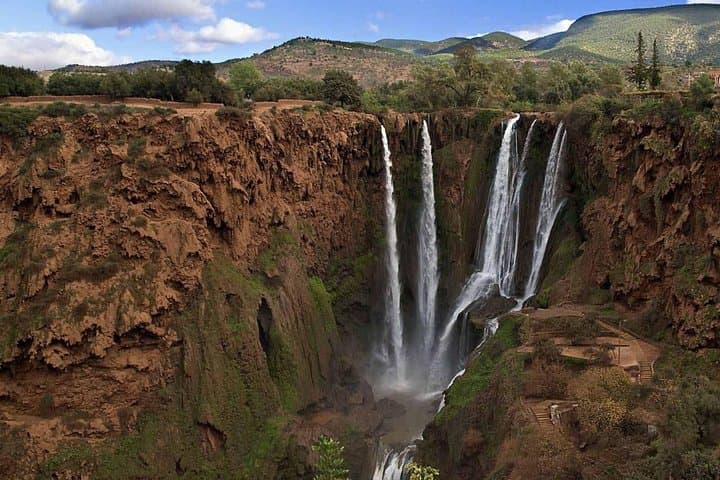
The road out of Marrakech peels away from ochre houses into low ridges of olive and carob trees, the Atlas mountains gathering like a suggestion on the horizon. By midmorning the air smells of dust and citrus; the vehicle sighs to a stop and a rim of whitewater appears through the trees. Ouzoud’s main cataract drops roughly 110 meters in a series of curtains and terraces, and the first sight is equal parts geological drama and animal theatre—Barbary macaques swinging from branches, then pausing to regard newcomers with comic curiosity.
The road out of Marrakech peels away from ochre houses into low ridges of olive and carob trees, the Atlas mountains gathering like a suggestion on the horizon. By midmorning the air smells of dust and citrus; the vehicle sighs to a stop and a rim of whitewater appears through the trees. Ouzoud’s main cataract drops roughly 110 meters in a series of curtains and terraces, and the first sight is equal parts geological drama and animal theatre—Barbary macaques swinging from branches, then pausing to regard newcomers with comic curiosity.
This is a Middle Atlas river played out in waterfalls. Millennia of limestone and tufa deposition have sculpted stepped drops and natural plunge pools; the cascades split into braided streams that feed small basins where locals once ground grain and now run cafés. The name Ouzoud comes from the Berber word for the olive groves that dominate the hillsides—trees that have framed the falls and fed generations. Today, terraces of cafes perch along narrow footpaths; guides point out geological seams and the old mills tucked into rock ledges.
Culture and landscape intersect here. Villages around Ouzoud are predominantly Amazigh (Berber), and a lunchtime tajine—rich, slow-cooked, and served in a shaded terrace facing the water—is almost obligatory. The macaques, locally called magots, are an enduring presence; their playful confidence underscores a deeper history of human-animal coexistence that’s at once charming and fragile.
Practical side: the standard day trip from Marrakech is about 150 km and roughly a 2.5–3 hour drive each way depending on traffic. The falls themselves are accessed via a 2–3 km network of trails and steps with approximately 100–120 m of elevation change if you descend to the base and climb back up. Trails vary from paved viewpoints to steep stone steps and muddy tracks near the water—expect some slippery sections and bring shoes with good grip.
Tips for planning: leave early to beat tour-bus crowds and late-afternoon haze; carry cash for small café lunches and local guides; respect signs and avoid feeding monkeys—their diet and behavior suffer when tourists intervene. If you want to swim, use the lower ponds where locals bathe, but be prepared for uneven rock and cold water.
A private tour with pickup and a local guide compresses logistics: air-conditioned transfer, guided walking time, and a tajine lunch are commonly included. For photographers, the falls reward both wide-angle panoramas and intimate shots of pools and monkeys; for hikers, the loop offers enough variety for a full, readable day without technical climbing. Leave no trace, pace the stair climbs, and let the river’s movement set the tempo—the falls are eager company and move you whether you follow or simply watch.