THE ADVENTURE COLLECTIVE® · Independent discovery and booking for outdoor travel

Leave Marrakech behind for a full‑day private trip to Ouzoud Falls, where a 110‑meter cascade, mill ruins and olive‑lined trails combine for a brisk hike and excellent photography. This guided excursion includes hotel pickup, local insight, and riverside lunch options.
Leave Marrakech behind for a full‑day private trip to Ouzoud Falls, where a 110‑meter cascade, mill ruins and olive‑lined trails combine for a brisk hike and excellent photography. This guided excursion includes hotel pickup, local insight, and riverside lunch options.
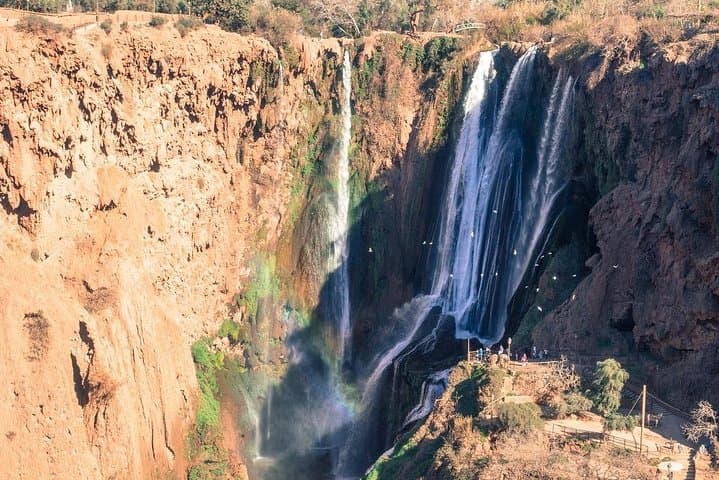
The van slips out of Marrakech before the city heat arrives, headlights picking out roadside olive groves as the High Atlas drops into rolling red cliffs. By the time the road winds into the hamlet of Tanaghmeilt, the sound of falling water becomes a presence — not distant, but insistently close. Ouzoud Falls announces itself in a cloud of mist and a green corridor: a river daring you to follow it to the lip of a 110‑meter cascade.
Verified experiences and guided adventures in the surrounding area.
Operated by Morocco Tours Services · Tanaghmeilt (Ouzoud Falls), Azilal Province
The van slips out of Marrakech before the city heat arrives, headlights picking out roadside olive groves as the High Atlas drops into rolling red cliffs. By the time the road winds into the hamlet of Tanaghmeilt, the sound of falling water becomes a presence — not distant, but insistently close. Ouzoud Falls announces itself in a cloud of mist and a green corridor: a river daring you to follow it to the lip of a 110‑meter cascade.
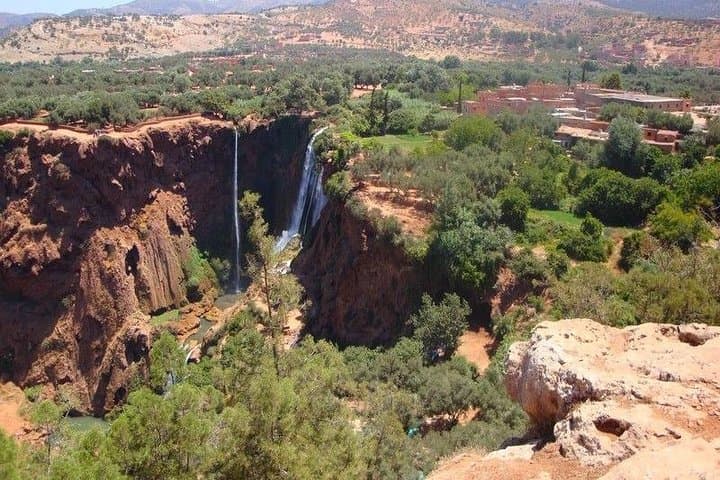
Ouzoud — from a Berber word originally meaning “grinding grain” — has been shaped by water and by people. The river that feeds the falls once powered small stone mills, the rotated arms visible from the ridge; villagers ground grain in those mills for generations. Geologically, the falls trace softer sandstone layers under more resistant rock, creating stepped drops and plunge pools that catch migrating birds and the gleam of sunlight on wet rock.
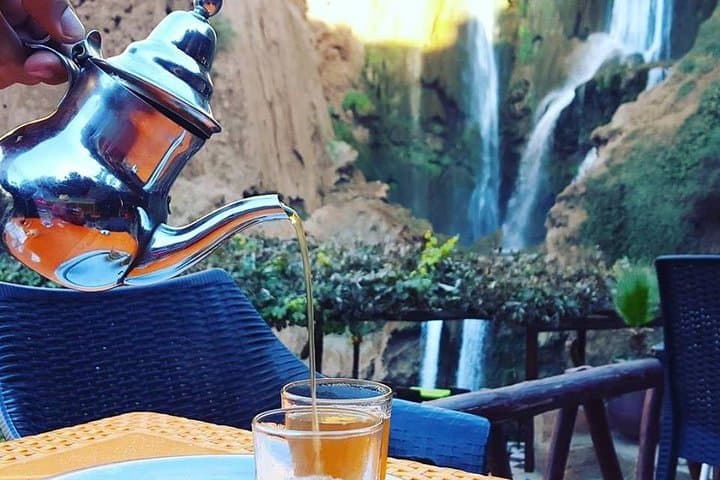
The landscape feels active: oleander leans toward the spray, olive trees crowd terraces, and Barbary macaques patrol the canopies above the trail. Local cafés sit on terraces carved into the bluff; from here, you can watch the cascade and sample freshly squeezed orange juice while the guide explains the mills and the traditional irrigation channels that thread the valley.
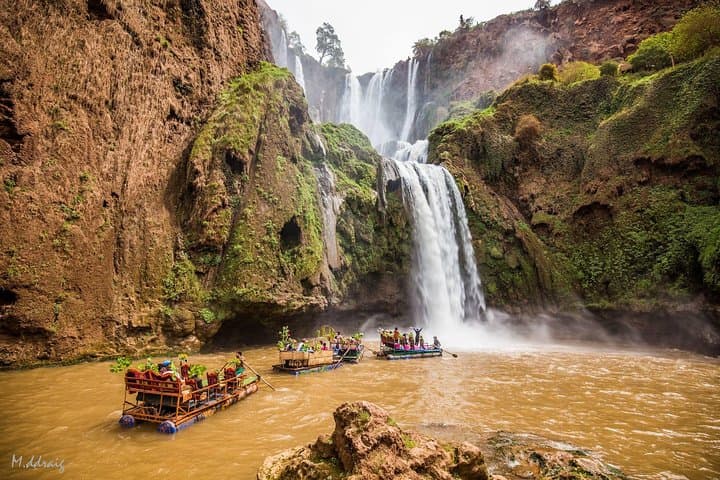
A short walk from the main viewing platforms leads to the wooden footbridge and to the narrow boats that shuffle curious travelers toward the base of the falls. The main loop is compact — roughly 3–5 km of trail — but expect uneven stone steps and an elevation change of about 100–200 meters as you drop to the gorge and climb back to the rim. Trails range from packed dirt and rock to slick, algae‑covered steps near the spray; sturdy footwear and measured steps matter.
Practicalities: the tour is a private full‑day excursion from Marrakech with hotel pickup, lasting roughly 7–11 hours (including a 2.5–3 hour drive each way). Lunch is typically at a riverside restaurant and may be included or offered locally; small boat rides and tips are extra. Best visited early or late in the day to avoid mid‑afternoon crowds and heat.
For planning: bring water and sun protection, wear grippy shoes, and be ready for a lot of photographs. Respect the macaques — don’t feed them — and follow local signage on paths and bridges. The experience is a blend of a short hike, cultural encounters, and a landscape that keeps moving: water pushing through rock, people sustaining old mills, and trees leaning into the mist.
moderate.
7–11 hours.
Suitable for travelers in average fitness able to walk 3–5 km with 100–200 m of elevation change and negotiate uneven terrain.
Expect roughly 2.5–3 hours each way depending on traffic — the tour schedules early pickup to maximize time at the falls.
Yes — the paths are manageable, but there are steep steps and uneven sections; go at a comfortable pace and consider local transport for anyone with limited mobility.
Lunch is usually arranged at a riverside restaurant; confirm with the operator whether it’s included or pay locally for a la carte options and drinks.
Swimming is possible in some pools but conditions vary; check with the guide about safety and current water levels before entering.
You’ll likely see Barbary macaques in the trees and various birds; sightings of larger mammals are uncommon in the immediate area.
Tipping is customary in Morocco; plan a modest tip for the guide and driver if you’re satisfied with the service.
The valley around Ouzoud has supported small hillside communities for centuries; traditional stone mills powered by the river remain visible near the falls.
The site is popular and vulnerable to litter and trail erosion — sticking to marked paths, avoiding feeding wildlife and using local services helps protect the area.
Morocco Tours Services operates guided outdoor trips and adventures with an emphasis on safety, stewardship, and memorable experiences.
The van slips out of Marrakech before the city heat arrives, headlights picking out roadside olive groves as the High Atlas drops into rolling red cliffs. By the time the road winds into the hamlet of Tanaghmeilt, the sound of falling water becomes a presence — not distant, but insistently close. Ouzoud Falls announces itself in a cloud of mist and a green corridor: a river daring you to follow it to the lip of a 110‑meter cascade.
The van slips out of Marrakech before the city heat arrives, headlights picking out roadside olive groves as the High Atlas drops into rolling red cliffs. By the time the road winds into the hamlet of Tanaghmeilt, the sound of falling water becomes a presence — not distant, but insistently close. Ouzoud Falls announces itself in a cloud of mist and a green corridor: a river daring you to follow it to the lip of a 110‑meter cascade.
Ouzoud — from a Berber word originally meaning “grinding grain” — has been shaped by water and by people. The river that feeds the falls once powered small stone mills, the rotated arms visible from the ridge; villagers ground grain in those mills for generations. Geologically, the falls trace softer sandstone layers under more resistant rock, creating stepped drops and plunge pools that catch migrating birds and the gleam of sunlight on wet rock.
The landscape feels active: oleander leans toward the spray, olive trees crowd terraces, and Barbary macaques patrol the canopies above the trail. Local cafés sit on terraces carved into the bluff; from here, you can watch the cascade and sample freshly squeezed orange juice while the guide explains the mills and the traditional irrigation channels that thread the valley.
A short walk from the main viewing platforms leads to the wooden footbridge and to the narrow boats that shuffle curious travelers toward the base of the falls. The main loop is compact — roughly 3–5 km of trail — but expect uneven stone steps and an elevation change of about 100–200 meters as you drop to the gorge and climb back to the rim. Trails range from packed dirt and rock to slick, algae‑covered steps near the spray; sturdy footwear and measured steps matter.
Practicalities: the tour is a private full‑day excursion from Marrakech with hotel pickup, lasting roughly 7–11 hours (including a 2.5–3 hour drive each way). Lunch is typically at a riverside restaurant and may be included or offered locally; small boat rides and tips are extra. Best visited early or late in the day to avoid mid‑afternoon crowds and heat.
For planning: bring water and sun protection, wear grippy shoes, and be ready for a lot of photographs. Respect the macaques — don’t feed them — and follow local signage on paths and bridges. The experience is a blend of a short hike, cultural encounters, and a landscape that keeps moving: water pushing through rock, people sustaining old mills, and trees leaning into the mist.