THE ADVENTURE COLLECTIVE® · Independent discovery and booking for outdoor travel

About 150 km from Marrakech, Ouzoud Falls deliver a dramatic day trip: 110 meters of cascading water, stone trails through olive groves, and village cafés perched on the rim. This full-day excursion blends easy walks, scenic viewpoints, and local culture—ideal for travelers who want a memorable natural outing with minimal fuss.
About 150 km from Marrakech, Ouzoud Falls deliver a dramatic day trip: 110 meters of cascading water, stone trails through olive groves, and village cafés perched on the rim. This full-day excursion blends easy walks, scenic viewpoints, and local culture—ideal for travelers who want a memorable natural outing with minimal fuss.
You step out of the minivan onto a strip of high Atlas air that smells faintly of olive wood and wet stone. The sound arrives before the falls do: a distant, building roar that shifts into a thunderous curtain as you round the last bend. Ouzoud’s tiers drop about 110 meters—widely cited as North Africa’s tallest waterfall—sending a constant spray that dusts the hair on your arms and brightens the canyon’s pegged cliffs.
Verified experiences and guided adventures in the surrounding area.
Operated by Marrakech City Travel · Ouzoud, Azilal Province
You step out of the minivan onto a strip of high Atlas air that smells faintly of olive wood and wet stone. The sound arrives before the falls do: a distant, building roar that shifts into a thunderous curtain as you round the last bend. Ouzoud’s tiers drop about 110 meters—widely cited as North Africa’s tallest waterfall—sending a constant spray that dusts the hair on your arms and brightens the canyon’s pegged cliffs.
The day trip from Marrakech is its own rhythm: a 150 km drive east through villages and scrubby foothills, a coffee stop in a roadside town, and then a walk along stone paths threaded through olive groves. Local guides point out the old grain mills at the lip of the falls—rock and wood constructions once driven by the river’s energy, and the reason the name “Ouzoud” is linked to millstone. Geologically, the falls cut through layers of sedimentary rock laid down when the Atlas squeezes oceanic platforms into folds; the river has simply kept carving, daring gravity to do its work.
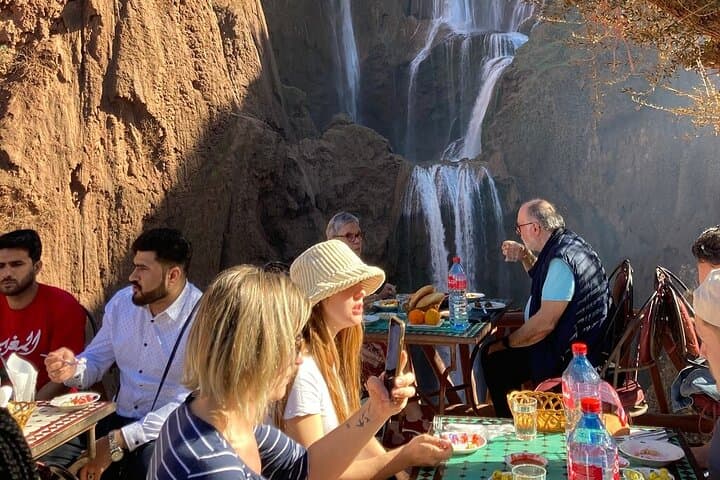
Culturally the place feels lived-in. Berber communities farm the terraces above and sell fresh orange juice, and cafés huddle on ledges where you can eat tagine with the falls as background. Barbary macaques are common on the paths and cliffs; they add a wild note, sometimes bold enough to approach packs and snacks. Local boatmen offer short rides at the base—optional, weather-dependent, and a good way to feel the falls’ pulse from below.
Practical planning is straightforward: the full experience is a long day—expect roughly nine hours door-to-door from Marrakech with hotel pickup and drop-off. The walking is not technical but includes uneven stone trails, stairs, and slick sections near the spray—sturdy shoes and attention to footing matter. Bring sunscreen, a waterproof layer for the mist, and small bills for cafés, tips, and local vendors.
Timing matters: arrive before midday for softer light on the cliffs and fewer tour groups. If you want closer photos of the falls and fewer people in frame, take the lower trail toward the river and consider the short, sheltered boat ride. Guides on the Viator day trip will steer you to the best viewpoints, handle the logistics, and include a relaxed lunch overlooking the cascade.
Conservation at Ouzoud is an ongoing local effort: visitors are asked to respect footpaths, avoid feeding wildlife, and use marked boat operators. Taken together, the trip is less an adrenaline charge than an immersive, sensory day—steeped in landscape, history, and the steady insistence of water pushing down through rock.
moderate.
9 hours.
Suitable for travelers comfortable with several hours of walking over uneven ground and stair sections; not strenuous but requires steady balance.
The falls are about 150 km from Marrakech; expect roughly 2.5–3 hours each way depending on traffic and stops.
No technical skills are required, but trails include stairs and some slippery sections; comfortable footwear is recommended.
Boat rides are typically optional and arranged locally at the base; bring cash if you want the short ride under the falls.
Yes—the tour notes infant seats are available, but terrain near the falls can be steep; supervise children closely.
The usual itinerary includes a lunch stop at a restaurant with a view of the falls, though menus may vary by provider.
Barbary macaques are common around the falls; various birds and small mammals inhabit the surrounding olive terraces—do not feed the wildlife.
The falls sit on a historical farming landscape where water-powered mills ground grain for local Berber communities; many of the hand-built mill remnants remain visible at the lip.
Local guides and operators encourage staying on marked trails, using reputable boatmen, and avoiding litter; tourism supports local conservation efforts when visitors follow these practices.
Marrakech City Travel operates guided outdoor trips and adventures with an emphasis on safety, stewardship, and memorable experiences.
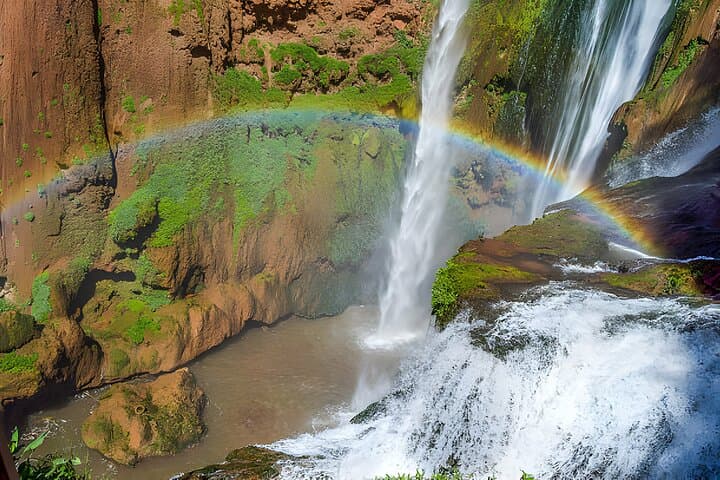
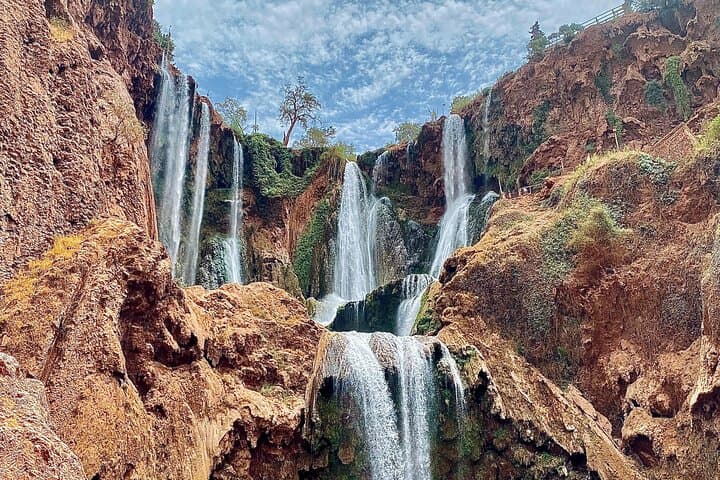

You step out of the minivan onto a strip of high Atlas air that smells faintly of olive wood and wet stone. The sound arrives before the falls do: a distant, building roar that shifts into a thunderous curtain as you round the last bend. Ouzoud’s tiers drop about 110 meters—widely cited as North Africa’s tallest waterfall—sending a constant spray that dusts the hair on your arms and brightens the canyon’s pegged cliffs.
You step out of the minivan onto a strip of high Atlas air that smells faintly of olive wood and wet stone. The sound arrives before the falls do: a distant, building roar that shifts into a thunderous curtain as you round the last bend. Ouzoud’s tiers drop about 110 meters—widely cited as North Africa’s tallest waterfall—sending a constant spray that dusts the hair on your arms and brightens the canyon’s pegged cliffs.
The day trip from Marrakech is its own rhythm: a 150 km drive east through villages and scrubby foothills, a coffee stop in a roadside town, and then a walk along stone paths threaded through olive groves. Local guides point out the old grain mills at the lip of the falls—rock and wood constructions once driven by the river’s energy, and the reason the name “Ouzoud” is linked to millstone. Geologically, the falls cut through layers of sedimentary rock laid down when the Atlas squeezes oceanic platforms into folds; the river has simply kept carving, daring gravity to do its work.
Culturally the place feels lived-in. Berber communities farm the terraces above and sell fresh orange juice, and cafés huddle on ledges where you can eat tagine with the falls as background. Barbary macaques are common on the paths and cliffs; they add a wild note, sometimes bold enough to approach packs and snacks. Local boatmen offer short rides at the base—optional, weather-dependent, and a good way to feel the falls’ pulse from below.
Practical planning is straightforward: the full experience is a long day—expect roughly nine hours door-to-door from Marrakech with hotel pickup and drop-off. The walking is not technical but includes uneven stone trails, stairs, and slick sections near the spray—sturdy shoes and attention to footing matter. Bring sunscreen, a waterproof layer for the mist, and small bills for cafés, tips, and local vendors.
Timing matters: arrive before midday for softer light on the cliffs and fewer tour groups. If you want closer photos of the falls and fewer people in frame, take the lower trail toward the river and consider the short, sheltered boat ride. Guides on the Viator day trip will steer you to the best viewpoints, handle the logistics, and include a relaxed lunch overlooking the cascade.
Conservation at Ouzoud is an ongoing local effort: visitors are asked to respect footpaths, avoid feeding wildlife, and use marked boat operators. Taken together, the trip is less an adrenaline charge than an immersive, sensory day—steeped in landscape, history, and the steady insistence of water pushing down through rock.