THE ADVENTURE COLLECTIVE® · Independent discovery and booking for outdoor travel

Drive from Marrakech across the High Atlas to Ouarzazate and the earthen ksar of Aït‑ben‑Haddou on an 8–10 hour group excursion. Expect film-studio visits, fortified kasbahs, shifting geology and a long, sunlit day of cultural and landscape highlights.
Drive from Marrakech across the High Atlas to Ouarzazate and the earthen ksar of Aït‑ben‑Haddou on an 8–10 hour group excursion. Expect film-studio visits, fortified kasbahs, shifting geology and a long, sunlit day of cultural and landscape highlights.
The road unfurls out of Marrakech at first light, a ribbon of asphalt pushing through orange plains and the foothills of the High Atlas. By midmorning the light has a different edge — ocher walls and sunbaked kasbahs throwing sharp shadows — and you arrive in the cinematic hush of Ouarzazate, where studios and ancient adobe towns share the same horizon.
Verified experiences and guided adventures in the surrounding area.
Operated by Marrakeh City Breaks · Ouarzazate, Drâa-Tafilalet
The road unfurls out of Marrakech at first light, a ribbon of asphalt pushing through orange plains and the foothills of the High Atlas. By midmorning the light has a different edge — ocher walls and sunbaked kasbahs throwing sharp shadows — and you arrive in the cinematic hush of Ouarzazate, where studios and ancient adobe towns share the same horizon.
This route traces old caravan arteries: Aït‑ben‑Haddou perches above the Ounila valley, a compact ksar of earthen towers that once controlled trade south to the Sahara. Geology changes quickly — folded volcanic ridges of the High Atlas give way to eroded desert plateaus and the broad, palm-lined Drâa valley. Local culture is tangible in market stalls, clay architecture and kasbah fortifications such as Taourirt; film crews have long exploited the clear, hard light and varied backdrops of the region.
Expect a long but steady day: museum-like studio lots, photo stops at Aït‑ben‑Haddou, and glimpses of dunes and oases beyond. Guidance is practical — wear sturdy shoes for uneven ksar paths, bring sun protection and enough water for the drive, and carry a small amount of cash for markets and tips.
The trip is accessible to most travelers but rewards a measured pace: pause on a terrace for the dust-sweet scent of date palms, watch a fennec slink between rocks at dusk, and remember these earthen villages are fragile. Respect signage, follow your guide’s directions at archaeological and film sites, and plan for an 8–10 hour outing with early pickup from Marrakech.
easy.
8–10 hours.
Suitable for most fitness levels; involves short walks on uneven surfaces and long periods in a vehicle.
The drive is approximately 200 km and typically takes 3–4 hours one way depending on stops and road conditions.
Entrance fees vary by site; check the tour inclusions — many group excursions include transportation but not all admissions, so carry some cash.
Many tour areas and the transportation options are accessible, but some historic ksar paths are uneven and not fully wheelchair-friendly — confirm specifics with the operator before booking.
Most day tours include short market stops and a lunch window in town; bring cash for small purchases and souvenirs as card acceptance can be limited.
Aït‑ben‑Haddou is a UNESCO-listed ksar that controlled caravan routes to the Sahara; Ouarzazate later grew as a trading and film-production hub under 20th century modernization.
Earthen architecture is sensitive to erosion; visitors should stick to paths, avoid climbing fragile walls and support local businesses to sustain conservation efforts.
Marrakeh City Breaks operates guided outdoor trips and adventures with an emphasis on safety, stewardship, and memorable experiences.
The road unfurls out of Marrakech at first light, a ribbon of asphalt pushing through orange plains and the foothills of the High Atlas. By midmorning the light has a different edge — ocher walls and sunbaked kasbahs throwing sharp shadows — and you arrive in the cinematic hush of Ouarzazate, where studios and ancient adobe towns share the same horizon.
The road unfurls out of Marrakech at first light, a ribbon of asphalt pushing through orange plains and the foothills of the High Atlas. By midmorning the light has a different edge — ocher walls and sunbaked kasbahs throwing sharp shadows — and you arrive in the cinematic hush of Ouarzazate, where studios and ancient adobe towns share the same horizon.
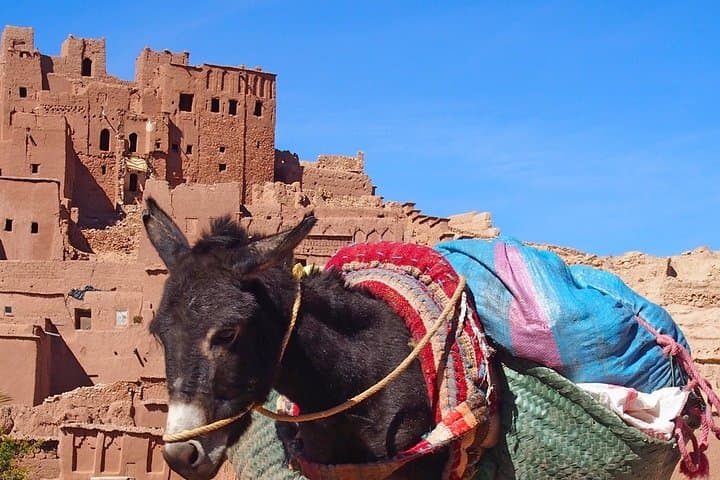
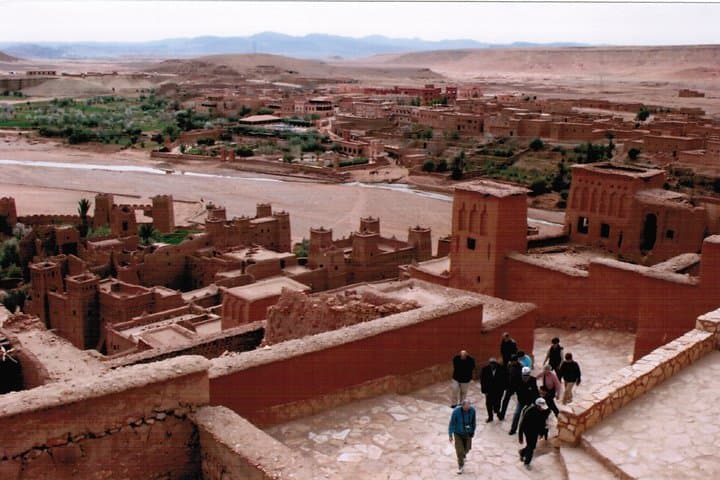
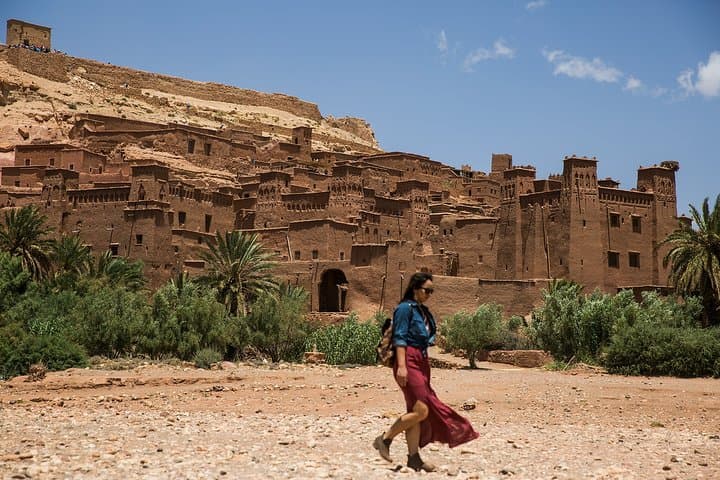
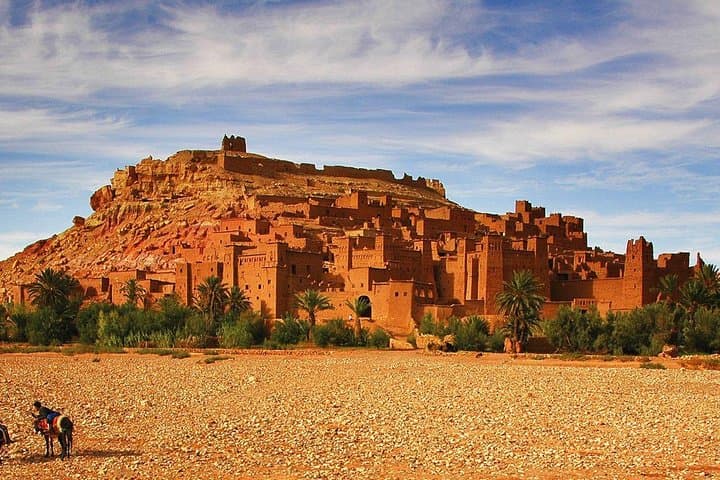
This route traces old caravan arteries: Aït‑ben‑Haddou perches above the Ounila valley, a compact ksar of earthen towers that once controlled trade south to the Sahara. Geology changes quickly — folded volcanic ridges of the High Atlas give way to eroded desert plateaus and the broad, palm-lined Drâa valley. Local culture is tangible in market stalls, clay architecture and kasbah fortifications such as Taourirt; film crews have long exploited the clear, hard light and varied backdrops of the region.
Expect a long but steady day: museum-like studio lots, photo stops at Aït‑ben‑Haddou, and glimpses of dunes and oases beyond. Guidance is practical — wear sturdy shoes for uneven ksar paths, bring sun protection and enough water for the drive, and carry a small amount of cash for markets and tips.
The trip is accessible to most travelers but rewards a measured pace: pause on a terrace for the dust-sweet scent of date palms, watch a fennec slink between rocks at dusk, and remember these earthen villages are fragile. Respect signage, follow your guide’s directions at archaeological and film sites, and plan for an 8–10 hour outing with early pickup from Marrakech.