THE ADVENTURE COLLECTIVE® · Independent discovery and booking for outdoor travel

In one long day from Tokyo you can stand above the clouds at Mt. Fuji’s 5th Station, ride a pirate-like cruise on Lake Ashi and ascend Hakone’s ropeway to shrine-studded summits. This guided tour pairs geology and culture with practical logistics suited to travelers who want big views without an overnight pack.
In one long day from Tokyo you can stand above the clouds at Mt. Fuji’s 5th Station, ride a pirate-like cruise on Lake Ashi and ascend Hakone’s ropeway to shrine-studded summits. This guided tour pairs geology and culture with practical logistics suited to travelers who want big views without an overnight pack.
The bus peels out of Shinjuku before sunrise and, within an hour, Tokyo’s glass and concrete begin to thin into rice paddies and cedar-dark hills. By midmorning the vehicle climbs the Fuji Subaru Line and the air sharpens; at about 2,300 meters the tour pauses at the 5th Station where clouds sit below you like a slow-moving sea and the volcanic flanks of Fuji push the horizon into a hard, geometric curve.
Verified experiences and guided adventures in the surrounding area.
Operated by JTB Global Marketing & Travel Inc. · Tokyo, Tokyo
The bus peels out of Shinjuku before sunrise and, within an hour, Tokyo’s glass and concrete begin to thin into rice paddies and cedar-dark hills. By midmorning the vehicle climbs the Fuji Subaru Line and the air sharpens; at about 2,300 meters the tour pauses at the 5th Station where clouds sit below you like a slow-moving sea and the volcanic flanks of Fuji push the horizon into a hard, geometric curve.
This is less a climb than a high‑altitude vantage point—an accessible summit experience with the mountain’s geology on full display. Mt. Fuji was born from repeated eruptions over tens of thousands of years, alternating between viscous and fluid lava flows that built the symmetrical cone visible today. The 5th Station sits on older pyroclastic deposits; from here you can observe the striated layers that map Fuji’s eruptive past.
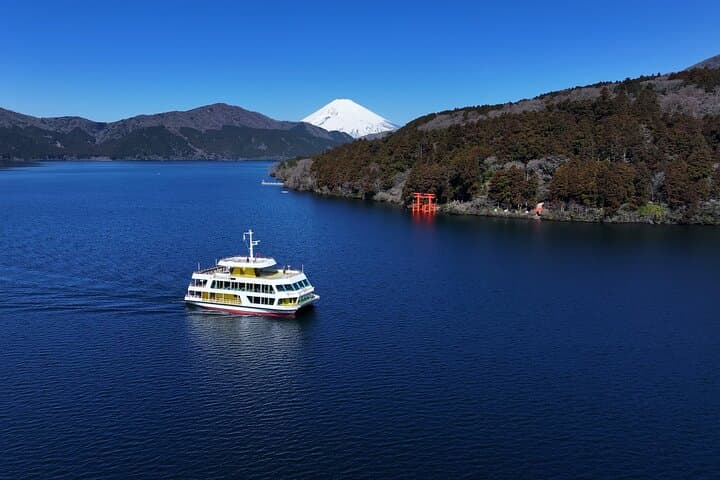
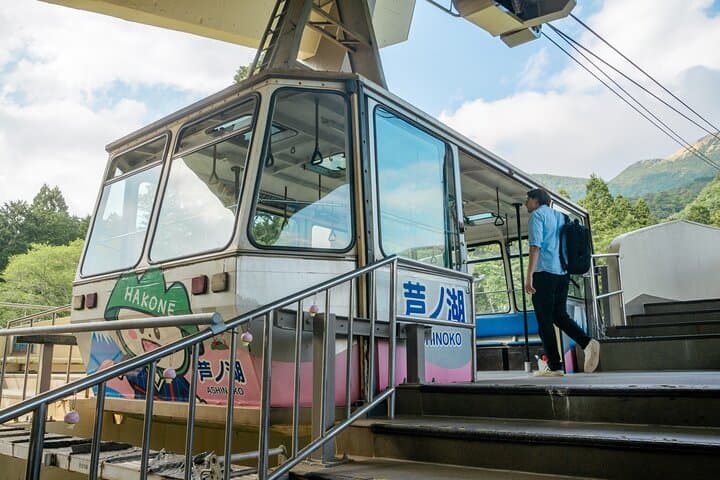
After mountain air and panoramic silence, the day pivots to Hakone’s greener moods: a short cruise across Lake Ashi on the Sorakaze, where the water seems to test your sense of scale and the shoreline forests smile with moss and cedar. The Komagatake ropeway climbs again, depositing you near Hakone Shrine Mototsumiya—an intimate cluster of torii and lanterns with a history tied to Edo-era pilgrimages and Tokugawa-era travel routes.
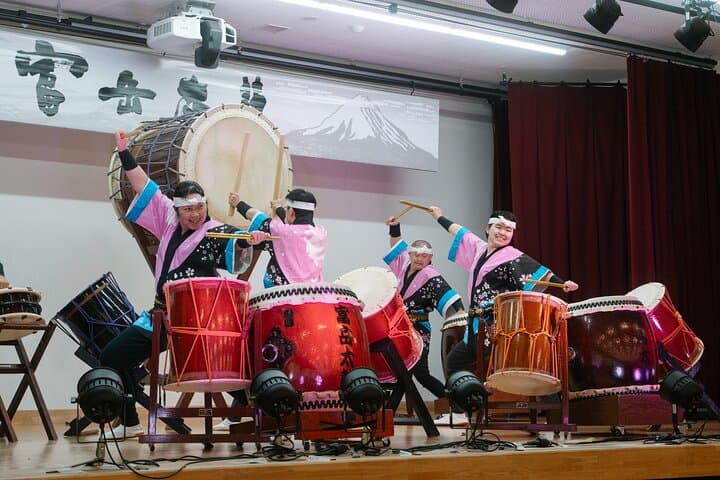
Culturally the tour blends ritual and modernity: a wadaiko drum performance during the lunch stop introduces rhythm as a form of storytelling, while guides explain why the mountain is a World Heritage site both for its natural majesty and its role in Japanese cultural life. Practical realities: the itinerary runs roughly 12–13 hours; pickup is in Shinjuku early morning, with optional drop-off at Odawara for bullet train connections.
Plan for weather volatility—Fuji’s Subaru Line closes in deep winter and visibility can vanish on humid summer afternoons—so flexibility is essential. Bring layers for temperatures that can drop to near freezing at the 5th Station even in summer, and carry water to offset light altitude effects. If the 5th Station is inaccessible, expect well-curated alternatives: Fujisan World Heritage Center, Lake Kawaguchi, or Itchiku Kubota Museum.
For photographers, sunrise and late-afternoon light create the strongest profiles of Fuji and Lake Ashi; for travelers, the day is a compact sampler—geology, pilgrimage sites, lake cruising, and cultural performance—delivered with the comfort of an air-conditioned bus and an experienced National Government Licensed English guide. Expect long days, short walks, and big perspectives.
moderate.
12–13 hours.
Suitable for most fitness levels—expect short walks and standing at viewpoints; stamina for a long day is helpful.
Not always—the Subaru Line can close due to snow or ice (typically Dec–Mar). If the road is impassable the tour visits an alternative site such as the Fujisan World Heritage Center or Lake Kawaguchi Oishi Park.
The tour lasts about 12–13 hours and starts in Shinjuku (check-in 7:40–8:10). Drop-off options include Shinjuku or Odawara for train connections.
Lunch is included only if you select the "With Lunch" option; the meal can accommodate vegetarian, Muslim-friendly, or Indian Thali requests made at booking.
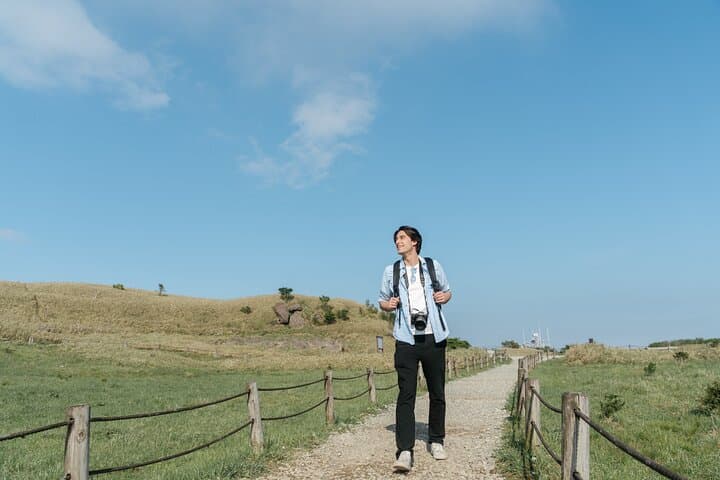
No—the itinerary involves short, mostly flat walks at viewpoints and shrine areas; no climbing experience required.
Yes, strollers are allowed and infants can join but must sit on an adult’s lap; children up to 5 may travel free without a seat or lunch unless booked separately.
The operator will substitute alternate attractions (e.g., Hakone Ropeway, Itchiku Kubota Art Museum, Oshino Hakkai). The tour proceeds and refunds are not issued for weather-related cancellations.
Mt. Fuji has been a sacred mountain and pilgrimage destination for centuries; Hakone developed as a strategic checkpoint and post town along the Tokaido route in the Edo period.
The tour supports local conservation with a carbon offset program; visitors should stick to marked paths and avoid feeding wildlife to minimize impact.
JTB Global Marketing & Travel Inc. operates guided outdoor trips and adventures with an emphasis on safety, stewardship, and memorable experiences.
The bus peels out of Shinjuku before sunrise and, within an hour, Tokyo’s glass and concrete begin to thin into rice paddies and cedar-dark hills. By midmorning the vehicle climbs the Fuji Subaru Line and the air sharpens; at about 2,300 meters the tour pauses at the 5th Station where clouds sit below you like a slow-moving sea and the volcanic flanks of Fuji push the horizon into a hard, geometric curve.
The bus peels out of Shinjuku before sunrise and, within an hour, Tokyo’s glass and concrete begin to thin into rice paddies and cedar-dark hills. By midmorning the vehicle climbs the Fuji Subaru Line and the air sharpens; at about 2,300 meters the tour pauses at the 5th Station where clouds sit below you like a slow-moving sea and the volcanic flanks of Fuji push the horizon into a hard, geometric curve.
This is less a climb than a high‑altitude vantage point—an accessible summit experience with the mountain’s geology on full display. Mt. Fuji was born from repeated eruptions over tens of thousands of years, alternating between viscous and fluid lava flows that built the symmetrical cone visible today. The 5th Station sits on older pyroclastic deposits; from here you can observe the striated layers that map Fuji’s eruptive past.
After mountain air and panoramic silence, the day pivots to Hakone’s greener moods: a short cruise across Lake Ashi on the Sorakaze, where the water seems to test your sense of scale and the shoreline forests smile with moss and cedar. The Komagatake ropeway climbs again, depositing you near Hakone Shrine Mototsumiya—an intimate cluster of torii and lanterns with a history tied to Edo-era pilgrimages and Tokugawa-era travel routes.
Culturally the tour blends ritual and modernity: a wadaiko drum performance during the lunch stop introduces rhythm as a form of storytelling, while guides explain why the mountain is a World Heritage site both for its natural majesty and its role in Japanese cultural life. Practical realities: the itinerary runs roughly 12–13 hours; pickup is in Shinjuku early morning, with optional drop-off at Odawara for bullet train connections.
Plan for weather volatility—Fuji’s Subaru Line closes in deep winter and visibility can vanish on humid summer afternoons—so flexibility is essential. Bring layers for temperatures that can drop to near freezing at the 5th Station even in summer, and carry water to offset light altitude effects. If the 5th Station is inaccessible, expect well-curated alternatives: Fujisan World Heritage Center, Lake Kawaguchi, or Itchiku Kubota Museum.
For photographers, sunrise and late-afternoon light create the strongest profiles of Fuji and Lake Ashi; for travelers, the day is a compact sampler—geology, pilgrimage sites, lake cruising, and cultural performance—delivered with the comfort of an air-conditioned bus and an experienced National Government Licensed English guide. Expect long days, short walks, and big perspectives.