THE ADVENTURE COLLECTIVE® · Independent discovery and booking for outdoor travel

Leave Syracuse for a full-day minivan tour to Mount Etna, where guided trekking takes you across craters, fumaroles and recent lava flows. Practical and immersive, this trip pairs comfortable transport with up to 6 km of volcanic walking and hands-on geology.
Leave Syracuse for a full-day minivan tour to Mount Etna, where guided trekking takes you across craters, fumaroles and recent lava flows. Practical and immersive, this trip pairs comfortable transport with up to 6 km of volcanic walking and hands-on geology.
You step into the air-conditioned minivan in Syracuse as sunlight slants over orange groves; the coast falls away and Sicily’s folded hills open toward a high black silhouette—Etna. The road rises, vineyards give way to basalt fields, and within an hour the volcano’s breath—fumaroles and warm sulfur—reintroduces you to a landscape that feels alive and impatient.
Verified experiences and guided adventures in the surrounding area.
Operated by Sicily in Travel · Syracuse, Sicily
You step into the air-conditioned minivan in Syracuse as sunlight slants over orange groves; the coast falls away and Sicily’s folded hills open toward a high black silhouette—Etna. The road rises, vineyards give way to basalt fields, and within an hour the volcano’s breath—fumaroles and warm sulfur—reintroduces you to a landscape that feels alive and impatient.
Etna is Europe’s highest and most active volcano, a basaltic giant whose repeated flows have shaped towns, soils and local culture for millennia. Geology reads like a timeline here: pahoehoe textures beside jagged ʻaʻā, summit craters rimmed with fresh glass. Nearby villages such as Nicolosi and Zafferana Etnea reflect a farming culture that uses volcanic soils for vineyards, pistachios and robust citrus.
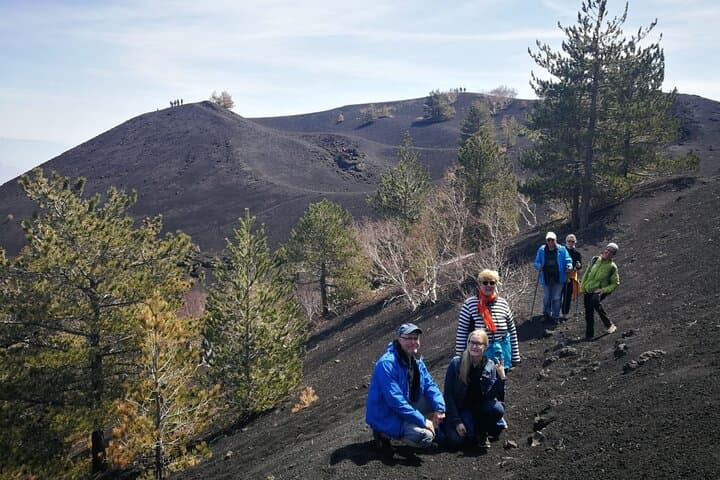
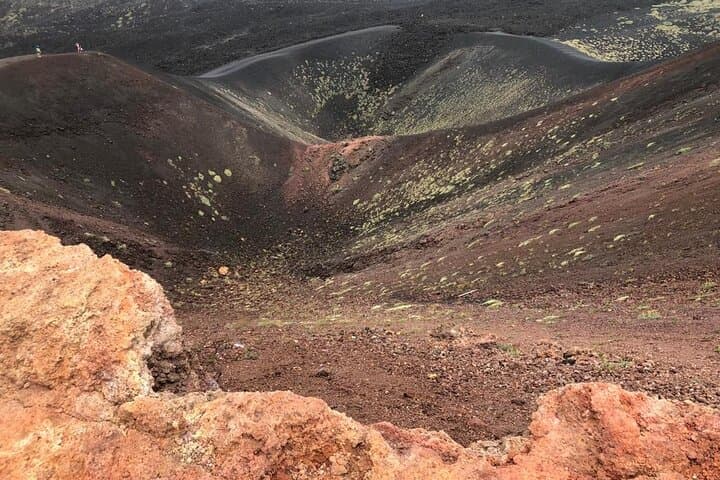
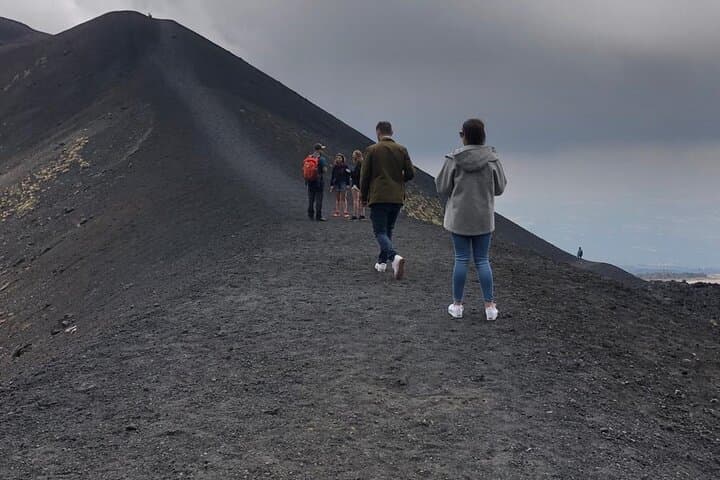
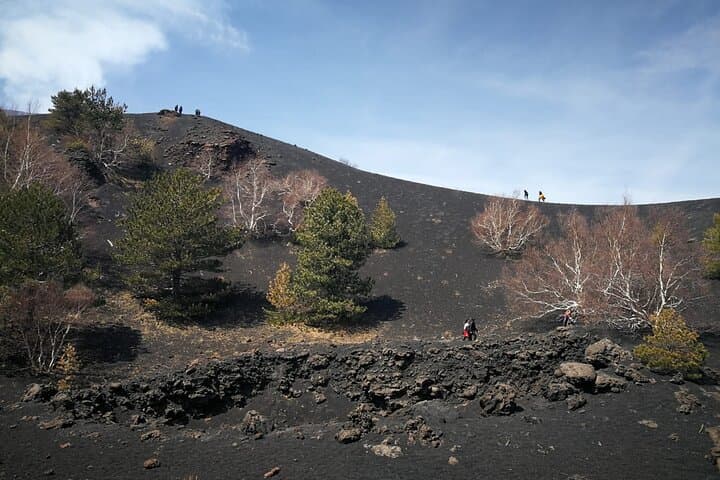
On this full-day tour expect roughly 6 km of guided trekking across crater basins and lava fields, with 2 hours devoted to walking among fumaroles and smaller craters. The terrain alternates between compact ash, loose scree and hardened lava—surfaces that demand steady footing more than technical gear.
Practical notes: wear closed, sturdy hiking shoes, layered clothing and a windproof jacket; weather can shift fast with elevation. Bring at least 1–2 liters of water, sun protection and a sense of pacing—altitude and loose ground slow the legs. The tour includes round-trip transfer from Syracuse and a guide; departures are daily but may be canceled in extreme volcanic or weather conditions. Stay on marked paths, respect park rules and leave volcanic specimens in place—the landscape recovers slowly.
moderate.
8 hours.
Moderate fitness recommended—able to handle uneven ground and up to 6 km of walking at higher elevation.
The tour includes up to about 6 km of guided trekking, typically divided into a main 2-hour crater walk plus shorter exploratory sections.
The activity is generally suitable for reasonably mobile children and older adults but is not recommended for people with serious cardiac or spinal conditions; check fitness needs before booking.
The tour includes round-trip transfer from Syracuse in an air-conditioned vehicle and the guided trekking portion; specific inclusions can vary by operator—confirm at booking.
Yes—operators may cancel for safety in cases of high volcanic activity or hazardous weather; refunds or rebooking policies depend on the provider’s terms.
Etna’s eruptions have repeatedly reshaped the island and its communities; towns on its slopes have adapted farming and architecture around volcanic soils for centuries.
Much of Etna is in Parco dell’Etna—stay on marked trails, avoid collecting rocks and respect seasonal restrictions to protect fragile volcanic habitats.
Sicily in Travel operates guided outdoor trips and adventures with an emphasis on safety, stewardship, and memorable experiences.
You step into the air-conditioned minivan in Syracuse as sunlight slants over orange groves; the coast falls away and Sicily’s folded hills open toward a high black silhouette—Etna. The road rises, vineyards give way to basalt fields, and within an hour the volcano’s breath—fumaroles and warm sulfur—reintroduces you to a landscape that feels alive and impatient.
You step into the air-conditioned minivan in Syracuse as sunlight slants over orange groves; the coast falls away and Sicily’s folded hills open toward a high black silhouette—Etna. The road rises, vineyards give way to basalt fields, and within an hour the volcano’s breath—fumaroles and warm sulfur—reintroduces you to a landscape that feels alive and impatient.
Etna is Europe’s highest and most active volcano, a basaltic giant whose repeated flows have shaped towns, soils and local culture for millennia. Geology reads like a timeline here: pahoehoe textures beside jagged ʻaʻā, summit craters rimmed with fresh glass. Nearby villages such as Nicolosi and Zafferana Etnea reflect a farming culture that uses volcanic soils for vineyards, pistachios and robust citrus.
On this full-day tour expect roughly 6 km of guided trekking across crater basins and lava fields, with 2 hours devoted to walking among fumaroles and smaller craters. The terrain alternates between compact ash, loose scree and hardened lava—surfaces that demand steady footing more than technical gear.
Practical notes: wear closed, sturdy hiking shoes, layered clothing and a windproof jacket; weather can shift fast with elevation. Bring at least 1–2 liters of water, sun protection and a sense of pacing—altitude and loose ground slow the legs. The tour includes round-trip transfer from Syracuse and a guide; departures are daily but may be canceled in extreme volcanic or weather conditions. Stay on marked paths, respect park rules and leave volcanic specimens in place—the landscape recovers slowly.