THE ADVENTURE COLLECTIVE® · Independent discovery and booking for outdoor travel

Leave Marrakech behind for a full-day journey into the High Atlas—hike village trails, sip mint tea in Berber homes, and peer up at Mt. Toubkal. This practical guide explains what to expect on the Imlil Valley trek and how to prepare.
Leave Marrakech behind for a full-day journey into the High Atlas—hike village trails, sip mint tea in Berber homes, and peer up at Mt. Toubkal. This practical guide explains what to expect on the Imlil Valley trek and how to prepare.
The minivan peels away from Marrakech and the city noise thins into olive groves and rippling foothills. Within an hour you’re at the Moulay Brahim Gorges, where streams carve the rock and the valley seems to breathe; camels stand patient on the track as you take a first photograph.
Verified experiences and guided adventures in the surrounding area.
Operated by Trips From Marrakech · Imlil, Marrakesh-Safi
The minivan peels away from Marrakech and the city noise thins into olive groves and rippling foothills. Within an hour you’re at the Moulay Brahim Gorges, where streams carve the rock and the valley seems to breathe; camels stand patient on the track as you take a first photograph.
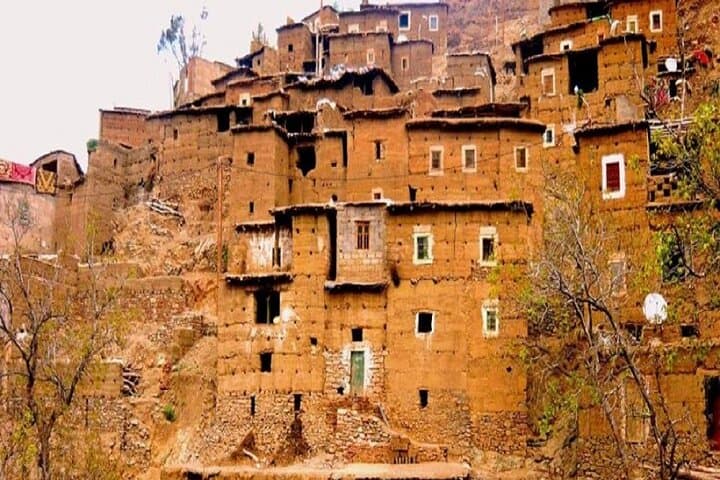
This day trip moves into the Imlil Valley—an interface of volcanic and sedimentary rock shaped by lift and frost. Peaks, including snow-capped Mt. Toubkal in winter, frame irrigated terraces where Berber farmers grow barley, vegetables and fruit trees using ancient khettara irrigation. Villages like Armed, Ait Souka and Taourirt retain a living mountain culture: multi-generational stone houses, mint tea rituals and seasonal markets that trace trade routes across the High Atlas.
Expect a guided hike of about 2–3 hours uphill sections, around 300–600 m cumulative elevation change depending on route, over rocky tracks, mule steps and paved village lanes. The afternoon includes a home-cooked Berber lunch in Ait Souka and time to descend via Taourirt back to the vehicle.
Practically: the trail is uneven but well-trodden; bring sturdy footwear, at least 1.5–2 L water, layered clothing and sun protection. Mornings are cool and clear; afternoons can warm quickly. The pace is steady, with repeated short climbs and sweeping viewpoint stops—good for hikers comfortable with moderate uphill walking but accessible to fit beginners with steady footing.
This is a day of cultural exchange as much as scenery: listen to local guides, respect private homes during lunch, and leave no trace to protect the fragile mountain terraces.
moderate.
6–8 hours (including transfers).
Suitable for people in good everyday fitness who can manage steady uphill walking for 2–3 hours; not recommended for those with serious cardiovascular issues.
The guided walking portion is typically 2–3 hours one way with variations depending on route; total trip time including transfers is about 7 hours.
Yes—this tour includes a traditional lunch hosted in a Berber family home in Ait Souka.
A short camel ride option is offered near the Moulay Brahim Gorges as part of the morning activities.
The Imlil Valley sits around 1,700–1,900 m; most travelers do not experience severe altitude effects, but those with respiratory or heart conditions should consult a doctor.
The High Atlas has been inhabited by Berber communities for centuries; village terraces and irrigation systems reflect agricultural practices adapted to steep, arid slopes.
The valley’s terraces are fragile—stick to established paths, avoid collecting plants, and support local families by accepting home meals rather than buying packaged goods.
Trips From Marrakech operates guided outdoor trips and adventures with an emphasis on safety, stewardship, and memorable experiences.
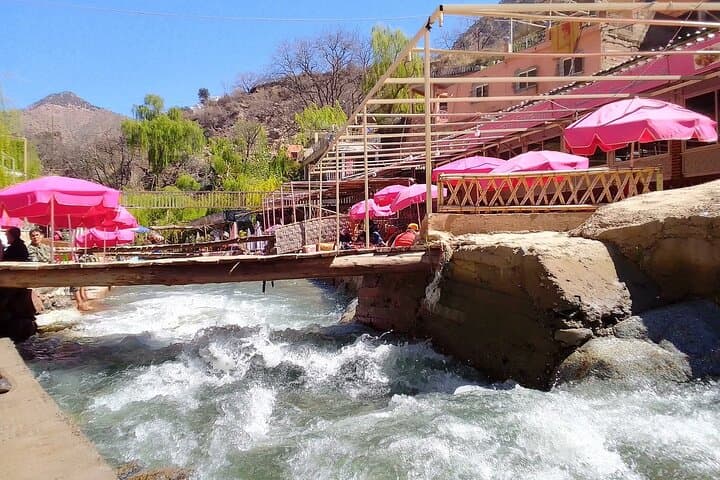
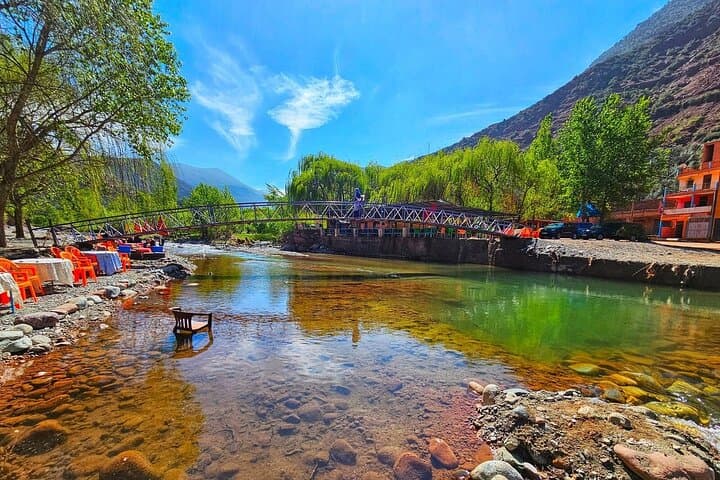
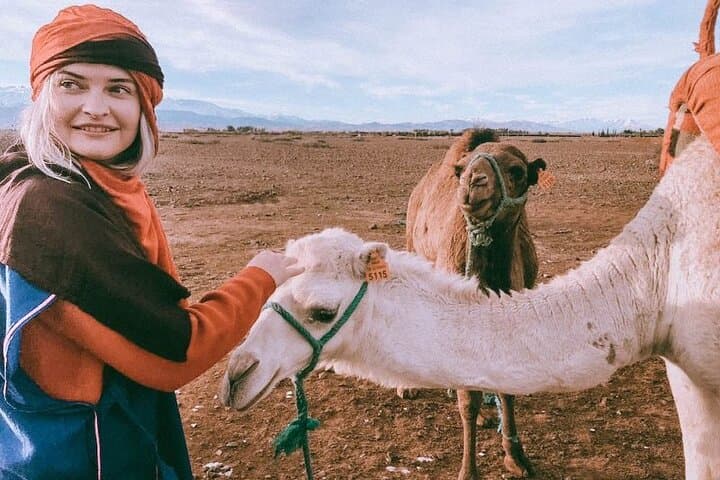
The minivan peels away from Marrakech and the city noise thins into olive groves and rippling foothills. Within an hour you’re at the Moulay Brahim Gorges, where streams carve the rock and the valley seems to breathe; camels stand patient on the track as you take a first photograph.
The minivan peels away from Marrakech and the city noise thins into olive groves and rippling foothills. Within an hour you’re at the Moulay Brahim Gorges, where streams carve the rock and the valley seems to breathe; camels stand patient on the track as you take a first photograph.
This day trip moves into the Imlil Valley—an interface of volcanic and sedimentary rock shaped by lift and frost. Peaks, including snow-capped Mt. Toubkal in winter, frame irrigated terraces where Berber farmers grow barley, vegetables and fruit trees using ancient khettara irrigation. Villages like Armed, Ait Souka and Taourirt retain a living mountain culture: multi-generational stone houses, mint tea rituals and seasonal markets that trace trade routes across the High Atlas.
Expect a guided hike of about 2–3 hours uphill sections, around 300–600 m cumulative elevation change depending on route, over rocky tracks, mule steps and paved village lanes. The afternoon includes a home-cooked Berber lunch in Ait Souka and time to descend via Taourirt back to the vehicle.
Practically: the trail is uneven but well-trodden; bring sturdy footwear, at least 1.5–2 L water, layered clothing and sun protection. Mornings are cool and clear; afternoons can warm quickly. The pace is steady, with repeated short climbs and sweeping viewpoint stops—good for hikers comfortable with moderate uphill walking but accessible to fit beginners with steady footing.
This is a day of cultural exchange as much as scenery: listen to local guides, respect private homes during lunch, and leave no trace to protect the fragile mountain terraces.