THE ADVENTURE COLLECTIVE® · Independent discovery and booking for outdoor travel

A short drive from Addis Ababa, Menagesha Suba Forest offers an accessible taste of Ethiopia’s afro-montane woodlands: tall junipers, endemic bushbuck, and bird-rich understory trails. This practical day trip pairs easy-to-moderate walking with local guides and a cultural look at conservation near the capital.
A short drive from Addis Ababa, Menagesha Suba Forest offers an accessible taste of Ethiopia’s afro-montane woodlands: tall junipers, endemic bushbuck, and bird-rich understory trails. This practical day trip pairs easy-to-moderate walking with local guides and a cultural look at conservation near the capital.
You step out of the van and the city thins into a green wall: juniper trunks ringed with lichen, Erica branches shrugging under moss, a highland wind that seems to know every path. Menagesha Suba Forest arrives with weight and scent — damp earth, resin, the sharp fruit of wild coffee — and immediately the pace of Addis Ababa falls away.
Verified experiences and guided adventures in the surrounding area.
Operated by Aman Ethiopia Tours And Travel Agent · Addis Ababa, Addis Ababa
You step out of the van and the city thins into a green wall: juniper trunks ringed with lichen, Erica branches shrugging under moss, a highland wind that seems to know every path. Menagesha Suba Forest arrives with weight and scent — damp earth, resin, the sharp fruit of wild coffee — and immediately the pace of Addis Ababa falls away.
This compact national park, roughly 2,500 hectares, has been a place of protection and use for centuries. Local chronicles note royal protection going back to the 15th century under Zera Yacob; today the forest is a rare patch of original afro-montane woodland in a landscape dominated by agriculture and expanding suburbs. The geology is simple but telling: volcanic highland bedrock under a thin, fertile soil that supports towering juniper and dense Erica stands. Those trees give the park a layered canopy that creates cool understory trails and muffles the sounds of traffic.
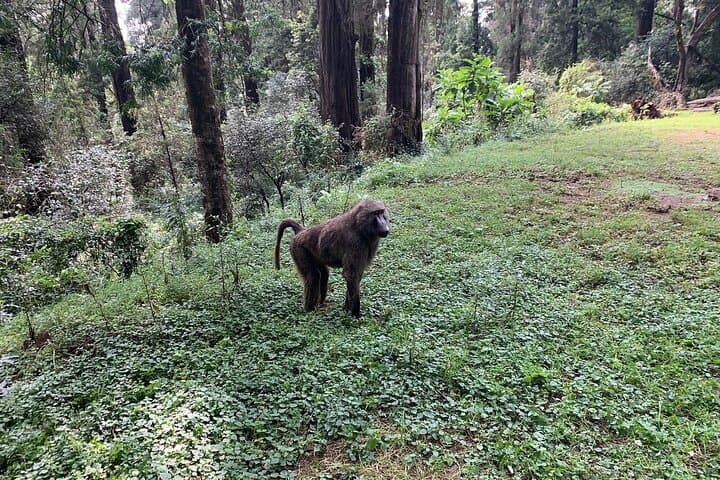
Wildlife shows best in the early hours. Menelik’s bushbuck—an endemic, compact antelope—moves silently through thickets; a flash of color from a turaco or Abyssinian thrush can betray a hidden feeding party. Birdlife is surprisingly diverse for a park this close to the capital, and local guides know the songs and secret perches.
The day trip offered from Addis Ababa is pragmatic: morning pick-up at hotels or the airport, a guided loop through classic sections of the forest, a packed or local lunch, and return in the late afternoon. Trails range from easy forest tracks to short, steeper connector routes; expect several kilometers of walking total and modest climbs that can test unseasoned lungs at Addis’s elevation.
Practicalities matter here. Start early to use crisp morning light for photography and to catch the most active wildlife. Wear sturdy shoes with good tread for wet root systems. Bring water (the tour provides a bottle, but top-ups are wise), sun protection for exposed ridgelines, and layers—the temperature can drop quickly under canopy shade. A small pair of binoculars and a field-guide app will turn fleeting calls into identified species.
Culturally, Menagesha is a living landscape: community woodlots and conservation groups work alongside park authorities to balance grazing, fuelwood needs, and tourism. Visiting responsibly—sticking to trails, respecting local guides, and avoiding single-use plastics—helps maintain access and protects nesting birds.
For a half-day escape from the city that still feels wild, Menagesha delivers. It’s an accessible taste of Ethiopian highland forest: ancient trees that seem to hold histories, wildlife that edges close to the path, and a landscape that asks, quietly, to be walked thoughtfully.
moderate.
6–7 hours.
Suitable for people with moderate fitness; expect several kilometers of walking with short steep sections and altitude around 2,300–2,600 m.
About a 45–60 minute drive depending on traffic; the tour includes pickup from hotels and some airport transfer options.
Children used to walking can join, but expect several hours of walking and some uneven terrain—check with the operator about age limits.
Yes; the tour includes entrance fees as part of the package.
Common sightings include Menelik’s bushbuck, several endemic and native birds such as the Abyssinian thrush and turacos; sightings aren’t guaranteed but early starts improve chances.
Bring small local currency for tips, extra snacks, or small purchases—major cards aren’t accepted in forest kiosks.
Moderate: several kilometers of walking with short climbs; reasonable cardiovascular fitness is recommended due to Addis Ababa’s elevation.
The forest has been locally protected since at least the 15th century under royal decree (historically associated with Zera Yacob), and remains an important communal resource.
Local community groups partner with park authorities to manage grazing and fuelwood; visitors are encouraged to stick to trails and minimize waste to reduce pressure on sensitive habitats.
Aman Ethiopia Tours And Travel Agent operates guided outdoor trips and adventures with an emphasis on safety, stewardship, and memorable experiences.
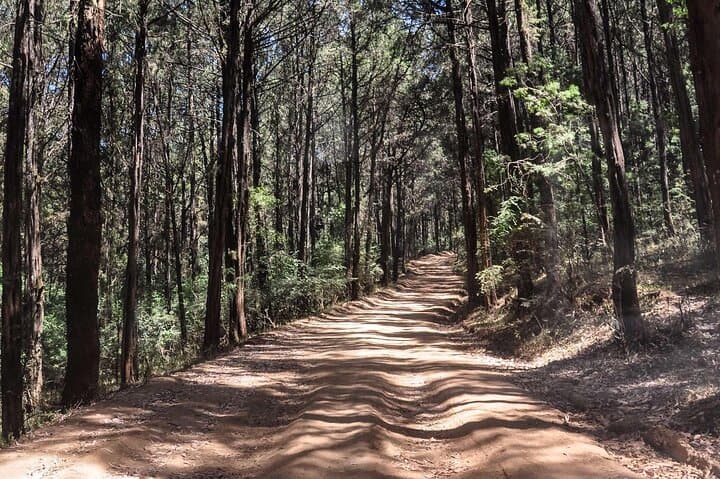
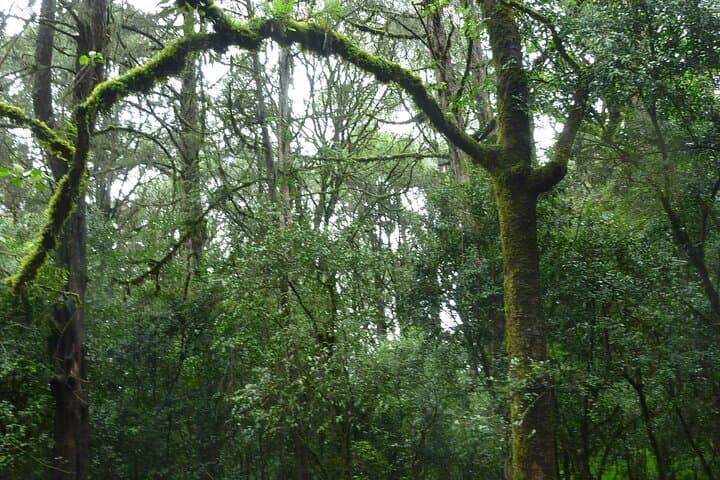
You step out of the van and the city thins into a green wall: juniper trunks ringed with lichen, Erica branches shrugging under moss, a highland wind that seems to know every path. Menagesha Suba Forest arrives with weight and scent — damp earth, resin, the sharp fruit of wild coffee — and immediately the pace of Addis Ababa falls away.
You step out of the van and the city thins into a green wall: juniper trunks ringed with lichen, Erica branches shrugging under moss, a highland wind that seems to know every path. Menagesha Suba Forest arrives with weight and scent — damp earth, resin, the sharp fruit of wild coffee — and immediately the pace of Addis Ababa falls away.
This compact national park, roughly 2,500 hectares, has been a place of protection and use for centuries. Local chronicles note royal protection going back to the 15th century under Zera Yacob; today the forest is a rare patch of original afro-montane woodland in a landscape dominated by agriculture and expanding suburbs. The geology is simple but telling: volcanic highland bedrock under a thin, fertile soil that supports towering juniper and dense Erica stands. Those trees give the park a layered canopy that creates cool understory trails and muffles the sounds of traffic.
Wildlife shows best in the early hours. Menelik’s bushbuck—an endemic, compact antelope—moves silently through thickets; a flash of color from a turaco or Abyssinian thrush can betray a hidden feeding party. Birdlife is surprisingly diverse for a park this close to the capital, and local guides know the songs and secret perches.
The day trip offered from Addis Ababa is pragmatic: morning pick-up at hotels or the airport, a guided loop through classic sections of the forest, a packed or local lunch, and return in the late afternoon. Trails range from easy forest tracks to short, steeper connector routes; expect several kilometers of walking total and modest climbs that can test unseasoned lungs at Addis’s elevation.
Practicalities matter here. Start early to use crisp morning light for photography and to catch the most active wildlife. Wear sturdy shoes with good tread for wet root systems. Bring water (the tour provides a bottle, but top-ups are wise), sun protection for exposed ridgelines, and layers—the temperature can drop quickly under canopy shade. A small pair of binoculars and a field-guide app will turn fleeting calls into identified species.
Culturally, Menagesha is a living landscape: community woodlots and conservation groups work alongside park authorities to balance grazing, fuelwood needs, and tourism. Visiting responsibly—sticking to trails, respecting local guides, and avoiding single-use plastics—helps maintain access and protects nesting birds.
For a half-day escape from the city that still feels wild, Menagesha delivers. It’s an accessible taste of Ethiopian highland forest: ancient trees that seem to hold histories, wildlife that edges close to the path, and a landscape that asks, quietly, to be walked thoughtfully.