THE ADVENTURE COLLECTIVE® · Independent discovery and booking for outdoor travel

Take a private day trip from Rome to Matera and trace seven thousand years of stone-carved living. This guided walk through the Sassi and rupestrian churches combines archaeology, dramatic views and practical local insights for a full-day cultural adventure.
Take a private day trip from Rome to Matera and trace seven thousand years of stone-carved living. This guided walk through the Sassi and rupestrian churches combines archaeology, dramatic views and practical local insights for a full-day cultural adventure.
You arrive before noon, the highway dropping away and a limestone plateau opening like a folded map. Stacked houses and carved rock faces lean into each other; roofs become alleys and alleys become terraces. The air tastes of dust and espresso. Walking the Sassi, the caves seem to breathe — cool hollows holding frescoed silence while sunlit facades step down toward the ravine.
Verified experiences and guided adventures in the surrounding area.
Operated by Rome Italy Explora · Matera, Basilicata
You arrive before noon, the highway dropping away and a limestone plateau opening like a folded map. Stacked houses and carved rock faces lean into each other; roofs become alleys and alleys become terraces. The air tastes of dust and espresso. Walking the Sassi, the caves seem to breathe — cool hollows holding frescoed silence while sunlit facades step down toward the ravine.
Matera’s shape is geological and human history in one. Calcarenite rock sculpted by rain and time allowed Paleolithic and Neolithic communities to hollow living space from stone; over millennia those grottoes evolved into the Sassi — settlements so ancient they appear suspended between eras. In the 1950s, the Italian state relocated many residents amid public-health crises, then decades later the city’s cave dwellings were rehabilitated and recognized as a UNESCO World Heritage Site in 1993. Cinematographers and writers have long been drawn to Matera’s stark, cinematic frames; you may recognize its lanes from films and photo essays.
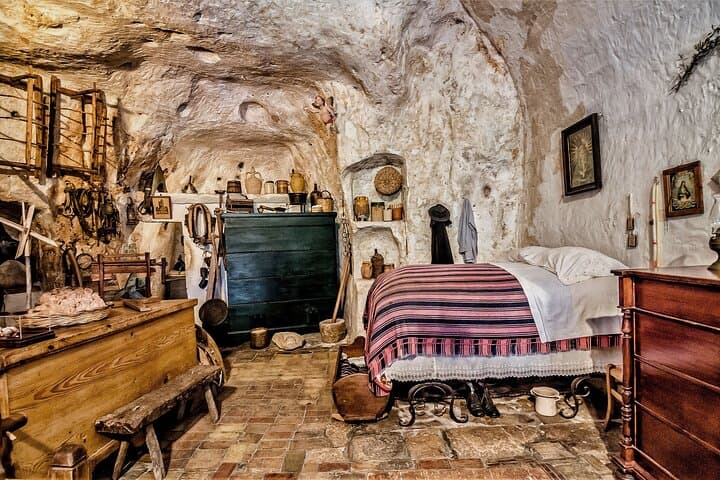
On a private day tour from Rome you’ll get a local guide, skip little lines at rupestrian churches, and enter a typical “casa grotta” to see how families once lived inside stone. Expect uneven cobbles, narrow stairways, and sudden viewpoints over the ravine. Practical notes: wear grippy shoes, carry water, and plan for 12–14 hours including transit. Morning light is best for photos and cooler walks; late afternoon reveals the Sassi’s warm colors as shadows lengthen. Respect interior frescoes, follow your guide on steep paths, and leave extra time to linger at a belvedere — Matera rewards those who move slowly.
easy.
12–14 hours.
Suitable for most fitness levels; requires standing and walking on uneven ground for several hours.
Door-to-door the trip is typically 12–14 hours, including round-trip luxury transportation and a 3–4 hour guided walking time in Matera.
The tour is labeled easy but Matera has uneven ground and steps; customers with significant mobility limitations may find parts challenging—contact the operator about alternatives.
This private tour includes entrance tickets for a typical cave house and rupestrian church as listed in the inclusions.
Yes—infants and small children can use strollers on some stretches, but expect steps and narrow lanes; child rates apply only when sharing with two paying adults.
Matera’s Sassi are among the world’s oldest continuously inhabited settlements, with cave dwellings used since the Paleolithic and major social change during mid-20th-century relocations.
UNESCO status protects the Sassi, but fragile interiors and frescoes require visitors to follow paths, avoid touching surfaces and minimize noise to preserve sites.
Rome Italy Explora operates guided outdoor trips and adventures with an emphasis on safety, stewardship, and memorable experiences.
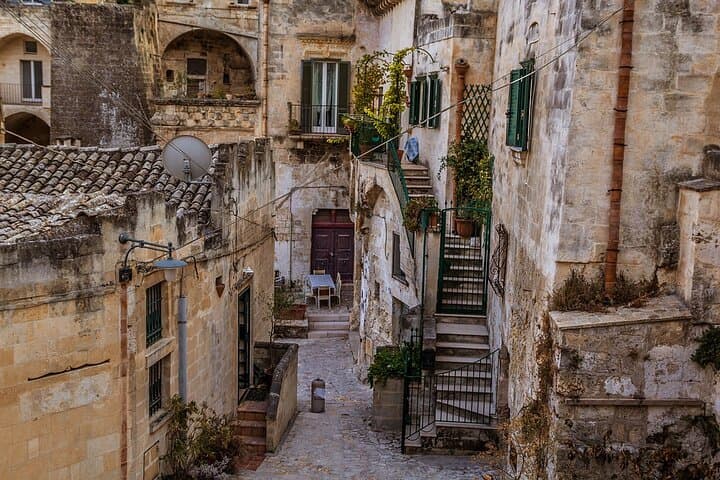
You arrive before noon, the highway dropping away and a limestone plateau opening like a folded map. Stacked houses and carved rock faces lean into each other; roofs become alleys and alleys become terraces. The air tastes of dust and espresso. Walking the Sassi, the caves seem to breathe — cool hollows holding frescoed silence while sunlit facades step down toward the ravine.
You arrive before noon, the highway dropping away and a limestone plateau opening like a folded map. Stacked houses and carved rock faces lean into each other; roofs become alleys and alleys become terraces. The air tastes of dust and espresso. Walking the Sassi, the caves seem to breathe — cool hollows holding frescoed silence while sunlit facades step down toward the ravine.
Matera’s shape is geological and human history in one. Calcarenite rock sculpted by rain and time allowed Paleolithic and Neolithic communities to hollow living space from stone; over millennia those grottoes evolved into the Sassi — settlements so ancient they appear suspended between eras. In the 1950s, the Italian state relocated many residents amid public-health crises, then decades later the city’s cave dwellings were rehabilitated and recognized as a UNESCO World Heritage Site in 1993. Cinematographers and writers have long been drawn to Matera’s stark, cinematic frames; you may recognize its lanes from films and photo essays.
On a private day tour from Rome you’ll get a local guide, skip little lines at rupestrian churches, and enter a typical “casa grotta” to see how families once lived inside stone. Expect uneven cobbles, narrow stairways, and sudden viewpoints over the ravine. Practical notes: wear grippy shoes, carry water, and plan for 12–14 hours including transit. Morning light is best for photos and cooler walks; late afternoon reveals the Sassi’s warm colors as shadows lengthen. Respect interior frescoes, follow your guide on steep paths, and leave extra time to linger at a belvedere — Matera rewards those who move slowly.