THE ADVENTURE COLLECTIVE® · Independent discovery and booking for outdoor travel

Journey from Hurghada to the East Bank of Luxor for a private day exploring Karnak and Luxor Temples, with a riverside lunch and guided interpretation. This full-day itinerary pairs monumental ancient architecture with practical tips to help you plan the long drive and all-day walking.
Journey from Hurghada to the East Bank of Luxor for a private day exploring Karnak and Luxor Temples, with a riverside lunch and guided interpretation. This full-day itinerary pairs monumental ancient architecture with practical tips to help you plan the long drive and all-day walking.
A thin desert wind cools the bus as it leaves the Red Sea coast and pushes inland toward the green ribbon of the Nile. By midmorning the sandstone pylons of Karnak rise like a city of columns against a clear Egyptian sky; hieroglyphs, chipped but legible, run in bands across lintels and walls, their stories waiting for a steady pair of feet and a patient ear.
Verified experiences and guided adventures in the surrounding area.
Operated by NORTH AFRICAN SHIPPING AND TOURISM COMPANY (NASCO TOURS) · Luxor, Luxor Governorate
A thin desert wind cools the bus as it leaves the Red Sea coast and pushes inland toward the green ribbon of the Nile. By midmorning the sandstone pylons of Karnak rise like a city of columns against a clear Egyptian sky; hieroglyphs, chipped but legible, run in bands across lintels and walls, their stories waiting for a steady pair of feet and a patient ear.
Luxor — ancient Thebes — is where pharaohs concentrated wealth and ritual. Geologically, the valley is built of Eocene and Oligocene limestones cut by the Nile; archaeologically it holds layers from Middle Kingdom temples to New Kingdom obelisks. Culturally the East Bank is still a living place: vendors, feluccas slipping past the riverbank, and modern cafés that sit under the shadow of millennia-old stone.
This private, full-day tour from Hurghada (about 3.5–4 hours driving each way, ~300 km) focuses on Karnak’s hypostyle hall and the evening-worn terraces of Luxor Temple, with lunch at the Steigenberger Nile Palace. Expect several hours of walking on level, uneven stone and sandy approaches, plus guided interpretation that connects inscriptions to historical context.
Practical guidance: bring sun protection and at least 1.5 L of water, wear sturdy walking shoes with good soles for stone floors, and time visits to avoid the midday heat or take advantage of cooler morning hours. Photography is allowed in most outdoor areas but avoid flash on pigments. Finally, leave artifacts untouched and carry out plastic to help preserve fragile antiquities for the next visitor.
moderate.
11 hours.
Suitable for travelers in average fitness; requires several hours of standing and walking over uneven stone surfaces.
Expect roughly 3.5–4 hours each way by air-conditioned vehicle (≈300 km), so plan for a full 11-hour day including sightseeing and breaks.
Admission for Karnak and Luxor Temple is typically included in organized tours; confirm with your operator prior to booking for up-to-date ticketing.
Outdoor photography is generally allowed; avoid flash photography on painted reliefs and follow signage—some inner areas may restrict photos.
The tour involves sustained walking on uneven surfaces and steps; it’s labeled suitable for various fitness levels but may be challenging for those with mobility limitations.
Luxor stands on the site of ancient Thebes, a New Kingdom power center; Karnak developed over 1,000+ years as a major cult complex dedicated to Amun-Ra.
High visitor volumes strain fragile stone and pigments—follow site rules, avoid touching reliefs, and minimize single-use plastics to reduce impact.
NORTH AFRICAN SHIPPING AND TOURISM COMPANY (NASCO TOURS) operates guided outdoor trips and adventures with an emphasis on safety, stewardship, and memorable experiences.
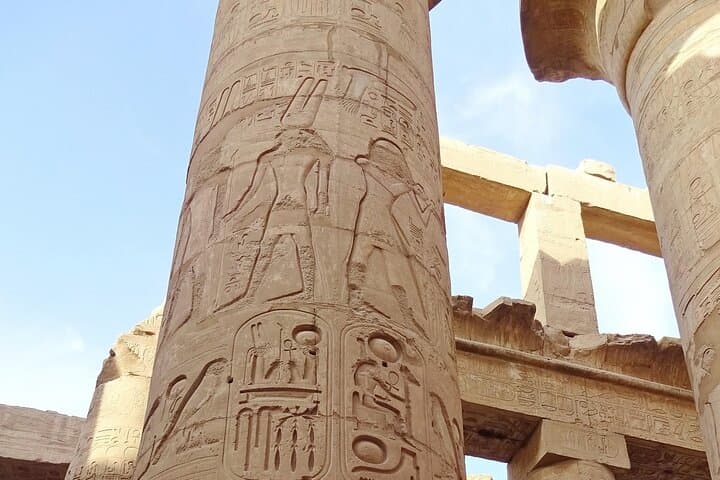
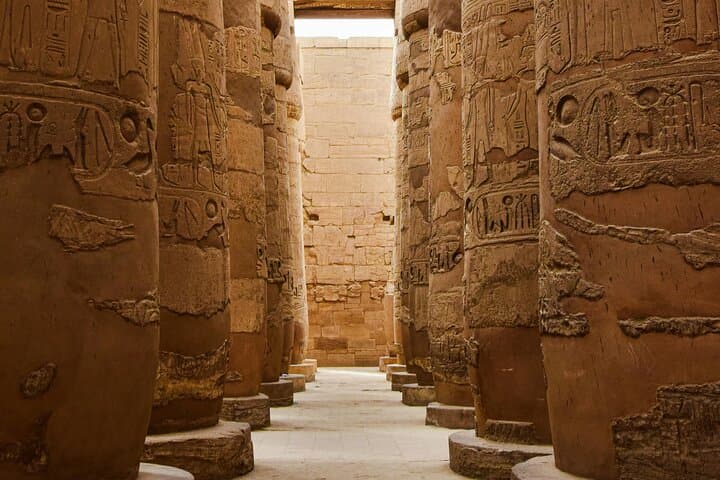
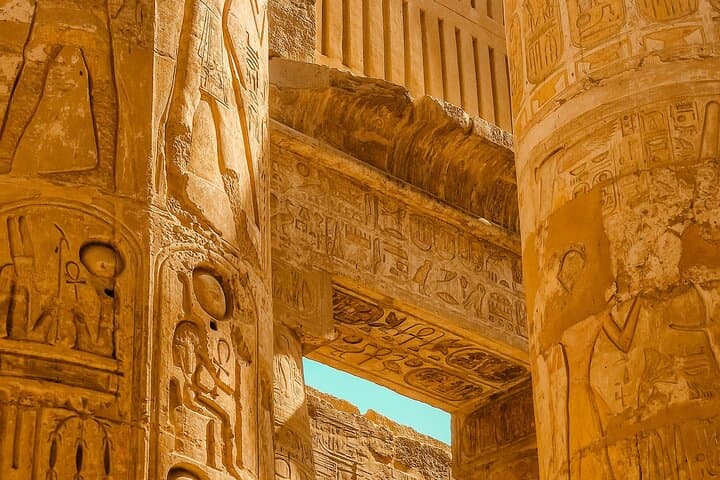
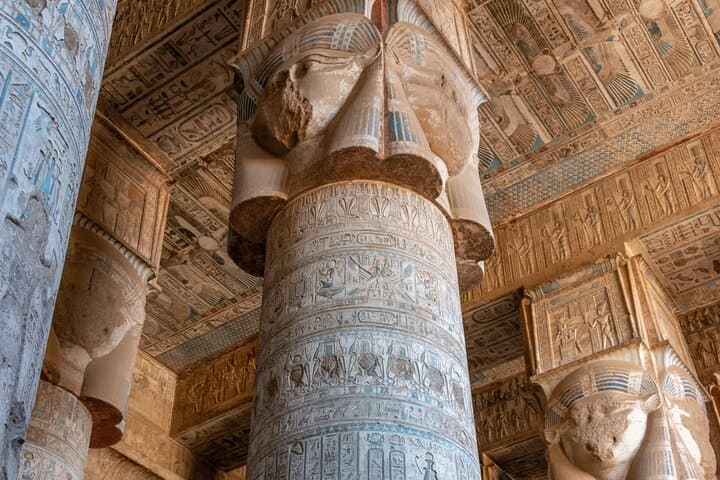
A thin desert wind cools the bus as it leaves the Red Sea coast and pushes inland toward the green ribbon of the Nile. By midmorning the sandstone pylons of Karnak rise like a city of columns against a clear Egyptian sky; hieroglyphs, chipped but legible, run in bands across lintels and walls, their stories waiting for a steady pair of feet and a patient ear.
A thin desert wind cools the bus as it leaves the Red Sea coast and pushes inland toward the green ribbon of the Nile. By midmorning the sandstone pylons of Karnak rise like a city of columns against a clear Egyptian sky; hieroglyphs, chipped but legible, run in bands across lintels and walls, their stories waiting for a steady pair of feet and a patient ear.
Luxor — ancient Thebes — is where pharaohs concentrated wealth and ritual. Geologically, the valley is built of Eocene and Oligocene limestones cut by the Nile; archaeologically it holds layers from Middle Kingdom temples to New Kingdom obelisks. Culturally the East Bank is still a living place: vendors, feluccas slipping past the riverbank, and modern cafés that sit under the shadow of millennia-old stone.
This private, full-day tour from Hurghada (about 3.5–4 hours driving each way, ~300 km) focuses on Karnak’s hypostyle hall and the evening-worn terraces of Luxor Temple, with lunch at the Steigenberger Nile Palace. Expect several hours of walking on level, uneven stone and sandy approaches, plus guided interpretation that connects inscriptions to historical context.
Practical guidance: bring sun protection and at least 1.5 L of water, wear sturdy walking shoes with good soles for stone floors, and time visits to avoid the midday heat or take advantage of cooler morning hours. Photography is allowed in most outdoor areas but avoid flash on pigments. Finally, leave artifacts untouched and carry out plastic to help preserve fragile antiquities for the next visitor.