THE ADVENTURE COLLECTIVE® · Independent discovery and booking for outdoor travel

Journey from Chengdu to see the Leshan Giant Buddha up close on a private day tour with lunch. Expect carved cliff stairways, riverside panoramas, and a compact museum visit that explains the statue’s Tang-dynasty origins.
Journey from Chengdu to see the Leshan Giant Buddha up close on a private day tour with lunch. Expect carved cliff stairways, riverside panoramas, and a compact museum visit that explains the statue’s Tang-dynasty origins.
A low sun and the swollen rivers converge beneath a carved face so vast it shrugs off scale. From Chengdu the road unwinds past rice paddies and river bends until the cliff where the Leshan Giant Buddha watches the confluence of three rivers. Visitors arrive at the cliff base first, where the Buddha’s feet and knees rise like a weathered amphitheater; steps hewn into the rock lead upward for longer views from the head.
Verified experiences and guided adventures in the surrounding area.
Operated by happychinatours · Leshan, Sichuan
A low sun and the swollen rivers converge beneath a carved face so vast it shrugs off scale. From Chengdu the road unwinds past rice paddies and river bends until the cliff where the Leshan Giant Buddha watches the confluence of three rivers. Visitors arrive at the cliff base first, where the Buddha’s feet and knees rise like a weathered amphitheater; steps hewn into the rock lead upward for longer views from the head.
The statue dates to the Tang dynasty (8th century), engineered to calm dangerous currents and to draw visitors and monastics to Lingyun Temple. The rock-face sits on red-brown sandstone shaped by fluvial processes, and the surrounding city of Leshan grew around river trade; temple architecture and museum exhibits explain both devotional practice and local water management techniques.
On the ground, expect carved staircases, viewing platforms, and packed-gravel paths; parts of the climb are steep and uneven. The river below still pushes and pulls—its currents once inspired the statue’s creation and now frame the view. Guide commentary typically includes the statue’s construction methods, restoration history, and the temple’s role in regional Buddhism.
Practical guidance: start early to avoid crowds, wear grippy shoes for the stone steps, and bring a light layer—the river gorge can be cooler and damper than Chengdu. Lunch is usually a Sichuan meal near the site; allow a full day for driving (about 2.5 hours each way), exploring the terraces and museum, and returning to Chengdu by evening.
moderate.
8 hours.
Moderate fitness required—comfortable walking, some stair climbing and short uphill sections.
The private transfer takes about 2.5 to 3 hours each way depending on traffic, so plan for roughly 5–6 hours of driving round-trip.
Yes—visitors can climb carved stairways from the feet toward the head; expect uneven stone steps and several hundred steps if you do the full ascent.
Yes, this private day tour includes the entrance ticket to the Leshan Giant Buddha as part of the package.
Children can visit but must be supervised; the site is not ideal for people with serious mobility limitations due to stairs and irregular surfaces—check with the operator about specific assistance options.
Carved during the Tang dynasty to calm dangerous river currents, the Leshan Buddha reflects both spiritual devotion and practical river engineering from the 8th century.
Ongoing conservation manages water erosion and biological growth on the sandstone; visitors are encouraged to stay on paths and avoid touching fragile areas.
happychinatours operates guided outdoor trips and adventures with an emphasis on safety, stewardship, and memorable experiences.
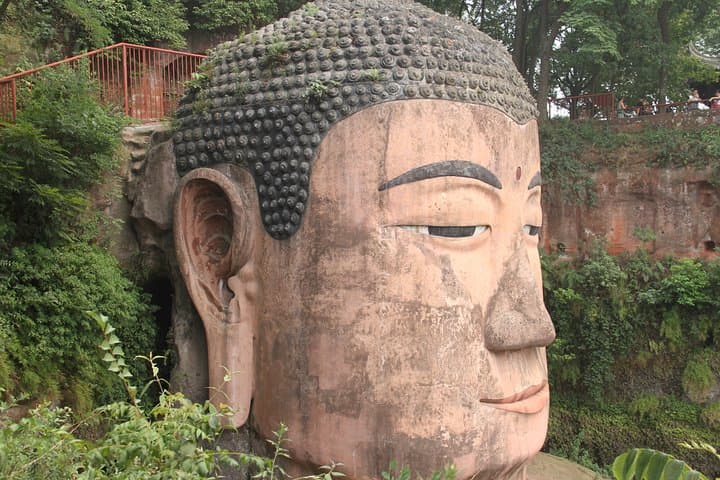
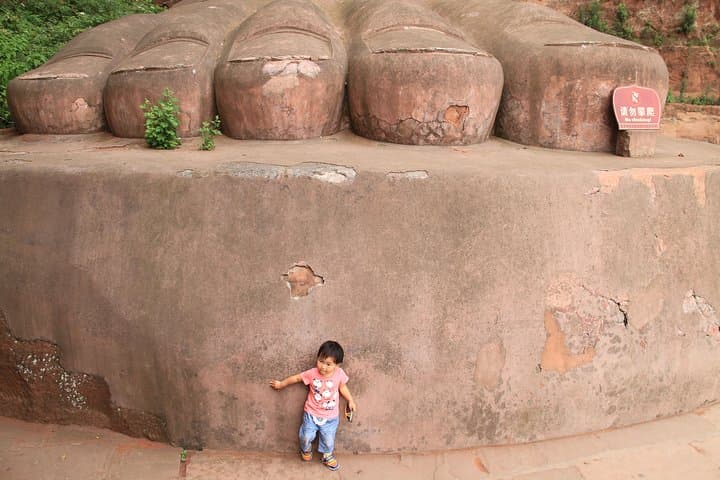
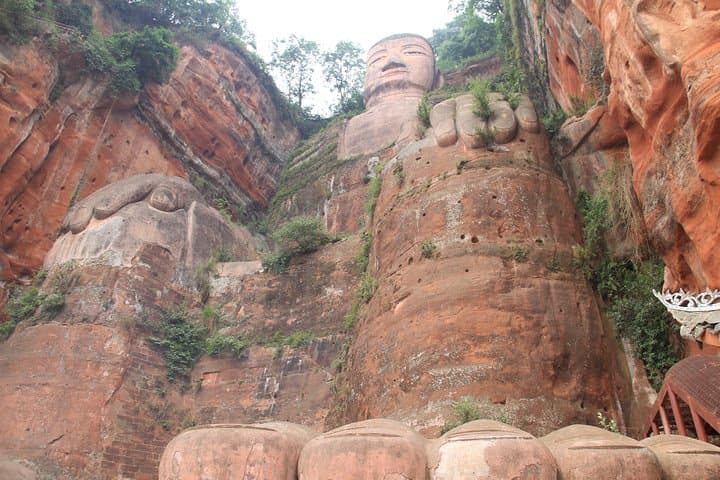
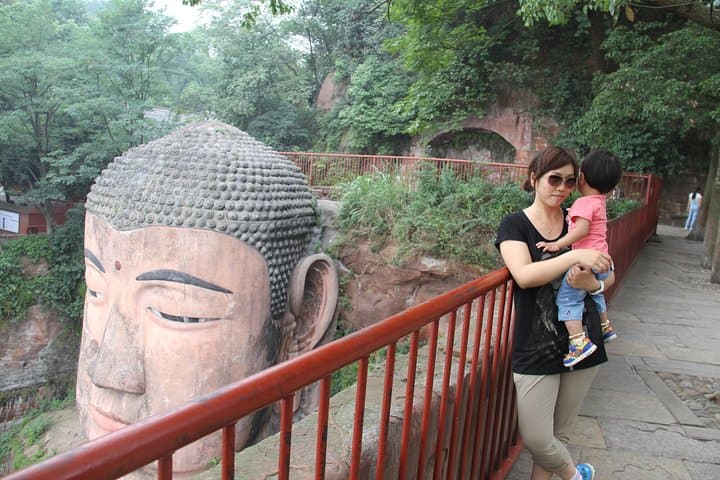
A low sun and the swollen rivers converge beneath a carved face so vast it shrugs off scale. From Chengdu the road unwinds past rice paddies and river bends until the cliff where the Leshan Giant Buddha watches the confluence of three rivers. Visitors arrive at the cliff base first, where the Buddha’s feet and knees rise like a weathered amphitheater; steps hewn into the rock lead upward for longer views from the head.
A low sun and the swollen rivers converge beneath a carved face so vast it shrugs off scale. From Chengdu the road unwinds past rice paddies and river bends until the cliff where the Leshan Giant Buddha watches the confluence of three rivers. Visitors arrive at the cliff base first, where the Buddha’s feet and knees rise like a weathered amphitheater; steps hewn into the rock lead upward for longer views from the head.
The statue dates to the Tang dynasty (8th century), engineered to calm dangerous currents and to draw visitors and monastics to Lingyun Temple. The rock-face sits on red-brown sandstone shaped by fluvial processes, and the surrounding city of Leshan grew around river trade; temple architecture and museum exhibits explain both devotional practice and local water management techniques.
On the ground, expect carved staircases, viewing platforms, and packed-gravel paths; parts of the climb are steep and uneven. The river below still pushes and pulls—its currents once inspired the statue’s creation and now frame the view. Guide commentary typically includes the statue’s construction methods, restoration history, and the temple’s role in regional Buddhism.
Practical guidance: start early to avoid crowds, wear grippy shoes for the stone steps, and bring a light layer—the river gorge can be cooler and damper than Chengdu. Lunch is usually a Sichuan meal near the site; allow a full day for driving (about 2.5 hours each way), exploring the terraces and museum, and returning to Chengdu by evening.