THE ADVENTURE COLLECTIVE® · Independent discovery and booking for outdoor travel

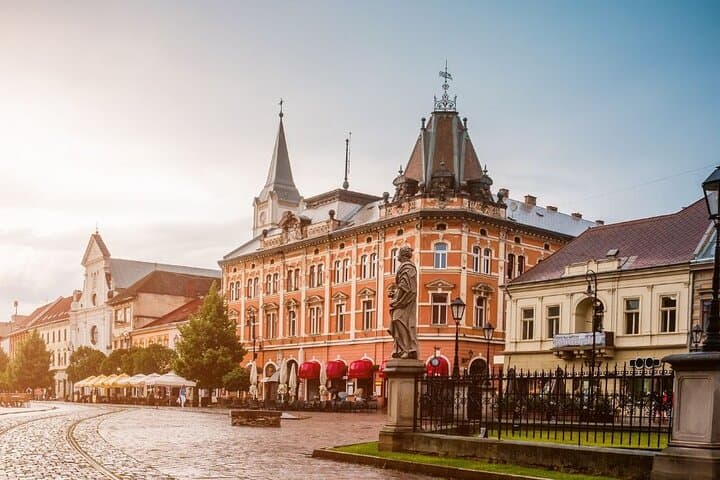
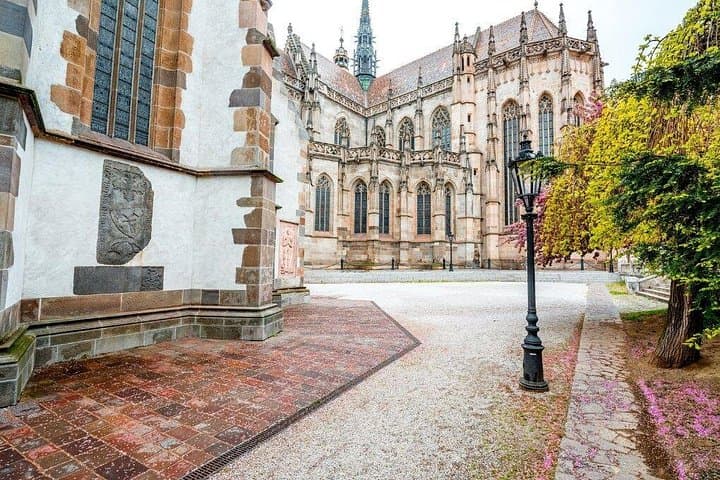
Make a full-day escape from Budapest to Košice for a guided walking tour through one of eastern Slovakia’s best-preserved medieval centers. Expect Gothic spires, market squares, and compact museums—plan for an 11‑hour day and comfortable walking shoes.
Make a full-day escape from Budapest to Košice for a guided walking tour through one of eastern Slovakia’s best-preserved medieval centers. Expect Gothic spires, market squares, and compact museums—plan for an 11‑hour day and comfortable walking shoes.
You arrive before the cathedral catches your eye: the pavement narrows, voices soften, and the stone of Hlavná ulica seems to lean in, telling its stories. The Hornád River threads past the city, pushing a cool edge into the market squares and guiding you toward the Gothic spire of St. Elisabeth Cathedral.
Verified experiences and guided adventures in the surrounding area.
Operated by Poland Travel · Košice, Košický kraj
You arrive before the cathedral catches your eye: the pavement narrows, voices soften, and the stone of Hlavná ulica seems to lean in, telling its stories. The Hornád River threads past the city, pushing a cool edge into the market squares and guiding you toward the Gothic spire of St. Elisabeth Cathedral.
Kosice grew up at a crossroads of trade and empire. Once part of the Kingdom of Hungary, it received one of Europe’s earliest municipal coats of arms in 1369; its streets still carry the imprint of medieval guilds, Renaissance facades, and 19th-century civic pride. The bedrock here is old limestone and river-deposited sediments, which helped shape the narrow streets and cellars beneath the city.
On a guided walking tour you’ll move from broad market squares into quieter lanes where carved portals and carved stone benches hint at daily life across six centuries. Local culture mixes Slovak, Hungarian, and Ruthenian influences—expect cafés serving bryndzové halušky, bakeries with poppy seed rolls, and neighbors chatting over fountains.
Practical edge: this is a long day trip—plan for 11 hours door-to-door. Wear cushioned walking shoes and bring a light rain layer; the medieval centre is largely pedestrian but has cobbles and occasional steps. Carry passport or ID for border checks, some euros and a card, and a refillable water bottle. Timed pickups from Budapest make the schedule tight; arrive at your pick-up point early and keep lunch options flexible—grab a quick bite in the square or sit down if time allows. With steady pace and sensible gear, Kosice rewards curiosity with architecture, compact museums, and an approachable urban rhythm.
easy.
11 hours.
Suitable for most fitness levels; expect 2–4 miles of walking on uneven cobbles over the guided portion
The drive is approximately 3.5 hours each way, making the total trip about 11 hours including the guided visit.
Yes — the itinerary includes a guided walking tour plus a block of free time to visit cafés, museums, or shop on Hlavná ulica.
The walking portion uses pedestrian streets with cobbles and some steps; it’s generally suitable for all fitness levels but may be challenging for those with significant mobility restrictions.
Slovakia uses the euro; cards are widely accepted but bring small-denomination cash for market stalls, tips, or public toilets.
Košice received one of Europe’s earliest municipal coats of arms in 1369 and evolved as a key medieval trading center at the crossroads of Central Europe.
The city center is protected and traffic-restricted to preserve historic façades; travelers are encouraged to use public transport and avoid littering to limit impact.
Poland Travel operates guided outdoor trips and adventures with an emphasis on safety, stewardship, and memorable experiences.
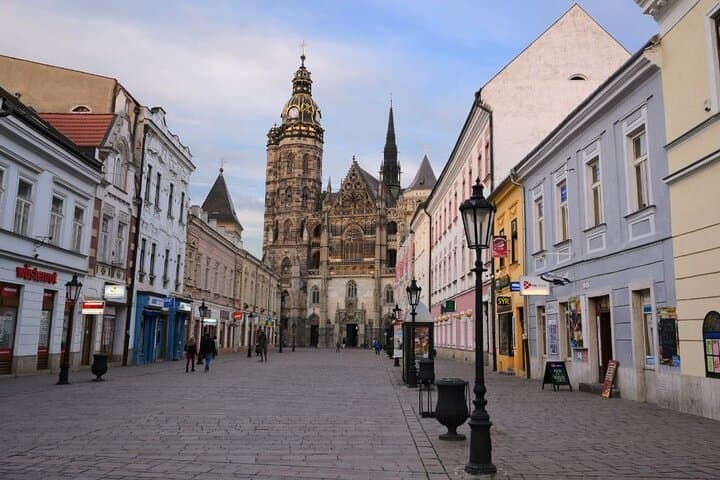
You arrive before the cathedral catches your eye: the pavement narrows, voices soften, and the stone of Hlavná ulica seems to lean in, telling its stories. The Hornád River threads past the city, pushing a cool edge into the market squares and guiding you toward the Gothic spire of St. Elisabeth Cathedral.
You arrive before the cathedral catches your eye: the pavement narrows, voices soften, and the stone of Hlavná ulica seems to lean in, telling its stories. The Hornád River threads past the city, pushing a cool edge into the market squares and guiding you toward the Gothic spire of St. Elisabeth Cathedral.
Kosice grew up at a crossroads of trade and empire. Once part of the Kingdom of Hungary, it received one of Europe’s earliest municipal coats of arms in 1369; its streets still carry the imprint of medieval guilds, Renaissance facades, and 19th-century civic pride. The bedrock here is old limestone and river-deposited sediments, which helped shape the narrow streets and cellars beneath the city.
On a guided walking tour you’ll move from broad market squares into quieter lanes where carved portals and carved stone benches hint at daily life across six centuries. Local culture mixes Slovak, Hungarian, and Ruthenian influences—expect cafés serving bryndzové halušky, bakeries with poppy seed rolls, and neighbors chatting over fountains.
Practical edge: this is a long day trip—plan for 11 hours door-to-door. Wear cushioned walking shoes and bring a light rain layer; the medieval centre is largely pedestrian but has cobbles and occasional steps. Carry passport or ID for border checks, some euros and a card, and a refillable water bottle. Timed pickups from Budapest make the schedule tight; arrive at your pick-up point early and keep lunch options flexible—grab a quick bite in the square or sit down if time allows. With steady pace and sensible gear, Kosice rewards curiosity with architecture, compact museums, and an approachable urban rhythm.