THE ADVENTURE COLLECTIVE® · Independent discovery and booking for outdoor travel

Escape Marrakech for a full-day loop into the High Atlas to hike past waterfalls, meet Berber villagers, tour an argan cooperative and finish with a valley camel ride. Expect mountain air, terraced fields and a family lunch in Imlil.
Escape Marrakech for a full-day loop into the High Atlas to hike past waterfalls, meet Berber villagers, tour an argan cooperative and finish with a valley camel ride. Expect mountain air, terraced fields and a family lunch in Imlil.
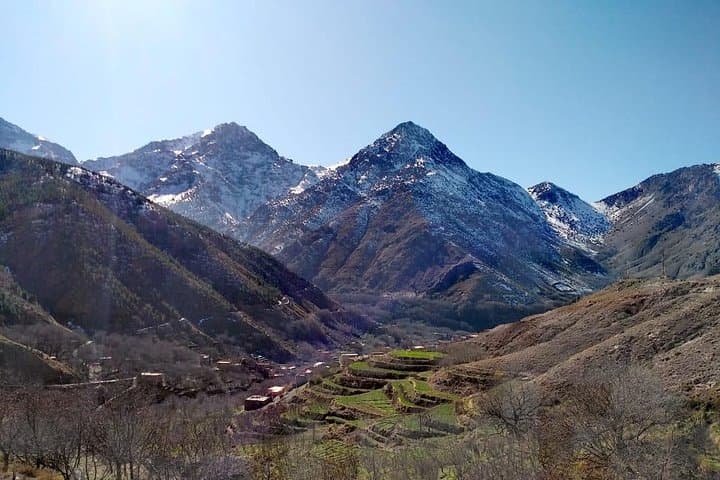
A morning pulls you out of Marrakech's ochre heat and onto a winding road that climbs into the High Atlas. By midmorning the air sharpens; terraced fields step down the valley and a ribbon of stream dares you closer. In Imlil the guide hands you a steaming glass of mint tea and points to a network of mule tracks that lead past waterfalls, orchards and low stone hamlets.
Verified experiences and guided adventures in the surrounding area.
Operated by Atlas Mountain Trekking · Imlil, Marrakech-Safi
A morning pulls you out of Marrakech's ochre heat and onto a winding road that climbs into the High Atlas. By midmorning the air sharpens; terraced fields step down the valley and a ribbon of stream dares you closer. In Imlil the guide hands you a steaming glass of mint tea and points to a network of mule tracks that lead past waterfalls, orchards and low stone hamlets.
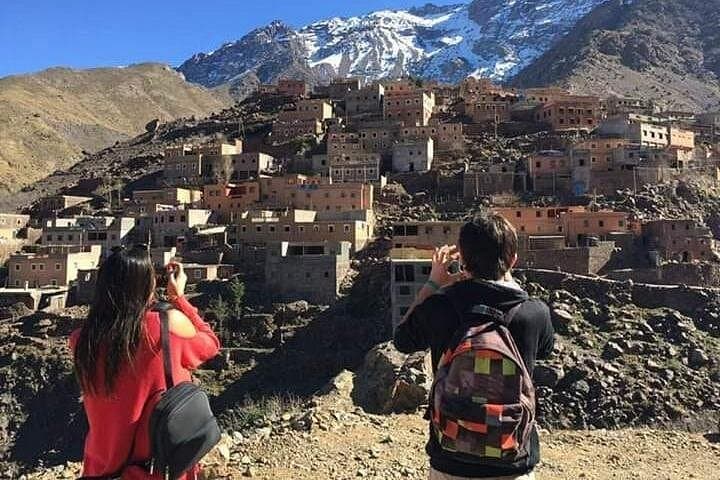
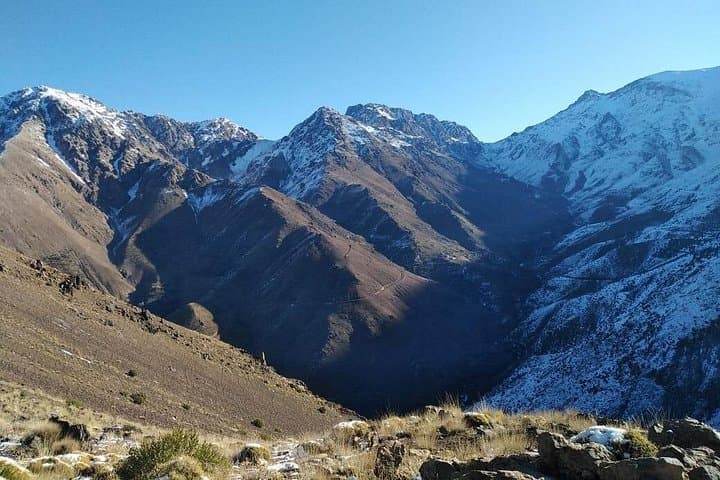
Geology here is blunt: folded schist and volcanic outcrops shaped by seasonal run-off, carving narrow gorges between terraces that ancient farmers irrigate with gravity-fed channels. The villages—Ait Mizan, Imoula and Ait Souka—carry Berber (Amazigh) traditions in their stone houses and irrigation systems; women’s cooperatives along the route still press argan by hand and sell oils and crafts. You’ll cross simple wooden bridges, skirt cherry and walnut trees, and stand above tumbling cascades that swell in spring.
The day trip mixes a 60–75 km round drive from Marrakech (about 1.5 hours each way) with 3–6 km of walking on uneven, often rocky village paths and mule tracks; Imlil sits around 1,700–1,800 m elevation, so expect cooler air and a modest 200–500 m elevation change on walking segments.
Practical guidance: wear sturdy hiking shoes with grip, layer for temperature swings, carry 1–2 liters of water and sun protection, and budget time for a family-style lunch in a Berber guesthouse. Respect private land and photography preferences, and allow flexible time for the camel ride and short market stops in Asni if scheduled on a market day.
moderate.
8 hours (full day).
Suitable for travelers with moderate fitness who can handle several hours of walking on uneven terrain and short elevation changes.
Expect roughly 60–75 km and about 1.5 hours each way depending on traffic and stops en route.
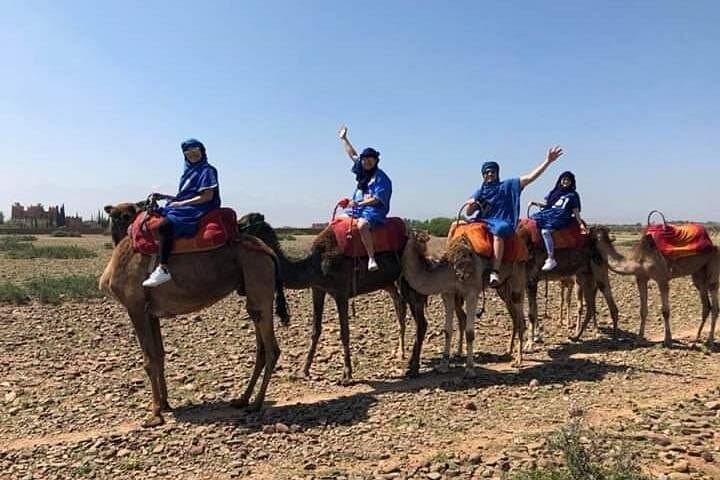
The camel ride included is a short, guided experience on level ground—suitable for beginners and families.
Lunch in a Berber family guesthouse is included; small purchases at cooperatives and optional market items are extra.
Children can usually join, but the walking and uneven surfaces make it unsuitable for travelers with significant mobility or spinal issues; check provider guidance for infants or special needs.
The Imlil valley has long been a local agricultural hub and a gateway for mountain guides to the Toubkal massif; many families maintain traditional irrigation and building methods.
Visitors should stay on established paths to protect fragile terraces and avoid disturbing water sources; supporting women’s cooperatives helps local sustainable livelihoods.
Atlas Mountain Trekking operates guided outdoor trips and adventures with an emphasis on safety, stewardship, and memorable experiences.
A morning pulls you out of Marrakech's ochre heat and onto a winding road that climbs into the High Atlas. By midmorning the air sharpens; terraced fields step down the valley and a ribbon of stream dares you closer. In Imlil the guide hands you a steaming glass of mint tea and points to a network of mule tracks that lead past waterfalls, orchards and low stone hamlets.
A morning pulls you out of Marrakech's ochre heat and onto a winding road that climbs into the High Atlas. By midmorning the air sharpens; terraced fields step down the valley and a ribbon of stream dares you closer. In Imlil the guide hands you a steaming glass of mint tea and points to a network of mule tracks that lead past waterfalls, orchards and low stone hamlets.
Geology here is blunt: folded schist and volcanic outcrops shaped by seasonal run-off, carving narrow gorges between terraces that ancient farmers irrigate with gravity-fed channels. The villages—Ait Mizan, Imoula and Ait Souka—carry Berber (Amazigh) traditions in their stone houses and irrigation systems; women’s cooperatives along the route still press argan by hand and sell oils and crafts. You’ll cross simple wooden bridges, skirt cherry and walnut trees, and stand above tumbling cascades that swell in spring.
The day trip mixes a 60–75 km round drive from Marrakech (about 1.5 hours each way) with 3–6 km of walking on uneven, often rocky village paths and mule tracks; Imlil sits around 1,700–1,800 m elevation, so expect cooler air and a modest 200–500 m elevation change on walking segments.
Practical guidance: wear sturdy hiking shoes with grip, layer for temperature swings, carry 1–2 liters of water and sun protection, and budget time for a family-style lunch in a Berber guesthouse. Respect private land and photography preferences, and allow flexible time for the camel ride and short market stops in Asni if scheduled on a market day.