THE ADVENTURE COLLECTIVE® · Independent discovery and booking for outdoor travel

Escape Marrakech for a day in the High Atlas: a short guided hike to waterfall viewpoints, a home-cooked Berber lunch, and stops at argan cooperatives and valley lookouts. Perfect for travelers seeking a compact mountain experience with cultural insight.
Escape Marrakech for a day in the High Atlas: a short guided hike to waterfall viewpoints, a home-cooked Berber lunch, and stops at argan cooperatives and valley lookouts. Perfect for travelers seeking a compact mountain experience with cultural insight.
A morning drive peels away the city’s heat and, within an hour, the asphalt ends and the High Atlas foothills open into terraced fields and dry-stone villages. In Imlil valley the air sharpens; the trailhead hums with the low calls of villagers and the clack of mule gear. The short guided hike follows mule tracks and mountain streams toward a small waterfall, with the highest peak in North Africa — Toubkal (4,167 m) — often visible as a distant, snow-capped presence.
Verified experiences and guided adventures in the surrounding area.
Operated by Morocco Inspiring Tours · Imlil, Marrakech-Safi
A morning drive peels away the city’s heat and, within an hour, the asphalt ends and the High Atlas foothills open into terraced fields and dry-stone villages. In Imlil valley the air sharpens; the trailhead hums with the low calls of villagers and the clack of mule gear. The short guided hike follows mule tracks and mountain streams toward a small waterfall, with the highest peak in North Africa — Toubkal (4,167 m) — often visible as a distant, snow-capped presence.
The valley has been a seasonal pasture and a caravan corridor for Berber communities for centuries, and stone houses and communal terraces reflect agricultural practices adapted to steep slopes. Geologically, the High Atlas is young and rugged: folded sedimentary layers and volcanic intrusions that have been uplifted by tectonic collision, producing steep valleys and fast-draining soils.
Culturally the day pairs natural walking with household hospitality — a home-cooked tajine lunch at a Berber family and a stop at an argan cooperative illustrate living traditions and local economies.
Practical guidance: expect 60–90 minutes of guided walking on uneven, rocky trails with modest elevation change; good footwear and sun protection matter. Bring water, small cash for cooperative purchases and tips, and a light layer for higher, windier spots. Pickups from Marrakech mean an early start and a relaxed return in the evening. The route is ideal for travelers who want a compact mountain experience with cultural context and minimal technical demand.
moderate.
7 hours.
Suitable for most healthy travelers who can handle 60–90 minutes of uphill/downhill walking on uneven terrain.
The guided walking section is about 60–90 minutes, typically covering a few kilometers on mixed terrain with modest elevation change.
Yes — the tour is described as suitable for all fitness levels, but participants should be comfortable walking on uneven ground for up to 90 minutes.
Vegetarian, vegan, and gluten-free options are available if requested in advance; mention dietary needs when booking.
Yes — on clear days the Toubkal massif is visible from valley viewpoints, though summit conditions vary and this tour does not summit Toubkal.
Imlil valley communities are historically Berber agrarian settlements that serviced trans-Atlas travel and sheep grazing routes; many homes retain traditional stone construction.
The High Atlas is sensitive to erosion and water scarcity; stick to trails, avoid single-use plastics, and hire local guides to support sustainable local income.
Morocco Inspiring Tours operates guided outdoor trips and adventures with an emphasis on safety, stewardship, and memorable experiences.
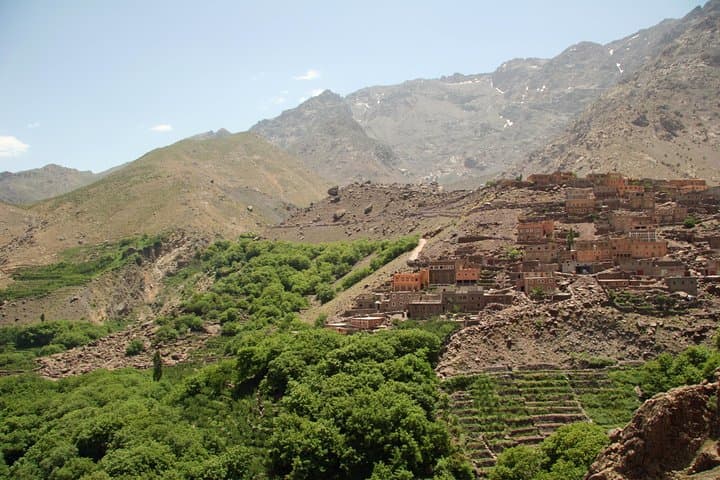
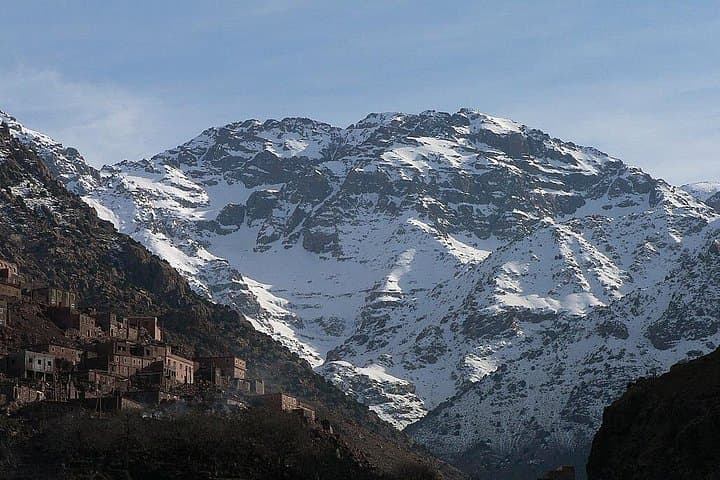
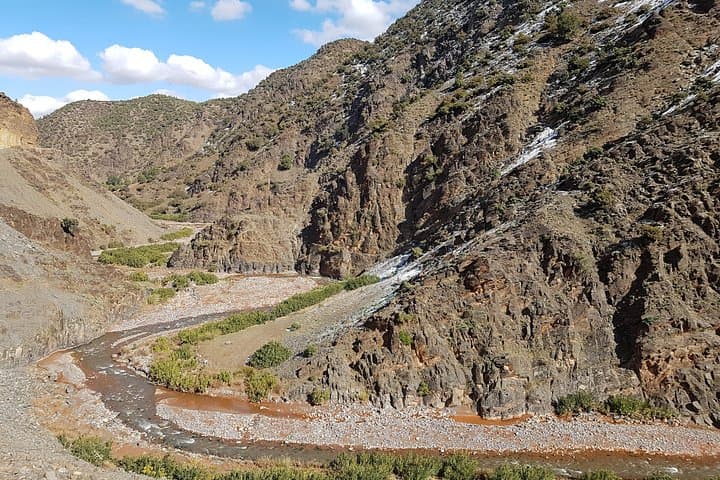
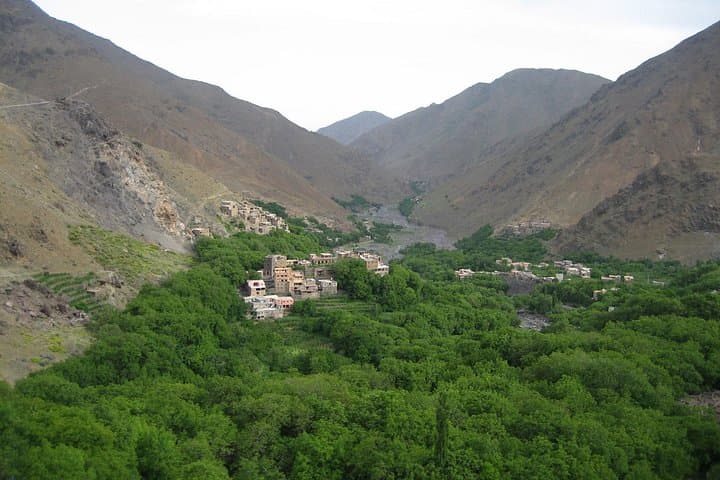
A morning drive peels away the city’s heat and, within an hour, the asphalt ends and the High Atlas foothills open into terraced fields and dry-stone villages. In Imlil valley the air sharpens; the trailhead hums with the low calls of villagers and the clack of mule gear. The short guided hike follows mule tracks and mountain streams toward a small waterfall, with the highest peak in North Africa — Toubkal (4,167 m) — often visible as a distant, snow-capped presence.
A morning drive peels away the city’s heat and, within an hour, the asphalt ends and the High Atlas foothills open into terraced fields and dry-stone villages. In Imlil valley the air sharpens; the trailhead hums with the low calls of villagers and the clack of mule gear. The short guided hike follows mule tracks and mountain streams toward a small waterfall, with the highest peak in North Africa — Toubkal (4,167 m) — often visible as a distant, snow-capped presence.
The valley has been a seasonal pasture and a caravan corridor for Berber communities for centuries, and stone houses and communal terraces reflect agricultural practices adapted to steep slopes. Geologically, the High Atlas is young and rugged: folded sedimentary layers and volcanic intrusions that have been uplifted by tectonic collision, producing steep valleys and fast-draining soils.
Culturally the day pairs natural walking with household hospitality — a home-cooked tajine lunch at a Berber family and a stop at an argan cooperative illustrate living traditions and local economies.
Practical guidance: expect 60–90 minutes of guided walking on uneven, rocky trails with modest elevation change; good footwear and sun protection matter. Bring water, small cash for cooperative purchases and tips, and a light layer for higher, windier spots. Pickups from Marrakech mean an early start and a relaxed return in the evening. The route is ideal for travelers who want a compact mountain experience with cultural context and minimal technical demand.