THE ADVENTURE COLLECTIVE® · Independent discovery and booking for outdoor travel

Drive up from Marrakech to the High Atlas and spend a day in Imlil—choose a steep hike toward Toubkal base camp, a mule trek through terraced valleys, or a cultural visit to Berber households. This private day trip blends mountain scenery, local hospitality, and practical options for differing fitness levels.
Drive up from Marrakech to the High Atlas and spend a day in Imlil—choose a steep hike toward Toubkal base camp, a mule trek through terraced valleys, or a cultural visit to Berber households. This private day trip blends mountain scenery, local hospitality, and practical options for differing fitness levels.
A thin mountain light lifts over the High Atlas as a minivan leaves Marrakech behind, trading dust-choked roads for switchbacks and terraced fields. By midmorning you arrive in Imlil, a compact Berber village at about 1,800 m where mule bells punctuate the valley and mint tea is served like a welcome. The valley feels alive: shepherds move goats across dry stone walls, while the ridgelines of Jebel Toubkal push the sky outward.
Verified experiences and guided adventures in the surrounding area.
Operated by Morocco Holiday Trips · Imlil, Marrakech-Safi
A thin mountain light lifts over the High Atlas as a minivan leaves Marrakech behind, trading dust-choked roads for switchbacks and terraced fields. By midmorning you arrive in Imlil, a compact Berber village at about 1,800 m where mule bells punctuate the valley and mint tea is served like a welcome. The valley feels alive: shepherds move goats across dry stone walls, while the ridgelines of Jebel Toubkal push the sky outward.
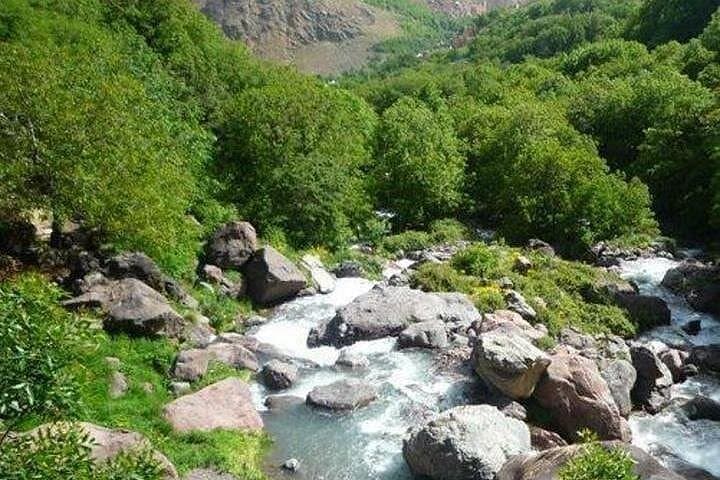
Imlil sits on routes used for centuries by Amazigh (Berber) communities and trekkers bound for Toubkal, North Africa’s highest peak. Geologically the valley is carved from volcanic and metamorphic rock, steep gullies cutting toward snowfields in winter. Local culture is centered on cooperative agriculture and guesthouses; a 1984 portrait by James A. Miller documented the village’s social and economic rhythms, many of which persist alongside tourism.
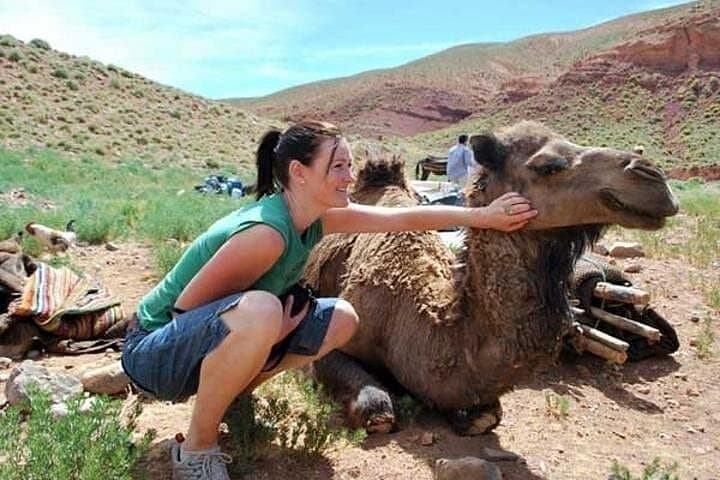
Expect choices: a steep day-hike toward Toubkal’s base camp, a gentler mule ride through the Azzaden terraces, or a walk to the Sidi Chamharouch shrine. Trails alternate between packed dirt, rocky switchbacks and shaded cedar groves; loose scree can appear on steeper pitches. Weather changes quickly—sunlit warmth can turn to cold wind near the col.
Practical guidance: start early to avoid midday heat, bring 2–3 liters of water, wear sturdy boots and layers for altitude, and hire a local guide to support navigation and community income. If you plan to ride, confirm weight limits for mules. A well-planned day in Imlil rewards with clear mountain views, close cultural contact, and a tangible sense of place in the High Atlas.
moderate.
9 hours.
Good cardiovascular fitness for 3–6 hours of walking with elevation changes; comfortable on uneven terrain.
The road takes about 1–1.5 hours depending on traffic and your pickup location in Marrakech.
Yes; mule and horseback options are available for gentler access to higher settlements—confirm weight limits and duration when booking.
At 1,800 m most travelers are fine, but those sensitive to altitude should monitor symptoms and avoid overexertion; descend and seek care if severe symptoms appear.
This excursion typically includes a local guide and lunch; check your booking details and bring small cash for gratuities and extras.
Imlil is a long-established Amazigh (Berber) settlement that developed as a mountain agricultural center and later as a gateway for climbs to Jebel Toubkal.
Trail erosion and overgrazing are local concerns; support registered guides, stick to trails, and pack out waste to reduce impact.
Morocco Holiday Trips operates guided outdoor trips and adventures with an emphasis on safety, stewardship, and memorable experiences.
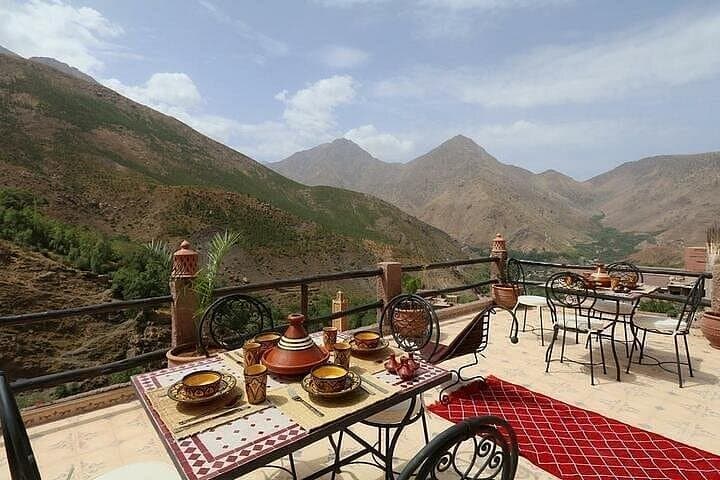
A thin mountain light lifts over the High Atlas as a minivan leaves Marrakech behind, trading dust-choked roads for switchbacks and terraced fields. By midmorning you arrive in Imlil, a compact Berber village at about 1,800 m where mule bells punctuate the valley and mint tea is served like a welcome. The valley feels alive: shepherds move goats across dry stone walls, while the ridgelines of Jebel Toubkal push the sky outward.
A thin mountain light lifts over the High Atlas as a minivan leaves Marrakech behind, trading dust-choked roads for switchbacks and terraced fields. By midmorning you arrive in Imlil, a compact Berber village at about 1,800 m where mule bells punctuate the valley and mint tea is served like a welcome. The valley feels alive: shepherds move goats across dry stone walls, while the ridgelines of Jebel Toubkal push the sky outward.
Imlil sits on routes used for centuries by Amazigh (Berber) communities and trekkers bound for Toubkal, North Africa’s highest peak. Geologically the valley is carved from volcanic and metamorphic rock, steep gullies cutting toward snowfields in winter. Local culture is centered on cooperative agriculture and guesthouses; a 1984 portrait by James A. Miller documented the village’s social and economic rhythms, many of which persist alongside tourism.
Expect choices: a steep day-hike toward Toubkal’s base camp, a gentler mule ride through the Azzaden terraces, or a walk to the Sidi Chamharouch shrine. Trails alternate between packed dirt, rocky switchbacks and shaded cedar groves; loose scree can appear on steeper pitches. Weather changes quickly—sunlit warmth can turn to cold wind near the col.
Practical guidance: start early to avoid midday heat, bring 2–3 liters of water, wear sturdy boots and layers for altitude, and hire a local guide to support navigation and community income. If you plan to ride, confirm weight limits for mules. A well-planned day in Imlil rewards with clear mountain views, close cultural contact, and a tangible sense of place in the High Atlas.