THE ADVENTURE COLLECTIVE® · Independent discovery and booking for outdoor travel

A full-day coach tour links the Giza Plateau’s pyramids with the Cairo Egyptian Museum—two contrasting ways to read ancient Egypt. Expect a long day, expert narration, and uneven walking surfaces across iconic sites.
A full-day coach tour links the Giza Plateau’s pyramids with the Cairo Egyptian Museum—two contrasting ways to read ancient Egypt. Expect a long day, expert narration, and uneven walking surfaces across iconic sites.
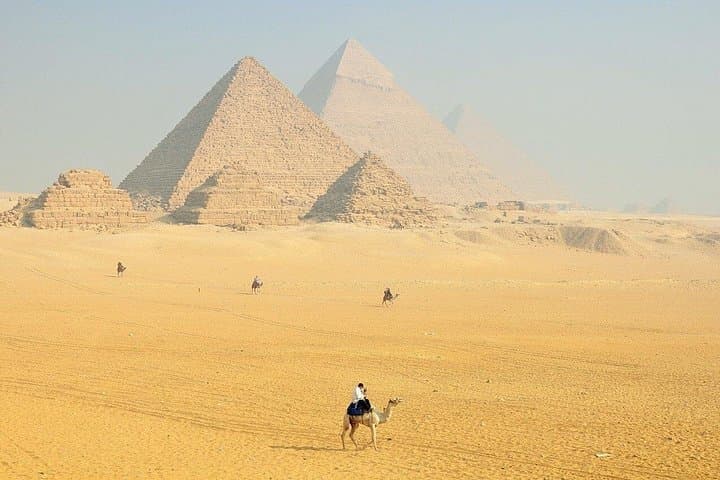
You step off the bus at dawn and the Giza Plateau opens in a dry, clear light: stone faces and sharp angles cutting into a wide sky. The Great Pyramid looms with an almost mechanical certainty—built by hands that organized labor, stone and astronomy into an enduring horizon marker. Your Egyptologist guide moves between objects and meaning, pointing out quarry marks, shaft alignments and the Sphinx’s weathered expression while the plateau’s heat presses like an obliging test of attention.
Verified experiences and guided adventures in the surrounding area.
Operated by Sharmzad Touristic Services · Giza, Cairo Governorate
You step off the bus at dawn and the Giza Plateau opens in a dry, clear light: stone faces and sharp angles cutting into a wide sky. The Great Pyramid looms with an almost mechanical certainty—built by hands that organized labor, stone and astronomy into an enduring horizon marker. Your Egyptologist guide moves between objects and meaning, pointing out quarry marks, shaft alignments and the Sphinx’s weathered expression while the plateau’s heat presses like an obliging test of attention.
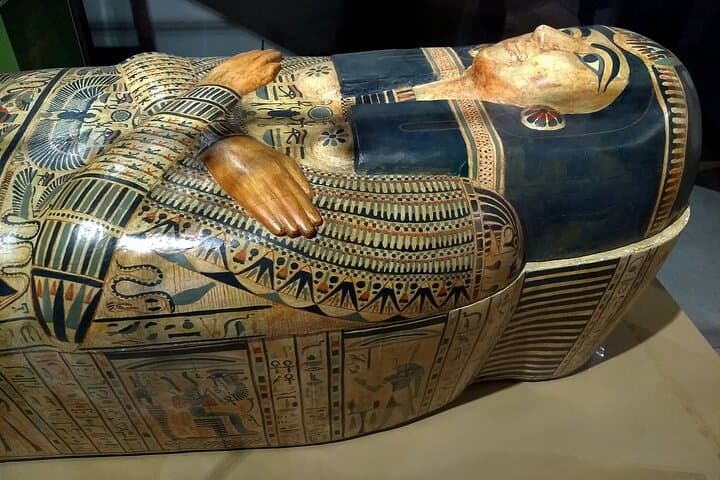
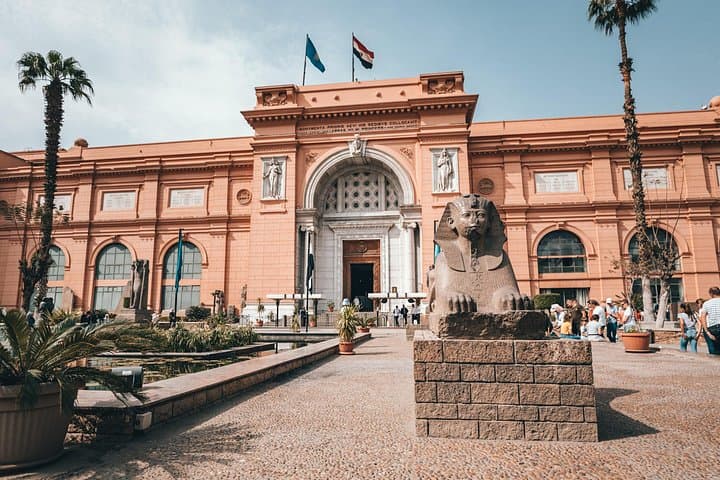
The day pairs two very different chapters of ancient Egypt. At Giza, Fourth Dynasty engineering—blocks, ramps, workers’ cemeteries—speaks to logistics as much as ritual. At the Egyptian Museum in Tahrir, glass cases hold delicate jewelry, statuary and Tutankhamen’s funerary treasure, artifacts that trace religious practice, royal life and the modern history of archaeology in Cairo.
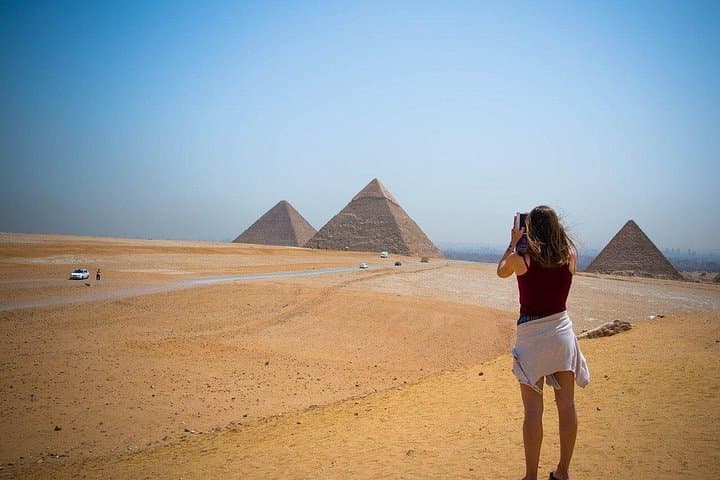
Practical realities frame the experience: long coach time from Sharm El Sheikh, a schedule that packs two major sites and a sit-down lunch, and moderate walking over uneven surfaces and stone steps. Expect guided explanations, short museum lines for groups, and opportunities to photograph wide-angle views of the plateau.
Plan for sun, dust and a very full day—carry ID, local currency for tips and small purchases, and comfortable shoes with good soles. Hydrate on the bus, move at the guide’s pace through the museum galleries, and leave room in your camera roll for the Sphinx at sunset light. This trip is history you can walk through, with practical preparation turning a long day into a clear, unforgettable context for Egypt’s most iconic sites.
moderate.
10–12 hours.
Suitable for travelers in average fitness who can handle several hours of walking and standing with periods seated on a coach
The coach transfer is a long, full-day drive—organizers usually schedule an early departure with return the same evening; expect 8–10 hours of total travel time depending on route and border processes.
Yes—the tour description indicates entry to the Egyptian Museum and Giza complex are included for the group.
The tour involves uneven ground and steps; it’s not recommended for those with significant mobility limitations—contact the operator to discuss specific accessibility needs.
An oriental lunch and bottled water are included in the itinerary, with time to rest before the museum or plateau visits.
The Giza pyramids date to the Fourth Dynasty (c. 2600–2500 BCE); the Egyptian Museum houses artifacts spanning millennia, including Tutankhamen’s funerary collection discovered in the 1920s.
The sites are managed with conservation measures and visitor rules—avoid climbing monuments, follow guide instructions, and support local conservation by respecting signage and not removing any artefacts.
Sharmzad Touristic Services operates guided outdoor trips and adventures with an emphasis on safety, stewardship, and memorable experiences.
You step off the bus at dawn and the Giza Plateau opens in a dry, clear light: stone faces and sharp angles cutting into a wide sky. The Great Pyramid looms with an almost mechanical certainty—built by hands that organized labor, stone and astronomy into an enduring horizon marker. Your Egyptologist guide moves between objects and meaning, pointing out quarry marks, shaft alignments and the Sphinx’s weathered expression while the plateau’s heat presses like an obliging test of attention.
You step off the bus at dawn and the Giza Plateau opens in a dry, clear light: stone faces and sharp angles cutting into a wide sky. The Great Pyramid looms with an almost mechanical certainty—built by hands that organized labor, stone and astronomy into an enduring horizon marker. Your Egyptologist guide moves between objects and meaning, pointing out quarry marks, shaft alignments and the Sphinx’s weathered expression while the plateau’s heat presses like an obliging test of attention.
The day pairs two very different chapters of ancient Egypt. At Giza, Fourth Dynasty engineering—blocks, ramps, workers’ cemeteries—speaks to logistics as much as ritual. At the Egyptian Museum in Tahrir, glass cases hold delicate jewelry, statuary and Tutankhamen’s funerary treasure, artifacts that trace religious practice, royal life and the modern history of archaeology in Cairo.
Practical realities frame the experience: long coach time from Sharm El Sheikh, a schedule that packs two major sites and a sit-down lunch, and moderate walking over uneven surfaces and stone steps. Expect guided explanations, short museum lines for groups, and opportunities to photograph wide-angle views of the plateau.
Plan for sun, dust and a very full day—carry ID, local currency for tips and small purchases, and comfortable shoes with good soles. Hydrate on the bus, move at the guide’s pace through the museum galleries, and leave room in your camera roll for the Sphinx at sunset light. This trip is history you can walk through, with practical preparation turning a long day into a clear, unforgettable context for Egypt’s most iconic sites.