THE ADVENTURE COLLECTIVE® · Independent discovery and booking for outdoor travel

Make a full-day escape from Marrakech to Essaouira for sea air, goats in argan trees and a medina crowned by 18th-century ramparts. This private trip combines scenic stops, a coastal panorama and time to taste the town's celebrated seafood.
Make a full-day escape from Marrakech to Essaouira for sea air, goats in argan trees and a medina crowned by 18th-century ramparts. This private trip combines scenic stops, a coastal panorama and time to taste the town's celebrated seafood.
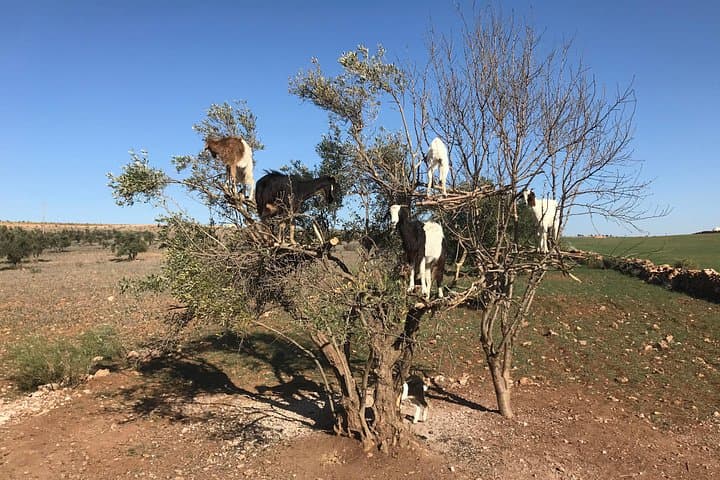
You leave Marrakech before dawn, the atlas foothills shrinking in the rearview while argan trees begin to punctuate the roadside—goats sometimes perched like watchful thieves among the branches.
Verified experiences and guided adventures in the surrounding area.
Operated by Said Benabbou · Essaouira, Marrakesh-Safi
You leave Marrakech before dawn, the atlas foothills shrinking in the rearview while argan trees begin to punctuate the roadside—goats sometimes perched like watchful thieves among the branches.
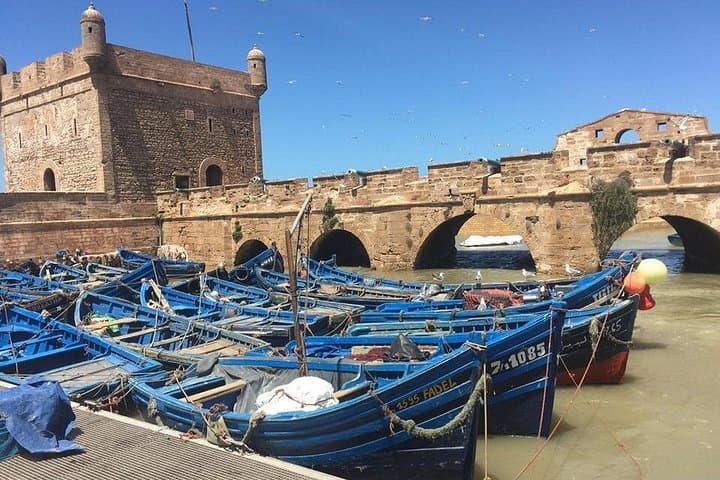
By late morning the wind off the Atlantic announces Essaouira: whitewashed walls, low blue shutters, and a harbor where wooden fishing boats bob against old stone quays. The air smells of salt and sizzling fish; the ramparts hum with gulls and the creak of pulleys as cannons stare out at a steady sea.
Essaouira (historic Mogador) is a port with layered histories: Phoenician and Roman traces, 16th-century Portuguese fortifications, and an 18th-century redesign under Sultan Sidi Mohammed ben Abdallah that gives the medina its broad streets and coastal fortifications. Geologically, the coastline is exposed basement rock and sand—beaches stretch west while the town clings to defensible cliffs.
Culturally the town mixes Berber, Arab and European influences; the souk sells argan oil, brassware and fresh seafood straight from the boats. The argan forest nearby is a unique, drought-adapted ecosystem that supports both people and the famous oil production; goats climbing trees are a local spectacle.
Practical guidance: expect a 10–12 hour day with roughly 2.5–3 hours driving each way from Marrakech (about 180–190 km). Wear sturdy shoes for cobbles and ramparts, bring sun protection and a reusable water bottle, and carry small bills for market purchases. Plan time for the panoramic overlook, a walk along the Ramparts and a seafood lunch at the port—book a private transfer for flexibility and to make the most of a single full day.
easy.
10–12 hours.
Suitable for most fitness levels; involves moderate walking on uneven cobbles and short uphill sections.
Expect roughly 2.5–3 hours each way depending on traffic and stops—plan a full 10–12 hour day for the round trip.
Lunch is not usually included; the itinerary allows time to choose seafood at the port or try local dishes in the medina.
Strollers can be used in parts of town, but cobbles, steps and narrow alleys make a baby carrier more practical for some sections.
Many itineraries include a stop near argan groves where cooperatives sell oil and demonstrate production—confirm with the operator if you want this included.
Essaouira—historically called Mogador—was fortified and redesigned in the 18th century under Sultan Sidi Mohammed ben Abdallah; its medina earned UNESCO status in 2001.
The argan landscape is ecologically important and many local cooperatives practice sustainable harvesting; visitors should avoid buying products packaged in single-use plastics and respect protected groves.
Said Benabbou operates guided outdoor trips and adventures with an emphasis on safety, stewardship, and memorable experiences.
You leave Marrakech before dawn, the atlas foothills shrinking in the rearview while argan trees begin to punctuate the roadside—goats sometimes perched like watchful thieves among the branches.
You leave Marrakech before dawn, the atlas foothills shrinking in the rearview while argan trees begin to punctuate the roadside—goats sometimes perched like watchful thieves among the branches.
By late morning the wind off the Atlantic announces Essaouira: whitewashed walls, low blue shutters, and a harbor where wooden fishing boats bob against old stone quays. The air smells of salt and sizzling fish; the ramparts hum with gulls and the creak of pulleys as cannons stare out at a steady sea.
Essaouira (historic Mogador) is a port with layered histories: Phoenician and Roman traces, 16th-century Portuguese fortifications, and an 18th-century redesign under Sultan Sidi Mohammed ben Abdallah that gives the medina its broad streets and coastal fortifications. Geologically, the coastline is exposed basement rock and sand—beaches stretch west while the town clings to defensible cliffs.
Culturally the town mixes Berber, Arab and European influences; the souk sells argan oil, brassware and fresh seafood straight from the boats. The argan forest nearby is a unique, drought-adapted ecosystem that supports both people and the famous oil production; goats climbing trees are a local spectacle.
Practical guidance: expect a 10–12 hour day with roughly 2.5–3 hours driving each way from Marrakech (about 180–190 km). Wear sturdy shoes for cobbles and ramparts, bring sun protection and a reusable water bottle, and carry small bills for market purchases. Plan time for the panoramic overlook, a walk along the Ramparts and a seafood lunch at the port—book a private transfer for flexibility and to make the most of a single full day.