THE ADVENTURE COLLECTIVE® · Independent discovery and booking for outdoor travel

Drive from Marrakech to Essaouira to walk wind-scoured ramparts, watch fishermen unload nets, and visit argan cooperatives. This full-day tour mixes coastal geology, 18th-century harbor architecture, and lively market culture—ideal for travelers who want a compressed taste of Morocco’s Atlantic coast.
Drive from Marrakech to Essaouira to walk wind-scoured ramparts, watch fishermen unload nets, and visit argan cooperatives. This full-day tour mixes coastal geology, 18th-century harbor architecture, and lively market culture—ideal for travelers who want a compressed taste of Morocco’s Atlantic coast.
You meet the driver at 9:00 a.m. and the road out of Marrakech opens to scrub, low hills and argan trees that lean toward the Atlantic as if listening for the sea.
Verified experiences and guided adventures in the surrounding area.
Operated by Authentic Destination · Essaouira, Marrakesh-Safi
You meet the driver at 9:00 a.m. and the road out of Marrakech opens to scrub, low hills and argan trees that lean toward the Atlantic as if listening for the sea.
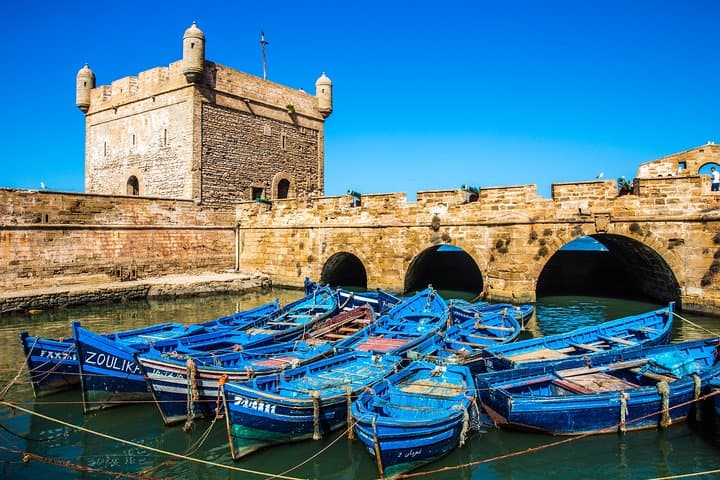
By midmorning the air carries salt and the first sight of Essaouira’s ramparts appears: pale stone walls cut into a rocky peninsula, blue-painted doors, and the steady motion of fishing boats bobbing in the harbor. Goats roost casually in argan branches above the road—an odd, photogenic habit that signals the region’s ecology as surely as the gulls that wheel overhead.
Essaouira’s history is visible in its plan: once called Mogador by Phoenician mariners, the modern layout dates to the 18th century when Sultan Sidi Mohammed ben Abdellah commissioned French architect Théodore Cornut to lay out fortifications influenced by Vauban. The city’s geology—wind-sculpted dunes and a rocky headland—makes it a working port and a windy playground for kite surfers.
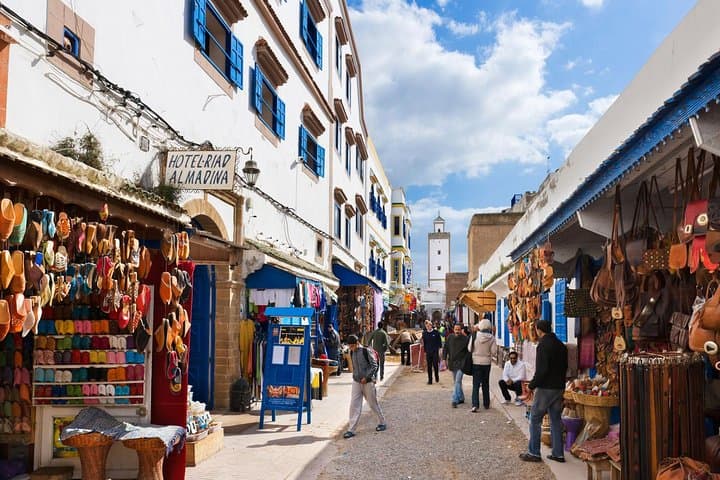
On a one-day tour expect a paced loop: harbor and fish auction, a stroll through the white-and-blue medina, time for an argan cooperative visit, and lunch of fresh seafood. The route is largely flat but cobbled; wind can be constant, so layer up. Bring small cash for markets, a sun hat, and shoes that grip on wet stones. Tours typically return by late afternoon, leaving enough time to arrive in Marrakech before evening, with memories of nets, fresh sardines, and a city shaped by wind and water.
easy.
8–9 hours.
Suitable for most fitness levels; involves several short walks on cobbles and standing at market areas
Most operators pick up and drop off in central Marrakech (hotels or riads); confirm your pickup point when booking.
Yes — this tour typically includes a seafood lunch at a local restaurant in Essaouira.
Yes — visits to local women's cooperatives are common; you can observe production and buy authentic argan oil.
Yes — the itinerary is low-impact with short walks, but cobbles and stairs in the medina can be a challenge for strollers or limited mobility.
Originally a Phoenician stop, the modern port plan dates to the 18th century under Sultan Sidi Mohammed ben Abdellah with designs by Théodore Cornut influenced by Vauban.
Argan forests are protected and many local cooperatives promote sustainable harvesting; choose certified argan products and avoid single‑use plastics on beaches.
Authentic Destination operates guided outdoor trips and adventures with an emphasis on safety, stewardship, and memorable experiences.
You meet the driver at 9:00 a.m. and the road out of Marrakech opens to scrub, low hills and argan trees that lean toward the Atlantic as if listening for the sea.
You meet the driver at 9:00 a.m. and the road out of Marrakech opens to scrub, low hills and argan trees that lean toward the Atlantic as if listening for the sea.
By midmorning the air carries salt and the first sight of Essaouira’s ramparts appears: pale stone walls cut into a rocky peninsula, blue-painted doors, and the steady motion of fishing boats bobbing in the harbor. Goats roost casually in argan branches above the road—an odd, photogenic habit that signals the region’s ecology as surely as the gulls that wheel overhead.
Essaouira’s history is visible in its plan: once called Mogador by Phoenician mariners, the modern layout dates to the 18th century when Sultan Sidi Mohammed ben Abdellah commissioned French architect Théodore Cornut to lay out fortifications influenced by Vauban. The city’s geology—wind-sculpted dunes and a rocky headland—makes it a working port and a windy playground for kite surfers.
On a one-day tour expect a paced loop: harbor and fish auction, a stroll through the white-and-blue medina, time for an argan cooperative visit, and lunch of fresh seafood. The route is largely flat but cobbled; wind can be constant, so layer up. Bring small cash for markets, a sun hat, and shoes that grip on wet stones. Tours typically return by late afternoon, leaving enough time to arrive in Marrakech before evening, with memories of nets, fresh sardines, and a city shaped by wind and water.