THE ADVENTURE COLLECTIVE® · Independent discovery and booking for outdoor travel

In a single day from Mexico City, stand on the Great Pyramid of Cholula beneath smoking volcanoes, step into the riotous Baroque of Tonantzintla, and stroll Puebla’s tiled plazas while tasting regional specialties. This accessible day tour blends geology, indigenous art and colonial architecture with practical logistics for travelers.
In a single day from Mexico City, stand on the Great Pyramid of Cholula beneath smoking volcanoes, step into the riotous Baroque of Tonantzintla, and stroll Puebla’s tiled plazas while tasting regional specialties. This accessible day tour blends geology, indigenous art and colonial architecture with practical logistics for travelers.
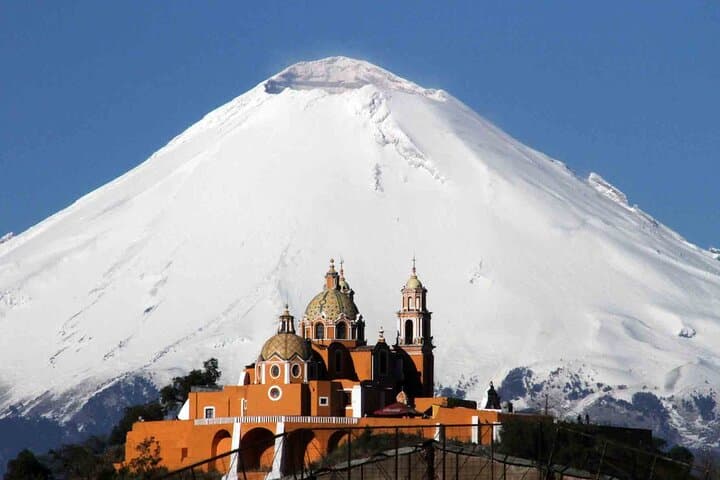
You leave Mexico City behind with the city’s grid softening into fields and low hills; within an hour the air is thinner and the skyline is broken by two hulking presences—Popocatépetl and Iztaccíhuatl—smoking and sleeping like mythic guardians. The first stop, Cholula, arrives as a burst of color: alleys lined with papel picado and women selling tamales. Atop the low, grassy rise, the Church of Our Lady of Remedies sits incongruously on the world’s largest pyramid by volume, its white façade cutting a clean silhouette against the volcanoes.
Verified experiences and guided adventures in the surrounding area.
Operated by Majestic Tours México · Cholula, Puebla
You leave Mexico City behind with the city’s grid softening into fields and low hills; within an hour the air is thinner and the skyline is broken by two hulking presences—Popocatépetl and Iztaccíhuatl—smoking and sleeping like mythic guardians. The first stop, Cholula, arrives as a burst of color: alleys lined with papel picado and women selling tamales. Atop the low, grassy rise, the Church of Our Lady of Remedies sits incongruously on the world’s largest pyramid by volume, its white façade cutting a clean silhouette against the volcanoes.
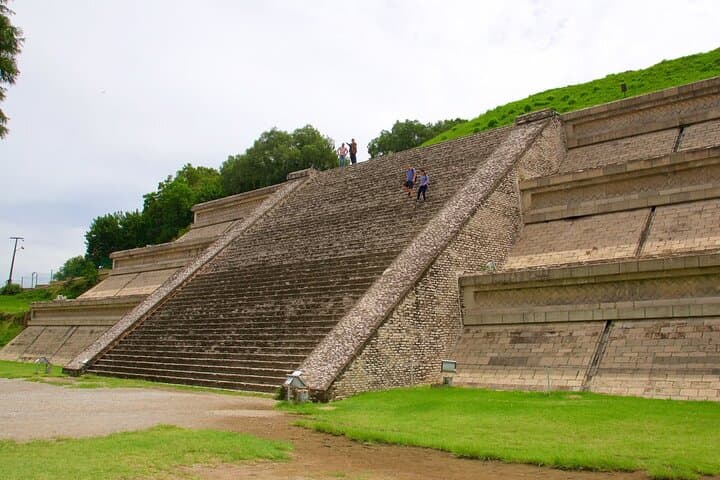
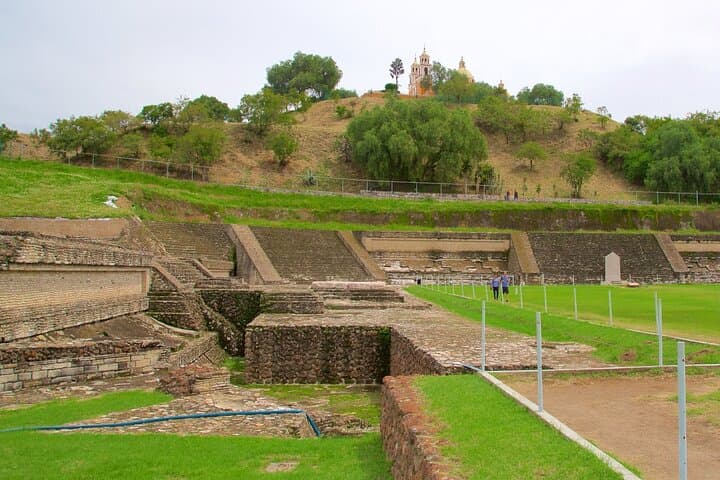
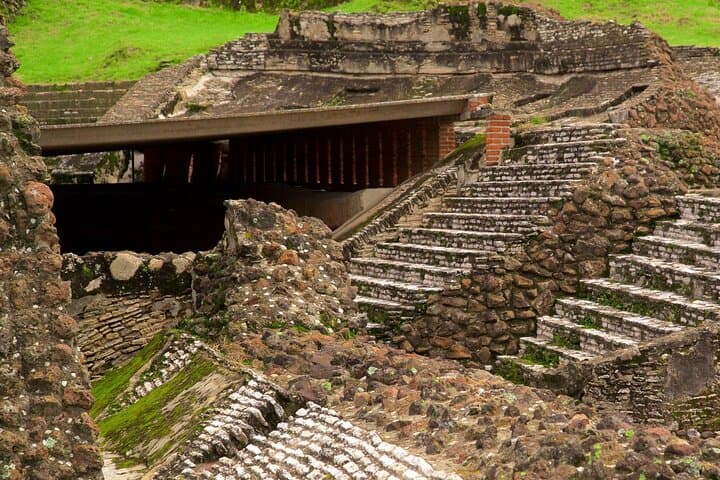
Climbing the broad stone stairway to the church, you feel the layered history beneath your feet. The pyramid—Tlachihualtepetl—was built in stages by different pre-Hispanic cultures; Spanish colonizers then crowned it with a Catholic shrine, literally layering one worldview on another. Nearby, the Church of Santa María Tonantzintla turns expectations inward: every surface is smothered in indigenous Baroque stucco, saints and angels rendered with native faces and cornucopias of local flora. The effect is exuberant, almost tactile—religion reinterpreted through local hands.
By afternoon the tour moves to Puebla’s historic center, a compact World Heritage city that feels like an open-air museum of colonial Mexico. The Cathedral’s twin towers and the tile‑clad buildings of Barrio del Artista anchor a city with a strong culinary thread—try mole poblano or chiles en nogada if they’re in season. Markets and ceramics shops offer Talavera pottery, painted with cobalt blues and sunburst motifs, a practical souvenir and a reminder of the region’s artisanal continuity.
Geology and culture interlock here: volcanic soils feed the maize and chilies, while tectonic uplift shaped the valleys that made Puebla and Cholula strategic settlements. Culturally, the valley is where Nahua, Otomi and Spanish influences collided and coalesced, visible in churches, festivals and food.
Practical guidance: the day is eight hours with moderate walking on cobbles and stairs—wear supportive shoes and layers; mornings can be cool, afternoons warm. Bring cash for small purchases and modest museum or church donations; photography inside Tonantzintla may be restricted, so look for posted signs. The tour includes coffee and transport; pick-up points in Mexico City require punctuality. If you want clearer volcano views, ask the guide for a morning seat on the vehicle’s right side.
This loop—volcanoes watching, pre-Hispanic earth beneath your feet, exuberant Baroque interiors and Puebla’s savory kitchens—condenses central Mexico into a single, well-paced day. It’s a primer on how landscape, history and craft feed one another, and an easy way to exit the capital and return with your head full of new sights and a palate to match.
easy.
8 hours.
Light walking and standing required; suitable for most travelers who can manage stairs and cobbled streets.
The tour runs approximately 8 hours (about 480 minutes) including transport from Mexico City and visits to Cholula, Tonantzintla and Puebla.
Yes—there are designated pickup points across CDMX; check your confirmation for the exact meeting location and arrive early.
Admission to specific museums or optional sites may not be included; the tour description notes which stops include entry—ask the operator if unsure.
The itinerary is rated easy with some stairs; it’s family-friendly but may be tiring for infants or those with mobility issues—infants must sit on a lap.
Photography rules vary; the church often restricts flash—observe posted signs or ask the guide to avoid damaging artwork.
The tour includes a coffee break; regional food tastings in Puebla are often optional and paid on-site.
Cholula’s pyramid was constructed over centuries before the Spanish conquest; the Spanish built the church on its summit as both a spiritual and political statement.
Heavy foot traffic and humidity threaten church murals and stucco—stay on marked paths, avoid touching artwork, and support local conservation efforts by choosing responsible guides.
Majestic Tours México operates guided outdoor trips and adventures with an emphasis on safety, stewardship, and memorable experiences.
You leave Mexico City behind with the city’s grid softening into fields and low hills; within an hour the air is thinner and the skyline is broken by two hulking presences—Popocatépetl and Iztaccíhuatl—smoking and sleeping like mythic guardians. The first stop, Cholula, arrives as a burst of color: alleys lined with papel picado and women selling tamales. Atop the low, grassy rise, the Church of Our Lady of Remedies sits incongruously on the world’s largest pyramid by volume, its white façade cutting a clean silhouette against the volcanoes.
You leave Mexico City behind with the city’s grid softening into fields and low hills; within an hour the air is thinner and the skyline is broken by two hulking presences—Popocatépetl and Iztaccíhuatl—smoking and sleeping like mythic guardians. The first stop, Cholula, arrives as a burst of color: alleys lined with papel picado and women selling tamales. Atop the low, grassy rise, the Church of Our Lady of Remedies sits incongruously on the world’s largest pyramid by volume, its white façade cutting a clean silhouette against the volcanoes.
Climbing the broad stone stairway to the church, you feel the layered history beneath your feet. The pyramid—Tlachihualtepetl—was built in stages by different pre-Hispanic cultures; Spanish colonizers then crowned it with a Catholic shrine, literally layering one worldview on another. Nearby, the Church of Santa María Tonantzintla turns expectations inward: every surface is smothered in indigenous Baroque stucco, saints and angels rendered with native faces and cornucopias of local flora. The effect is exuberant, almost tactile—religion reinterpreted through local hands.
By afternoon the tour moves to Puebla’s historic center, a compact World Heritage city that feels like an open-air museum of colonial Mexico. The Cathedral’s twin towers and the tile‑clad buildings of Barrio del Artista anchor a city with a strong culinary thread—try mole poblano or chiles en nogada if they’re in season. Markets and ceramics shops offer Talavera pottery, painted with cobalt blues and sunburst motifs, a practical souvenir and a reminder of the region’s artisanal continuity.
Geology and culture interlock here: volcanic soils feed the maize and chilies, while tectonic uplift shaped the valleys that made Puebla and Cholula strategic settlements. Culturally, the valley is where Nahua, Otomi and Spanish influences collided and coalesced, visible in churches, festivals and food.
Practical guidance: the day is eight hours with moderate walking on cobbles and stairs—wear supportive shoes and layers; mornings can be cool, afternoons warm. Bring cash for small purchases and modest museum or church donations; photography inside Tonantzintla may be restricted, so look for posted signs. The tour includes coffee and transport; pick-up points in Mexico City require punctuality. If you want clearer volcano views, ask the guide for a morning seat on the vehicle’s right side.
This loop—volcanoes watching, pre-Hispanic earth beneath your feet, exuberant Baroque interiors and Puebla’s savory kitchens—condenses central Mexico into a single, well-paced day. It’s a primer on how landscape, history and craft feed one another, and an easy way to exit the capital and return with your head full of new sights and a palate to match.