THE ADVENTURE COLLECTIVE® · Independent discovery and booking for outdoor travel

Cross the Strait of Gibraltar for a full-day immersion in northern Morocco: a ferry, a mountain road and Chefchaouen’s iconic blue medina. Expect a long but richly textured day of sea watch, mountain views and market discoveries.
Cross the Strait of Gibraltar for a full-day immersion in northern Morocco: a ferry, a mountain road and Chefchaouen’s iconic blue medina. Expect a long but richly textured day of sea watch, mountain views and market discoveries.
The day begins before sunrise in Seville: a quiet hotel pickup, the hum of an air-conditioned van, and a long, steady drive toward the southern Spanish ports. Along the coast the Mediterranean leans into the Atlantic; ferries queue and, if luck is on your side, pods of dolphins will slice through the wake as the ferry pushes off — the sea almost daring you to keep watching.
Verified experiences and guided adventures in the surrounding area.
Operated by Not Just a Tourist · Chefchaouen, Chefchaouen Province
The day begins before sunrise in Seville: a quiet hotel pickup, the hum of an air-conditioned van, and a long, steady drive toward the southern Spanish ports. Along the coast the Mediterranean leans into the Atlantic; ferries queue and, if luck is on your side, pods of dolphins will slice through the wake as the ferry pushes off — the sea almost daring you to keep watching.
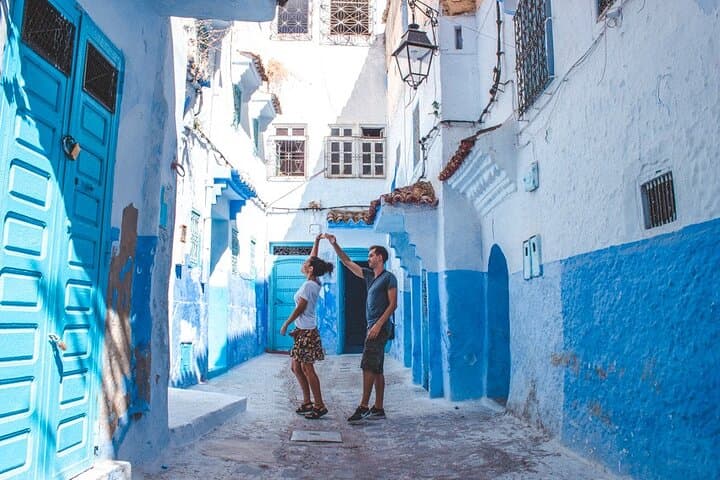
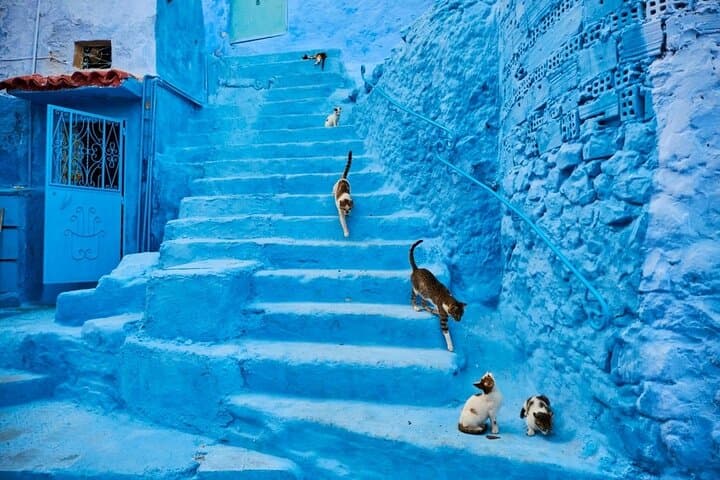
By midmorning you land in Tangier and climb out into the Rif Mountains. Chefchaouen sits like a painted village on a hillside at roughly 600 m; its alleys are washed in blues that cool the eyes and contrast with the ochre slopes around it. Founded in the 15th century by Moorish and Andalusian refugees, the town blends Spanish-Muslim architecture, mountain livelihoods, and a history tied to cross-strait trade and migration.
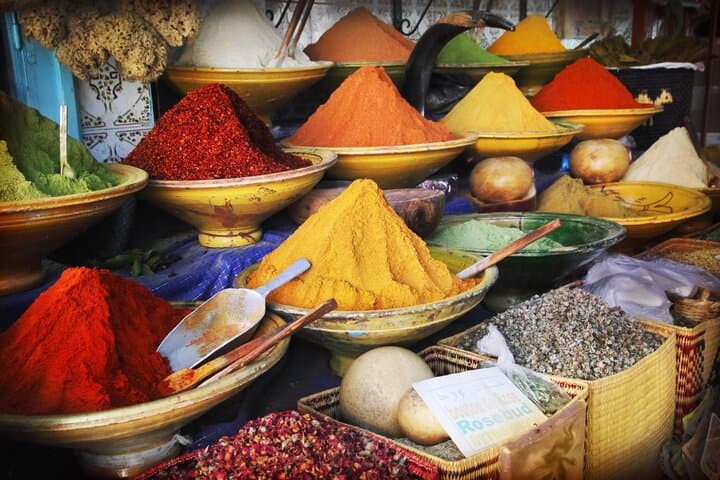
Geologically the Rif is a folded range of limestone and shale; roads wind through steep valleys and terraced agriculture. Culturally, expect friendly shopkeepers, woven wool goods, and small cafés where mint tea is served with deliberate ceremony. The town’s kasbah and the climb to the Spanish Mosque offer compact but rewarding vantage points.
Practical guidance: this is a long, 12–15 hour day with multiple border formalities — passports and ferry data are required. Wear sturdy walking shoes for uneven cobbles, carry cash (Moroccan dirham) for small purchases, and bring water and sun protection. The trip is best for travelers ready for a full day of travel and walking: you’ll trade a night’s comfort for a concentrated immersion into northern Morocco’s colors, scents, and mountain roads.
moderate.
12–15 hours.
Suitable for travelers in average fitness who can manage several hours of walking and a long travel day.
Visa requirements depend on your nationality; many passport holders can enter Morocco visa-free for short stays, but check current embassy rules before travel.
Ferry time varies by port — crossings from Tarifa are around 1 hour, from Algeciras can be 1–2 hours depending on destination and vessel.
Yes: the itinerary allocates time for walking the medina, visiting the kasbah area, and reaching a nearby viewpoint, but it’s a compact visit rather than an overnight exploration.
Moroccan dirham (MAD) is used locally; exchange some cash before arrival or withdraw at ATMs in Tangier or Chefchaouen.
Chefchaouen was founded in 1471 by Moorish and Andalusian refugees and later served as a mountain stronghold and trading hub between the coast and interior.
The region faces water scarcity and pressure from day tourism; minimize impact by staying on paths, avoiding single-use plastics, and buying from local artisans.
Not Just a Tourist operates guided outdoor trips and adventures with an emphasis on safety, stewardship, and memorable experiences.
The day begins before sunrise in Seville: a quiet hotel pickup, the hum of an air-conditioned van, and a long, steady drive toward the southern Spanish ports. Along the coast the Mediterranean leans into the Atlantic; ferries queue and, if luck is on your side, pods of dolphins will slice through the wake as the ferry pushes off — the sea almost daring you to keep watching.
The day begins before sunrise in Seville: a quiet hotel pickup, the hum of an air-conditioned van, and a long, steady drive toward the southern Spanish ports. Along the coast the Mediterranean leans into the Atlantic; ferries queue and, if luck is on your side, pods of dolphins will slice through the wake as the ferry pushes off — the sea almost daring you to keep watching.
By midmorning you land in Tangier and climb out into the Rif Mountains. Chefchaouen sits like a painted village on a hillside at roughly 600 m; its alleys are washed in blues that cool the eyes and contrast with the ochre slopes around it. Founded in the 15th century by Moorish and Andalusian refugees, the town blends Spanish-Muslim architecture, mountain livelihoods, and a history tied to cross-strait trade and migration.
Geologically the Rif is a folded range of limestone and shale; roads wind through steep valleys and terraced agriculture. Culturally, expect friendly shopkeepers, woven wool goods, and small cafés where mint tea is served with deliberate ceremony. The town’s kasbah and the climb to the Spanish Mosque offer compact but rewarding vantage points.
Practical guidance: this is a long, 12–15 hour day with multiple border formalities — passports and ferry data are required. Wear sturdy walking shoes for uneven cobbles, carry cash (Moroccan dirham) for small purchases, and bring water and sun protection. The trip is best for travelers ready for a full day of travel and walking: you’ll trade a night’s comfort for a concentrated immersion into northern Morocco’s colors, scents, and mountain roads.