THE ADVENTURE COLLECTIVE® · Independent discovery and booking for outdoor travel

Experience volcano views, cloud-forest waterfalls and a 500m cable car on a full-day private trip from Quito to Baños de Agua Santa. Long but accessible, this route packs multiple microclimates and dramatic cascades into one unforgettable day.
Experience volcano views, cloud-forest waterfalls and a 500m cable car on a full-day private trip from Quito to Baños de Agua Santa. Long but accessible, this route packs multiple microclimates and dramatic cascades into one unforgettable day.
You step out of the minivan as cloud and heat trade places — mist clings to the canyon walls while sunlight punches through gaps, spotlighting the thundering curtains of Pailón del Diablo. The road from Quito climbs past volcanic cones — Antisana, the Ilinizas, Cotopaxi and Tungurahua — then drops into the green incision of the Pastaza River, where cloud forest quickly takes the stage.
Verified experiences and guided adventures in the surrounding area.
Operated by Ecuador Best Tours · Baños de Agua Santa, Tungurahua
You step out of the minivan as cloud and heat trade places — mist clings to the canyon walls while sunlight punches through gaps, spotlighting the thundering curtains of Pailón del Diablo. The road from Quito climbs past volcanic cones — Antisana, the Ilinizas, Cotopaxi and Tungurahua — then drops into the green incision of the Pastaza River, where cloud forest quickly takes the stage.
Baños de Agua Santa grew around thermal springs; locals have used the waters for generations, and the town’s culture is built on adventure tourism and agriculture. Geologically the area marks the eastern edge of the Northern Andes, where steep canyons expose volcanic deposits and fast-flowing tributaries shape dramatic waterfalls like Manto de la Novia and the lesser-known Machay.
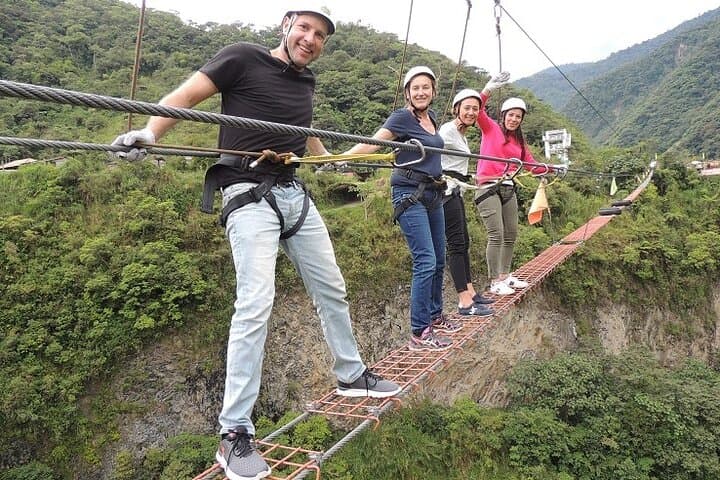
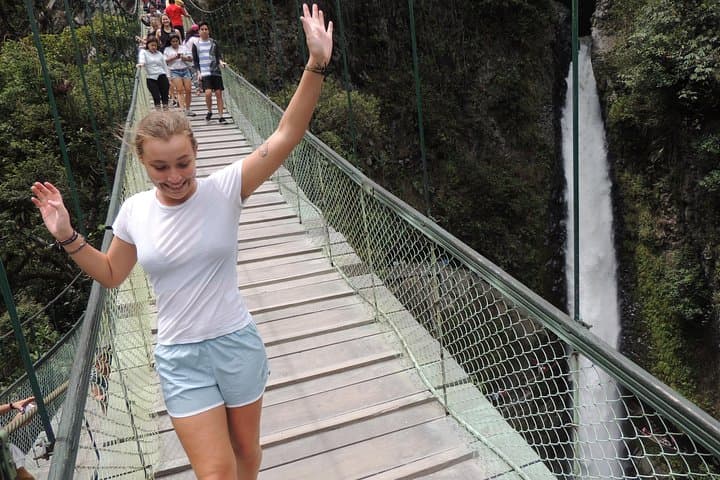
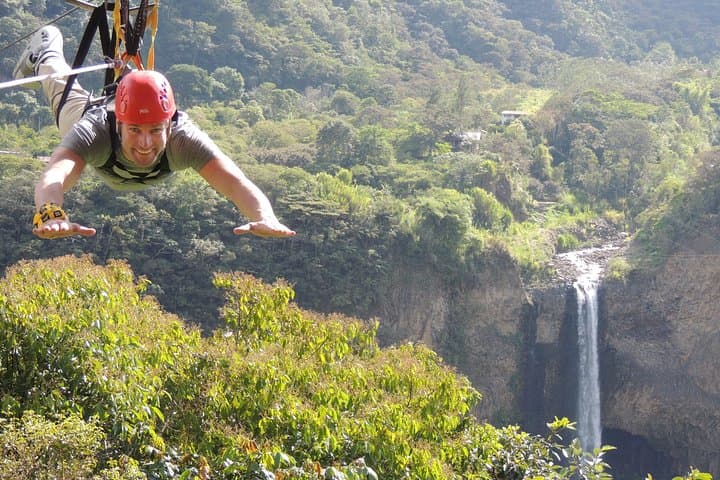
On a guided day trip you’ll walk village streets, cross a 500m cable car over the Pastaza canyon, descend staircases that hug wet rock, and learn how hydroelectric projects and traditional farming share the river valley. The fauna shifts from high-Andean birds near the volcanoes to humid-forest species as you move east; orchids and mosses take on architectural roles on trunks and cliffs.
Practical edge: this is a long, full-day excursion (about 11–12 hours) with short hikes and lots of stairs — bring sturdy shoes, a waterproof layer, and water. Expect microclimates: sun, wind, cloud and rain can arrive within an hour. Timing your visit for morning departure from Quito gives the clearest views of the volcanoes and more time to explore each waterfall and viewpoint before returning after dusk.
easy.
11–12 hours.
Suitable for travelers in basic fitness who can manage short hikes, stair descents and a full day in a vehicle.
Expect a full day: roughly 11–12 hours total including driving time and stops, with pick up in Quito around 7:30 a.m. and return near early evening.
Yes — the itinerary is labeled suitable for all fitness levels, though families should be prepared for stairs, brief hikes and long vehicle time.
The tour description lists some admissions as included; verify with the operator before booking which specific site fees are covered.
Quito sits at high altitude (~2,850 m) but Baños is lower; if you arrive from sea level, allow a day to acclimate in Quito and stay hydrated — severe cases are uncommon on this route.
Baños developed around hot springs that have been used since pre-Columbian and colonial times; the town’s modern economy blends tourism with agriculture and artisan crafts.
The valley faces visitor-impact pressures: stick to marked trails, avoid feeding wildlife, and consider hiring local guides to support community-based conservation.
Ecuador Best Tours operates guided outdoor trips and adventures with an emphasis on safety, stewardship, and memorable experiences.
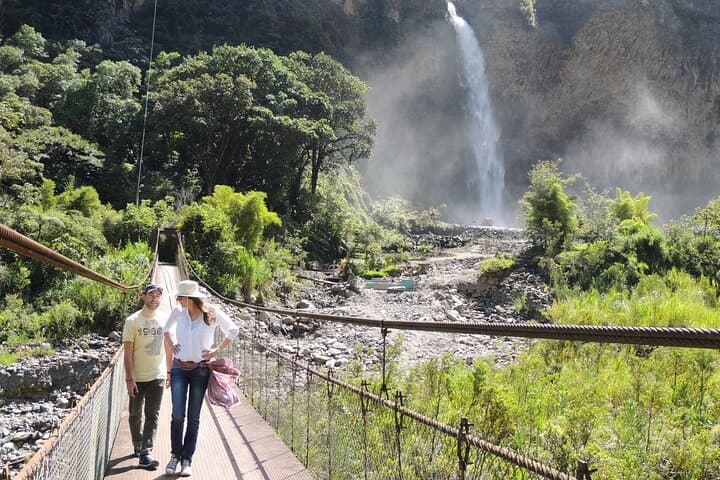
You step out of the minivan as cloud and heat trade places — mist clings to the canyon walls while sunlight punches through gaps, spotlighting the thundering curtains of Pailón del Diablo. The road from Quito climbs past volcanic cones — Antisana, the Ilinizas, Cotopaxi and Tungurahua — then drops into the green incision of the Pastaza River, where cloud forest quickly takes the stage.
You step out of the minivan as cloud and heat trade places — mist clings to the canyon walls while sunlight punches through gaps, spotlighting the thundering curtains of Pailón del Diablo. The road from Quito climbs past volcanic cones — Antisana, the Ilinizas, Cotopaxi and Tungurahua — then drops into the green incision of the Pastaza River, where cloud forest quickly takes the stage.
Baños de Agua Santa grew around thermal springs; locals have used the waters for generations, and the town’s culture is built on adventure tourism and agriculture. Geologically the area marks the eastern edge of the Northern Andes, where steep canyons expose volcanic deposits and fast-flowing tributaries shape dramatic waterfalls like Manto de la Novia and the lesser-known Machay.
On a guided day trip you’ll walk village streets, cross a 500m cable car over the Pastaza canyon, descend staircases that hug wet rock, and learn how hydroelectric projects and traditional farming share the river valley. The fauna shifts from high-Andean birds near the volcanoes to humid-forest species as you move east; orchids and mosses take on architectural roles on trunks and cliffs.
Practical edge: this is a long, full-day excursion (about 11–12 hours) with short hikes and lots of stairs — bring sturdy shoes, a waterproof layer, and water. Expect microclimates: sun, wind, cloud and rain can arrive within an hour. Timing your visit for morning departure from Quito gives the clearest views of the volcanoes and more time to explore each waterfall and viewpoint before returning after dusk.