THE ADVENTURE COLLECTIVE® · Independent discovery and booking for outdoor travel

A full‑day guided tour from Colombo to Anuradhapura that visits Jetavanarama, Ruwanweliseya, the Jaya Sri Maha Bodhi and other ancient monuments—ideal for history fans and seekers of spiritual heritage.
A full‑day guided tour from Colombo to Anuradhapura that visits Jetavanarama, Ruwanweliseya, the Jaya Sri Maha Bodhi and other ancient monuments—ideal for history fans and seekers of spiritual heritage.
You step out of the air‑conditioned vehicle into a heat that settles like a slow hand on ancient stone. The sky is wide above Anuradhapura; stupas and banyan crowns puncture that openness, and the silence between monuments feels curated by centuries of ritual.
Verified experiences and guided adventures in the surrounding area.
Operated by Lakpura LLC · Anuradhapura, North Central Province
You step out of the air‑conditioned vehicle into a heat that settles like a slow hand on ancient stone. The sky is wide above Anuradhapura; stupas and banyan crowns puncture that openness, and the silence between monuments feels curated by centuries of ritual.
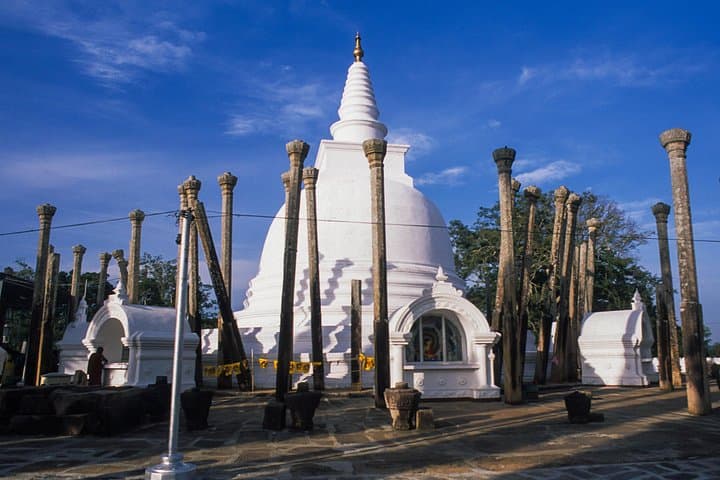
Anuradhapura was the capital of Sri Lanka for over a millennium and the ruins still map the power of an island kingdom: massive brick dagobas such as Jetavanarama, the patient immensity of Ruwanweliseya, and the Jaya Sri Maha Bodhi—the sacred fig planted in 288 BCE—whose leaves whisper through pilgrim prayers. Geologically the area sits on ancient Precambrian bedrock with seasonally dry plains dotted by man‑made tanks (reservoirs) that once irrigated this urban center.
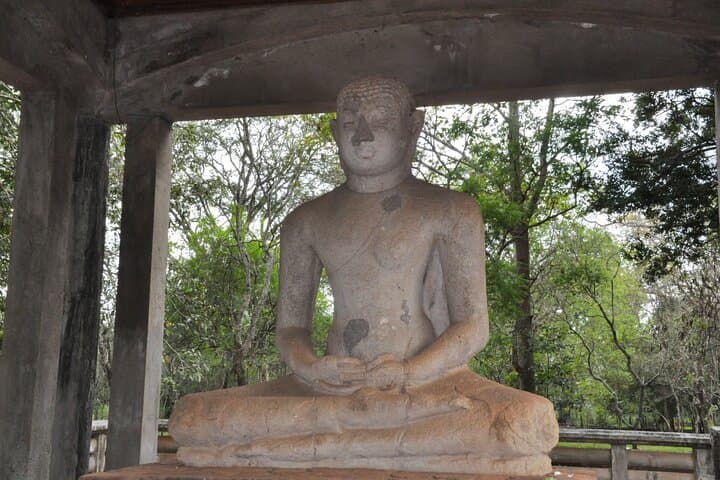
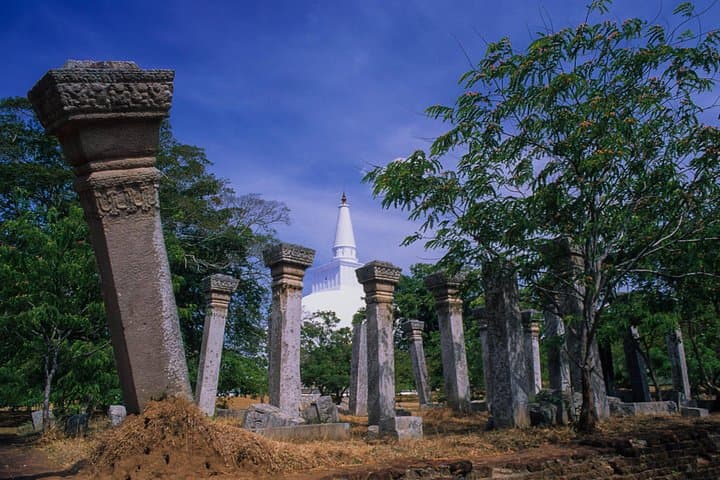
Culture here is public and devotional. Monks preside at shrines; offerings are routine; inscriptions and carved pillars speak to royal patronage and Brahmi script that recorded law and piety. Nearby Mihintale, where Buddhism took root on the island, adds the climbable archaeology of monastic platforms and caves.
Practical guidance: this is a full‑day outing (roughly 12 hours from Colombo) with easy walking between dispersed sites and some stair climbs at Mihintale. Bring a reusable water bottle, sun protection and clothes that cover shoulders and knees for temple entry. Expect dusty paths and pockets of shade beneath banyans; footwear should be easy to remove for shrines. The best windows for photography are early morning light and late afternoon warmth when brick takes on ochre tones.
Whether you arrive from Colombo on a guided transfer or stay overnight in Anuradhapura, plan for hydration, respectful dress, and a slow pace—the ruins reward those who let the place set the tempo.
easy.
12 hours.
Suitable for most fitness levels; expect moderate walking on flat and uneven surfaces with occasional stairs.
This is a full‑day tour of about 12 hours including round‑trip transfer time between Colombo and Anuradhapura.
Most sites are visited externally or with local guidance; specific entry fees vary—confirm with the operator before booking.
Yes—routes are generally flat and suitable for most ages, though there is walking and some steps at sites like Mihintale.
Yes—tours include stops for lunch; bring snacks if you prefer particular dietary needs.
Anuradhapura was Sri Lanka’s capital from the 4th century BCE to the 10th century CE and became a major Buddhist monastic center under royal patronage.
Many sites are fragile—stick to designated paths, avoid climbing unmarked structures, and support local guides who help protect the ruins.
Lakpura LLC operates guided outdoor trips and adventures with an emphasis on safety, stewardship, and memorable experiences.
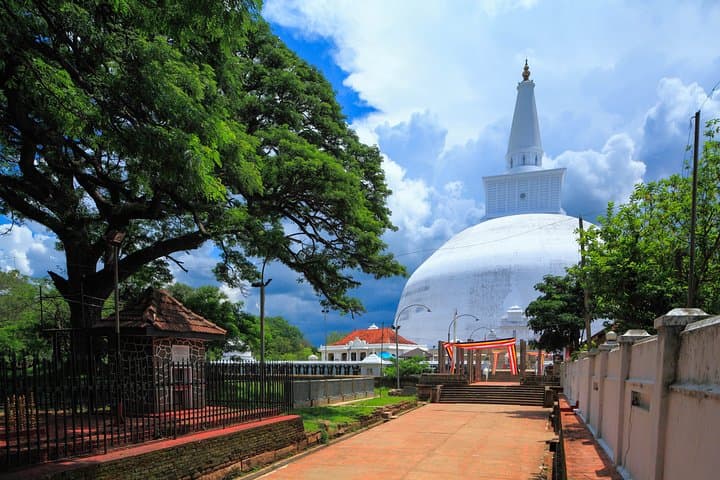
You step out of the air‑conditioned vehicle into a heat that settles like a slow hand on ancient stone. The sky is wide above Anuradhapura; stupas and banyan crowns puncture that openness, and the silence between monuments feels curated by centuries of ritual.
You step out of the air‑conditioned vehicle into a heat that settles like a slow hand on ancient stone. The sky is wide above Anuradhapura; stupas and banyan crowns puncture that openness, and the silence between monuments feels curated by centuries of ritual.
Anuradhapura was the capital of Sri Lanka for over a millennium and the ruins still map the power of an island kingdom: massive brick dagobas such as Jetavanarama, the patient immensity of Ruwanweliseya, and the Jaya Sri Maha Bodhi—the sacred fig planted in 288 BCE—whose leaves whisper through pilgrim prayers. Geologically the area sits on ancient Precambrian bedrock with seasonally dry plains dotted by man‑made tanks (reservoirs) that once irrigated this urban center.
Culture here is public and devotional. Monks preside at shrines; offerings are routine; inscriptions and carved pillars speak to royal patronage and Brahmi script that recorded law and piety. Nearby Mihintale, where Buddhism took root on the island, adds the climbable archaeology of monastic platforms and caves.
Practical guidance: this is a full‑day outing (roughly 12 hours from Colombo) with easy walking between dispersed sites and some stair climbs at Mihintale. Bring a reusable water bottle, sun protection and clothes that cover shoulders and knees for temple entry. Expect dusty paths and pockets of shade beneath banyans; footwear should be easy to remove for shrines. The best windows for photography are early morning light and late afternoon warmth when brick takes on ochre tones.
Whether you arrive from Colombo on a guided transfer or stay overnight in Anuradhapura, plan for hydration, respectful dress, and a slow pace—the ruins reward those who let the place set the tempo.