THE ADVENTURE COLLECTIVE® · Independent discovery and booking for outdoor travel

Fly from Cairo to Aswan for a full-day private tour of Philae and Abu Simbel. This long but manageable day pairs short flights, Nile crossings, and world-class temple architecture with an Egyptologist guide.
Fly from Cairo to Aswan for a full-day private tour of Philae and Abu Simbel. This long but manageable day pairs short flights, Nile crossings, and world-class temple architecture with an Egyptologist guide.
Before sunrise you feel the city loosen its grip as a private car carries you to Cairo’s domestic terminal. The day unfolds like a long, bright ribbon: a short domestic flight to Aswan, a boat crossing where the Nile dares you to look downstream, then the carved faces of Ramses II rising from desert rock at Abu Simbel.
Verified experiences and guided adventures in the surrounding area.
Operated by Nile Prince Travel · Aswan, Aswan Governorate
Before sunrise you feel the city loosen its grip as a private car carries you to Cairo’s domestic terminal. The day unfolds like a long, bright ribbon: a short domestic flight to Aswan, a boat crossing where the Nile dares you to look downstream, then the carved faces of Ramses II rising from desert rock at Abu Simbel.
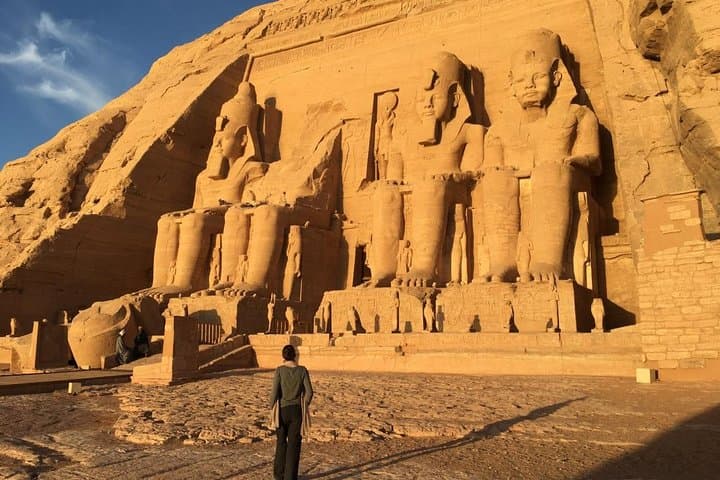
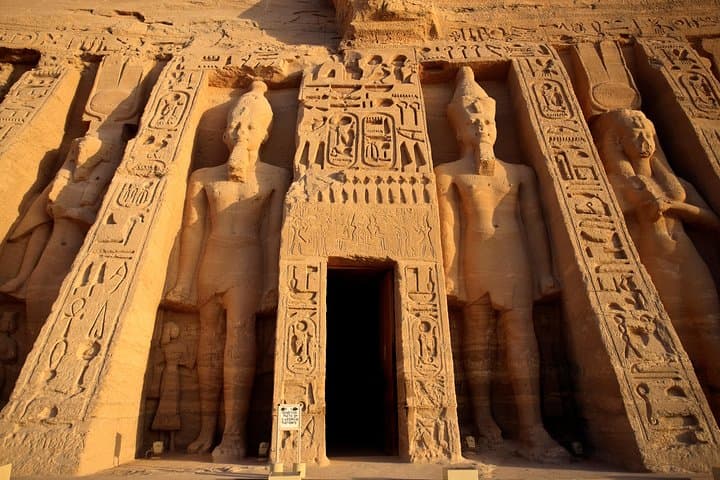
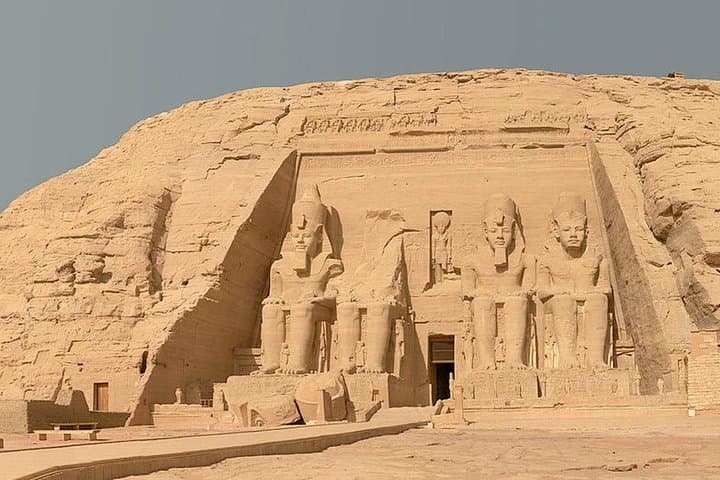
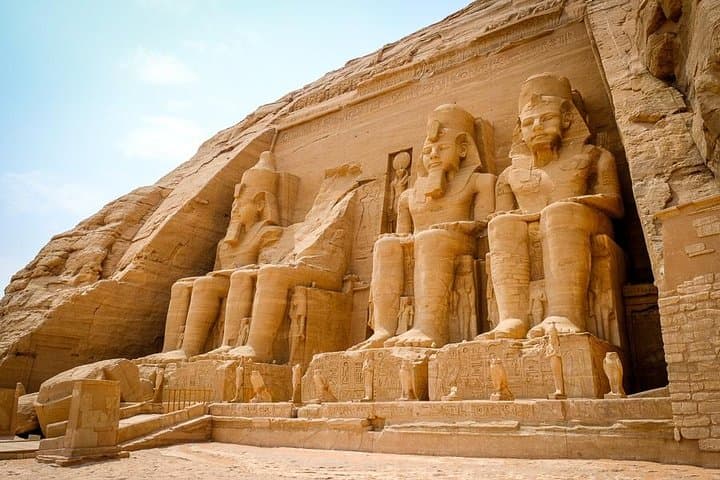
Philae sits in the river’s calm—stone rooms that once echoed with Isis’ rites now receive steady foot traffic and the Nile’s wind. Abu Simbel, hewn into a cliff by Ramesses II in the 13th century BCE, was moved, block by block, in the 1960s to escape the rising waters of the Aswan High Dam—a modern engineering rescue that saved an ancient gesture of power.
Expect hard stony surfaces, shallow temple chambers, and wide-open façades sculpted to catch the sun. Local guides lay out the layers: pharaonic politics, Nubian frontiers, and the twentieth-century diplomacy that preserved these sites. Lunch breaks the day with simple Egyptian fare; bottled water keeps the heat from stealing focus.
Practicalities matter: the tour is a long day—roughly 12–13 hours—with early pickup from Cairo and internal flights included. Wear sturdy, closed shoes for uneven quarry floors, sun protection, and carry your passport for flights and checkpoint checks. Mobility access is possible in many areas but surfaces and steps remain. Respect the reliefs—no touching—and follow your Egyptologist guide’s timing to make the most of each temple without rushing the stones.
easy.
12–13 hours.
Suitable for most fitness levels but requires stamina for a long day, short walks, and standing during tours.
Yes—domestic return flights from Cairo to Aswan are included in the tour price.
Entrance fees are typically not included; check booking details and be prepared to pay site entry fees if required.
The tour lists accessibility options, but some temple areas have steps and uneven surfaces—notify the operator in advance to arrange assistance.
A restaurant lunch and bottled water are included; dietary requests should be communicated during booking.
Abu Simbel was carved by order of Ramesses II in the 13th century BCE as a display of imperial power; the temples were relocated in the 1960s to avoid inundation from the Aswan High Dam under an international UNESCO-driven project.
The 1960s relocation preserved the temples, but heavy tourism and environmental factors still require site management—stay on marked paths and avoid touching reliefs to protect fragile stone.
Nile Prince Travel operates guided outdoor trips and adventures with an emphasis on safety, stewardship, and memorable experiences.
Before sunrise you feel the city loosen its grip as a private car carries you to Cairo’s domestic terminal. The day unfolds like a long, bright ribbon: a short domestic flight to Aswan, a boat crossing where the Nile dares you to look downstream, then the carved faces of Ramses II rising from desert rock at Abu Simbel.
Before sunrise you feel the city loosen its grip as a private car carries you to Cairo’s domestic terminal. The day unfolds like a long, bright ribbon: a short domestic flight to Aswan, a boat crossing where the Nile dares you to look downstream, then the carved faces of Ramses II rising from desert rock at Abu Simbel.
Philae sits in the river’s calm—stone rooms that once echoed with Isis’ rites now receive steady foot traffic and the Nile’s wind. Abu Simbel, hewn into a cliff by Ramesses II in the 13th century BCE, was moved, block by block, in the 1960s to escape the rising waters of the Aswan High Dam—a modern engineering rescue that saved an ancient gesture of power.
Expect hard stony surfaces, shallow temple chambers, and wide-open façades sculpted to catch the sun. Local guides lay out the layers: pharaonic politics, Nubian frontiers, and the twentieth-century diplomacy that preserved these sites. Lunch breaks the day with simple Egyptian fare; bottled water keeps the heat from stealing focus.
Practicalities matter: the tour is a long day—roughly 12–13 hours—with early pickup from Cairo and internal flights included. Wear sturdy, closed shoes for uneven quarry floors, sun protection, and carry your passport for flights and checkpoint checks. Mobility access is possible in many areas but surfaces and steps remain. Respect the reliefs—no touching—and follow your Egyptologist guide’s timing to make the most of each temple without rushing the stones.