THE ADVENTURE COLLECTIVE® · Independent discovery and booking for outdoor travel

Make Abu Simbel accessible in a single day: fly to Aswan, drive along Lake Nasser and spend the morning among Ramses II’s monumental temples. This practical guide explains what to expect, how the temples were saved from the dam, and what to pack for the trip.
Make Abu Simbel accessible in a single day: fly to Aswan, drive along Lake Nasser and spend the morning among Ramses II’s monumental temples. This practical guide explains what to expect, how the temples were saved from the dam, and what to pack for the trip.
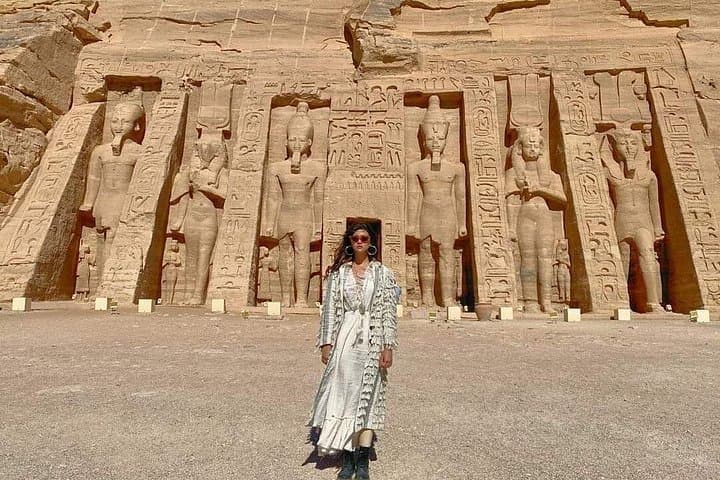
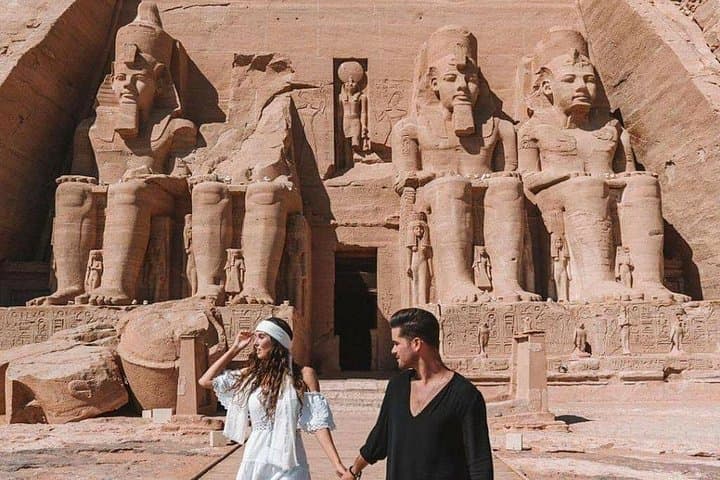
You arrive at Aswan with the morning sun already hard on the runway, then settle into a road that edges Lake Nasser — the water seems to dare the desert to keep its secrets. An hour-and-a-half flight from Cairo collapses the map; a three- to four-hour drive south opens it again, bringing you to the colossal rock-cut facades of Abu Simbel where four seated colossi of Ramses II stare out across the lake.
Verified experiences and guided adventures in the surrounding area.
Operated by Sun Pyramids Tours · Abu Simbel, Aswan Governorate
You arrive at Aswan with the morning sun already hard on the runway, then settle into a road that edges Lake Nasser — the water seems to dare the desert to keep its secrets. An hour-and-a-half flight from Cairo collapses the map; a three- to four-hour drive south opens it again, bringing you to the colossal rock-cut facades of Abu Simbel where four seated colossi of Ramses II stare out across the lake.
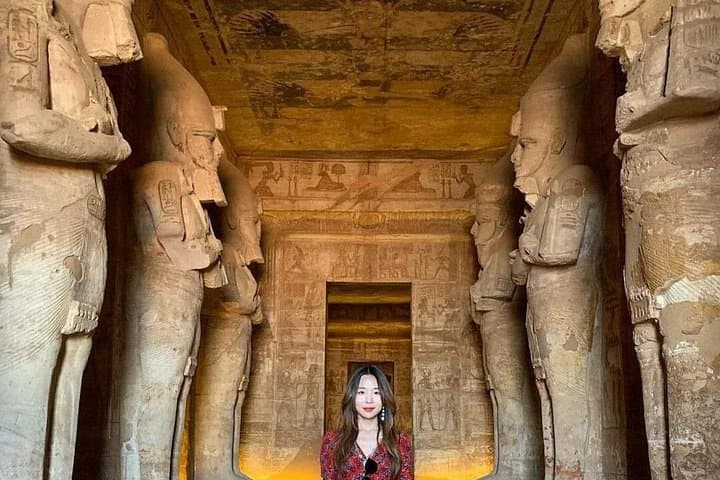
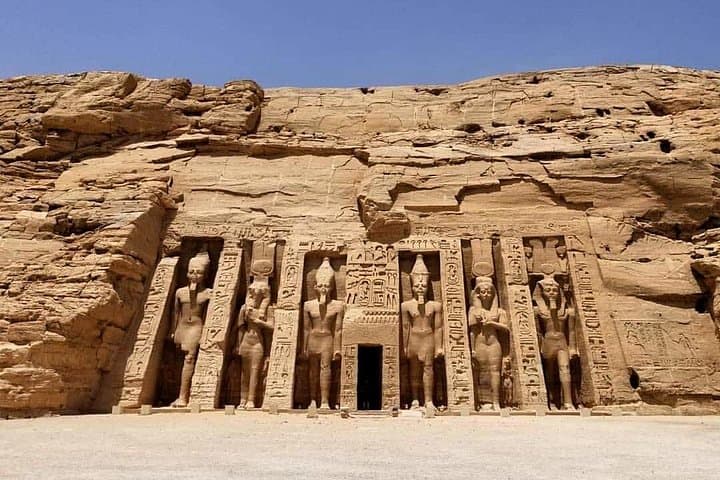
The twin temples date to the 13th century BCE and were re-cut into massive blocks and moved, stone by numbered stone, in the 1960s to escape the rising waters behind the Aswan High Dam — a major international conservation effort led by UNESCO. The temples are carved from sandstone into a cliff face; interiors hold reliefs of the Battle of Kadesh and richly painted chambers dedicated to Nefertari and the gods.
Expect stark desert geology, sudden shade in cavernous halls, and the Nubian cultural presence in local crafts and food at Aswan's markets. Photography is allowed but be mindful of glass cases and low-light in inner sanctums.
Practicalities: the full excursion runs about 10–12 hours door-to-door; the road leg is roughly 280–300 km each way from Aswan (plan 3–4 hours driving). Wear sturdy shoes for uneven stone, bring 2–3 liters of water, sun protection, and your passport — tours typically include domestic flights and entrance fees. Aim for early departures to avoid mid-afternoon heat and allow time to absorb the carvings without rushing the return flight to Cairo.
easy.
10–12 hours.
Suitable for travelers in average fitness — involves short walks and standing during temple visits.
Road distance is roughly 280–300 km and typically takes about 3–4 hours one way depending on stops and road conditions.
The site offers level approaches to the main façades, but interior chambers have steps and low thresholds; check operator accessibility details if mobility is a concern.
Yes, casual photography is generally allowed, but avoid tripods or flash when signs prohibit them and respect site staff instructions.
A valid passport is required for domestic flights and tour booking; international visitors should ensure their Egypt entry visa requirements are met prior to travel.
The twin temples were carved in the 13th century BCE for Ramses II and Nefertari; in the 1960s they were dismantled and reassembled on higher ground to avoid the reservoir created by the Aswan High Dam.
The relocation was an early large-scale cultural conservation project; ongoing protection focuses on controlling visitor impact, managing humidity, and preventing erosion from tourism.
Sun Pyramids Tours operates guided outdoor trips and adventures with an emphasis on safety, stewardship, and memorable experiences.
You arrive at Aswan with the morning sun already hard on the runway, then settle into a road that edges Lake Nasser — the water seems to dare the desert to keep its secrets. An hour-and-a-half flight from Cairo collapses the map; a three- to four-hour drive south opens it again, bringing you to the colossal rock-cut facades of Abu Simbel where four seated colossi of Ramses II stare out across the lake.
You arrive at Aswan with the morning sun already hard on the runway, then settle into a road that edges Lake Nasser — the water seems to dare the desert to keep its secrets. An hour-and-a-half flight from Cairo collapses the map; a three- to four-hour drive south opens it again, bringing you to the colossal rock-cut facades of Abu Simbel where four seated colossi of Ramses II stare out across the lake.
The twin temples date to the 13th century BCE and were re-cut into massive blocks and moved, stone by numbered stone, in the 1960s to escape the rising waters behind the Aswan High Dam — a major international conservation effort led by UNESCO. The temples are carved from sandstone into a cliff face; interiors hold reliefs of the Battle of Kadesh and richly painted chambers dedicated to Nefertari and the gods.
Expect stark desert geology, sudden shade in cavernous halls, and the Nubian cultural presence in local crafts and food at Aswan's markets. Photography is allowed but be mindful of glass cases and low-light in inner sanctums.
Practicalities: the full excursion runs about 10–12 hours door-to-door; the road leg is roughly 280–300 km each way from Aswan (plan 3–4 hours driving). Wear sturdy shoes for uneven stone, bring 2–3 liters of water, sun protection, and your passport — tours typically include domestic flights and entrance fees. Aim for early departures to avoid mid-afternoon heat and allow time to absorb the carvings without rushing the return flight to Cairo.