THE ADVENTURE COLLECTIVE® · Independent discovery and booking for outdoor travel

Travelers depart Aswan before sunrise for a long, rewarding day at Abu Simbel—two hours at the relocated Ramesses II temples, interpretive displays, and dramatic desert-and-lake scenery. This guide explains what to expect, how to prepare, and practical tips for the long drive and limited time on site.
Travelers depart Aswan before sunrise for a long, rewarding day at Abu Simbel—two hours at the relocated Ramesses II temples, interpretive displays, and dramatic desert-and-lake scenery. This guide explains what to expect, how to prepare, and practical tips for the long drive and limited time on site.
Before dawn a minibus eases out of Aswan, headlights cutting through a black desert that slowly lightens to ochre. The road to Abu Simbel unspools along the rim of Lake Nasser, and by midmorning the four colossal faces of Ramesses II greet visitors with a scale that reorders perspective: stone carved at human scale, now dwarfed by history.
Verified experiences and guided adventures in the surrounding area.
Operated by Canary Tours Egypt · Abu Simbel, Aswan Governorate
Before dawn a minibus eases out of Aswan, headlights cutting through a black desert that slowly lightens to ochre. The road to Abu Simbel unspools along the rim of Lake Nasser, and by midmorning the four colossal faces of Ramesses II greet visitors with a scale that reorders perspective: stone carved at human scale, now dwarfed by history.
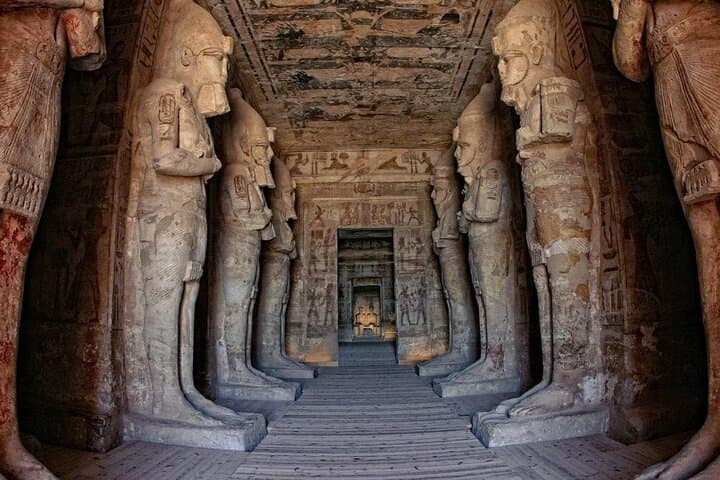
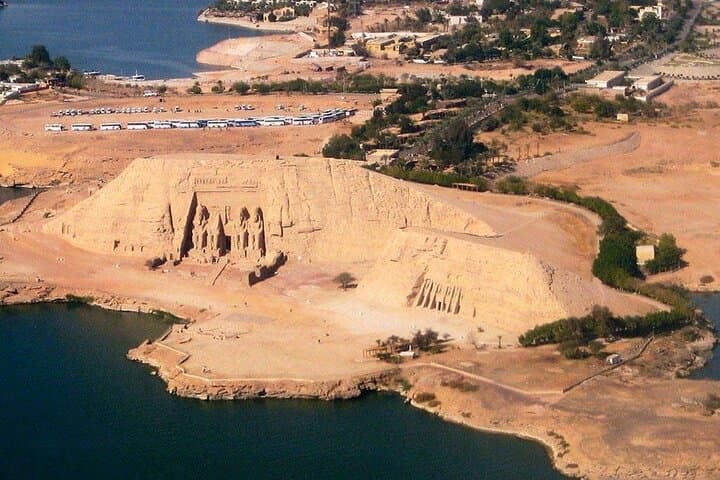
The temples at Abu Simbel date to the 13th century BCE, built by Ramesses II and later relocated in the 1960s to avoid inundation from the Aswan High Dam. The geology here is hard sandstone and granite, bleached by sun and wind; the relocation itself is part of the modern story you’ll see in on-site information panels.
Culturally, the site links Pharaonic statecraft to modern conservation—local guides often explain the engineering effort and the Sun Festival alignment that annually illuminates the inner sanctum.
Practically, expect an early pickup from Aswan or your Nile cruise (often around 4:00 AM), a roughly three-hour drive each way, and a two-hour window at the temple complex. The visit involves short walks on compacted sand and stone with limited shade. Bring sun protection, carry water, and plan for bright midday light in photos. Tours run year-round; winter mornings can be cool while summers are intensely hot.
The experience balances awe with accessibility: an easy-paced, long-day excursion that places travelers within one of Egypt’s most dramatic archaeological projects and the sweep of Lake Nasser’s desert edge.
easy.
7–8 hours.
Suitable for most fitness levels; involves short, mostly flat walks on uneven sand and stone and long vehicle time.
The drive is about three hours each way; combined with a two-hour site visit expect a 7–8 hour day depending on traffic and exact pickup time.
The site has some accessible features and transportation is wheelchair-accessible, but there are uneven surfaces and short steps near temple entrances—check with the operator for assistance options.
Most shared tours include hotel/cruise pickup and drop-off and transport but not a full meal; confirm specifics with the operator and bring snacks if needed.
Photography is generally allowed in exterior and many interior areas, but follow site rules and guide directions—flash may be restricted in sensitive chambers.
Abu Simbel was commissioned by Ramesses II in the 13th century BCE and was painstakingly relocated in the 1960s to save it from Lake Nasser after construction of the Aswan High Dam.
The 1960s relocation is an early large-scale example of archaeological conservation; ongoing site maintenance monitors stone erosion and visitor impact, and operators encourage no-touch policies to protect reliefs.
Canary Tours Egypt operates guided outdoor trips and adventures with an emphasis on safety, stewardship, and memorable experiences.


Before dawn a minibus eases out of Aswan, headlights cutting through a black desert that slowly lightens to ochre. The road to Abu Simbel unspools along the rim of Lake Nasser, and by midmorning the four colossal faces of Ramesses II greet visitors with a scale that reorders perspective: stone carved at human scale, now dwarfed by history.
Before dawn a minibus eases out of Aswan, headlights cutting through a black desert that slowly lightens to ochre. The road to Abu Simbel unspools along the rim of Lake Nasser, and by midmorning the four colossal faces of Ramesses II greet visitors with a scale that reorders perspective: stone carved at human scale, now dwarfed by history.
The temples at Abu Simbel date to the 13th century BCE, built by Ramesses II and later relocated in the 1960s to avoid inundation from the Aswan High Dam. The geology here is hard sandstone and granite, bleached by sun and wind; the relocation itself is part of the modern story you’ll see in on-site information panels.
Culturally, the site links Pharaonic statecraft to modern conservation—local guides often explain the engineering effort and the Sun Festival alignment that annually illuminates the inner sanctum.
Practically, expect an early pickup from Aswan or your Nile cruise (often around 4:00 AM), a roughly three-hour drive each way, and a two-hour window at the temple complex. The visit involves short walks on compacted sand and stone with limited shade. Bring sun protection, carry water, and plan for bright midday light in photos. Tours run year-round; winter mornings can be cool while summers are intensely hot.
The experience balances awe with accessibility: an easy-paced, long-day excursion that places travelers within one of Egypt’s most dramatic archaeological projects and the sweep of Lake Nasser’s desert edge.