THE ADVENTURE COLLECTIVE® · Independent discovery and booking for outdoor travel

Experience limestone cliffs, a sampan ride through Tam Coc’s caves, and a climb to Mua Cave viewpoint on a long, guided day trip from Hanoi. This full-day combines history at Hoa Lu with gentle cycling and riverside scenery.
Experience limestone cliffs, a sampan ride through Tam Coc’s caves, and a climb to Mua Cave viewpoint on a long, guided day trip from Hanoi. This full-day combines history at Hoa Lu with gentle cycling and riverside scenery.
A morning bus threads out of Hanoi and the landscape loosens: low karst towers rise like stacked stone ribs, rice paddies flatten to mirror the sky, and the Ngo Dong River waits, patient and insistent. On arrival, travelers first step into Hoa Lu’s compact complex of Dinh and Le temples, where carved stone and simple courtyards outline Vietnam’s 10th–11th century royal footprint.
Verified experiences and guided adventures in the surrounding area.
Operated by SWALLOW TRAVEL · Tam Coc, Ninh Binh Province
A morning bus threads out of Hanoi and the landscape loosens: low karst towers rise like stacked stone ribs, rice paddies flatten to mirror the sky, and the Ngo Dong River waits, patient and insistent. On arrival, travelers first step into Hoa Lu’s compact complex of Dinh and Le temples, where carved stone and simple courtyards outline Vietnam’s 10th–11th century royal footprint.
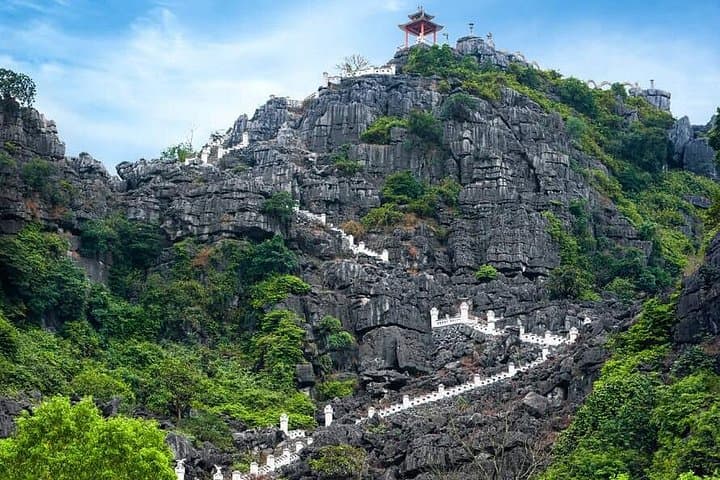
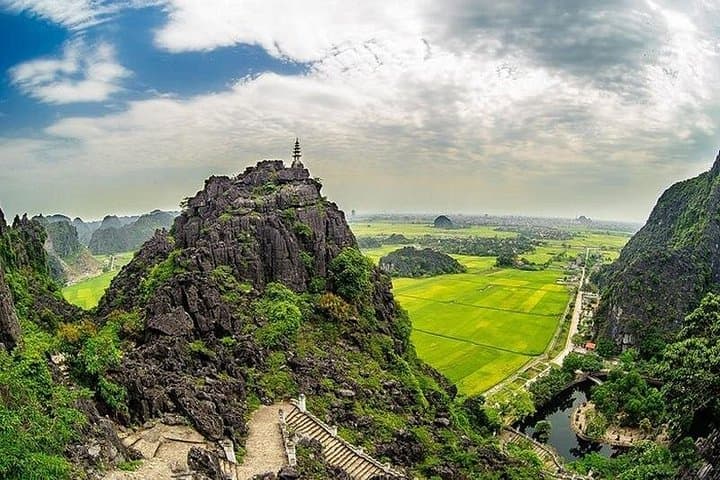
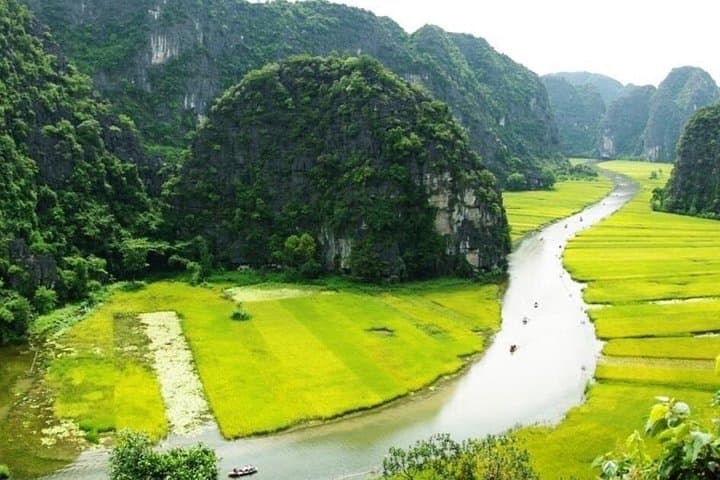
The geology here is limestone in active conversation with water—caves and grottoes carved by slow rivers over millennia. At Mua Cave a steep stone stairway climbs the flank of Ngoa Long Mountain, rewarding effort with a broad view of the Tam Coc river threading through rice plains and jagged cliffs.
After lunch, a local boatman will row the sampan through three limestone caves; the river’s current seems to pull the hull forward with curiosity, revealing rice terraces and small riverside hamlets. The day finishes with a relaxed cycle along flat country lanes that pass farmers, buffalo, and intermittent pagodas—an uncomplicated window into rural life.
Practical guidance: the outing is a long day (expect early pickup and a return to Hanoi in the evening), wear grippy shoes for the Mua climb, and bring sunscreen, a refillable water bottle, and modest clothing for temple visits. Morning light is best for photos and cooler walking; the village paths are unpaved in sections, so a comfortable hybrid bike or trekking footwear makes the cycling segment easier. Respect temple rules—cover shoulders and knees—and carry cash for small purchases or tips.
moderate.
12 hours.
Reasonable day-trip fitness; the Mua stair climb and several hours of standing/walking require stamina but no technical training.
The roundtrip is about 120 km each way; expect roughly 2–2.5 hours each way by air-conditioned limousine bus, depending on traffic.
Yes, the tour indicates that entrance fees and a buffet-style Vietnamese lunch are included in the itinerary.
Yes—cycling is on quiet country lanes and generally flat, suitable for beginners comfortable on a bike; hybrid or touring bikes are recommended.
The tour is family-friendly and suitable for a range of ages, but infants must sit on an adult's lap during transportation and guardians should assess the Mua stairs for young children.
Hoa Lu served as Vietnam’s capital in the 10th–11th centuries under the Dinh and Early Le dynasties, with temples honoring those early rulers.
Tourism concentrates in a few valley corridors—travelers should avoid littering, use refillable water, and keep to designated paths to protect fragile karst and ricefield habitats.
SWALLOW TRAVEL operates guided outdoor trips and adventures with an emphasis on safety, stewardship, and memorable experiences.

A morning bus threads out of Hanoi and the landscape loosens: low karst towers rise like stacked stone ribs, rice paddies flatten to mirror the sky, and the Ngo Dong River waits, patient and insistent. On arrival, travelers first step into Hoa Lu’s compact complex of Dinh and Le temples, where carved stone and simple courtyards outline Vietnam’s 10th–11th century royal footprint.
A morning bus threads out of Hanoi and the landscape loosens: low karst towers rise like stacked stone ribs, rice paddies flatten to mirror the sky, and the Ngo Dong River waits, patient and insistent. On arrival, travelers first step into Hoa Lu’s compact complex of Dinh and Le temples, where carved stone and simple courtyards outline Vietnam’s 10th–11th century royal footprint.
The geology here is limestone in active conversation with water—caves and grottoes carved by slow rivers over millennia. At Mua Cave a steep stone stairway climbs the flank of Ngoa Long Mountain, rewarding effort with a broad view of the Tam Coc river threading through rice plains and jagged cliffs.
After lunch, a local boatman will row the sampan through three limestone caves; the river’s current seems to pull the hull forward with curiosity, revealing rice terraces and small riverside hamlets. The day finishes with a relaxed cycle along flat country lanes that pass farmers, buffalo, and intermittent pagodas—an uncomplicated window into rural life.
Practical guidance: the outing is a long day (expect early pickup and a return to Hanoi in the evening), wear grippy shoes for the Mua climb, and bring sunscreen, a refillable water bottle, and modest clothing for temple visits. Morning light is best for photos and cooler walking; the village paths are unpaved in sections, so a comfortable hybrid bike or trekking footwear makes the cycling segment easier. Respect temple rules—cover shoulders and knees—and carry cash for small purchases or tips.