THE ADVENTURE COLLECTIVE® · Independent discovery and booking for outdoor travel

A full-day drive from Salta into the Quebrada de Humahuaca brings you to the Serranía del Hornocal—the vividly banded Hill of 14 Colors. This high-altitude, largely vehicle-based outing combines geology, indigenous towns and short viewpoint walks for a compact cultural and scenic day trip.
A full-day drive from Salta into the Quebrada de Humahuaca brings you to the Serranía del Hornocal—the vividly banded Hill of 14 Colors. This high-altitude, largely vehicle-based outing combines geology, indigenous towns and short viewpoint walks for a compact cultural and scenic day trip.
The bus eases out of Salta before dawn, the Andes light arriving slow and hard like a promise. Roads climb through dry puna and red badlands, villages appearing as clusters of low adobe roofs. By midmorning the valley opens to the Quebrada de Humahuaca and then to the switchbacks that lead toward Uquía; here a 4x4 takes over and the landscape suddenly becomes raw and vertical.
Verified experiences and guided adventures in the surrounding area.
Operated by La Quebrada Turismo · Humahuaca, Jujuy
The bus eases out of Salta before dawn, the Andes light arriving slow and hard like a promise. Roads climb through dry puna and red badlands, villages appearing as clusters of low adobe roofs. By midmorning the valley opens to the Quebrada de Humahuaca and then to the switchbacks that lead toward Uquía; here a 4x4 takes over and the landscape suddenly becomes raw and vertical.
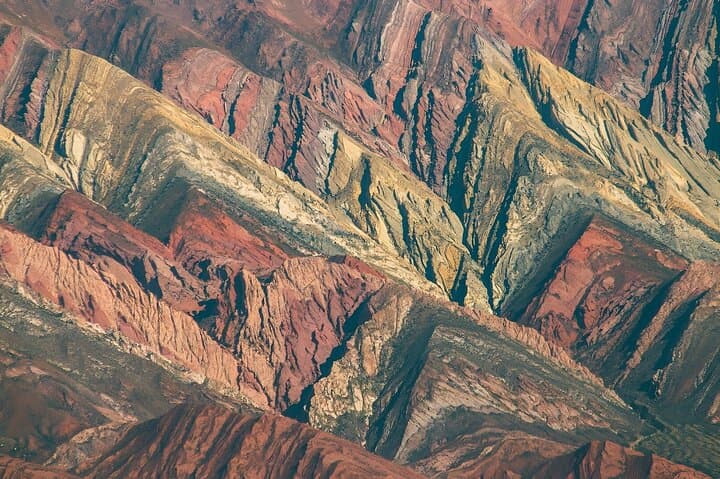
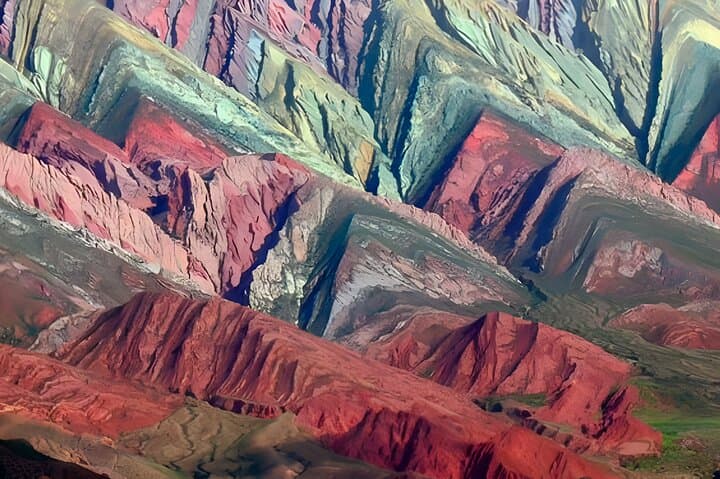
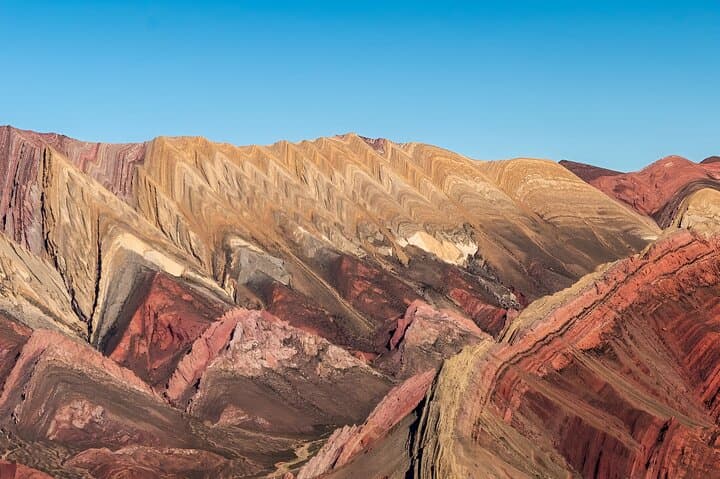
Serranías del Hornocal—often called the Hill of 14 Colors—was formed by millennia of uplift and erosion; fluted bands of limestone, shale and volcanic sediments now stand at roughly 4,350 meters, each stripe telling of shifting seas and mineral chemistry. The route threads through UNESCO-listed Quebrada de Humahuaca, a cultural corridor where indigenous communities, colonial churches and roadside ceramists keep Andean traditions alive.
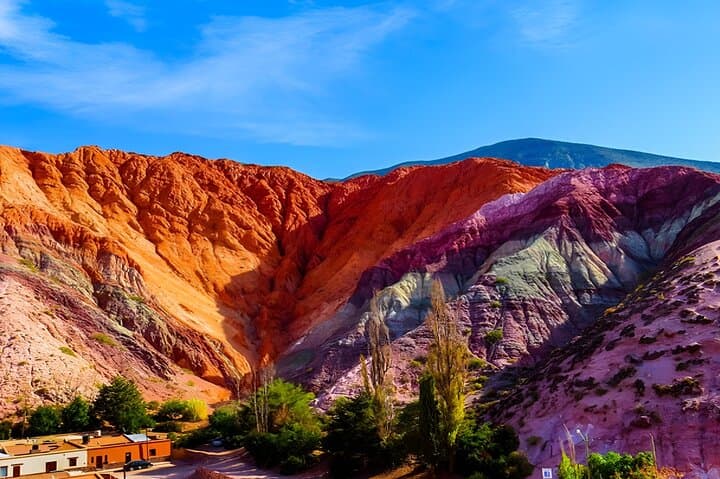
Expect panoramic viewpoints more than hikes: short, rocky walks from the 4x4 to ledges where wind shapes the light and clouds race across the painted cliffs. The program usually includes stops at Purmamarca’s Cerro de los Siete Colores, Tilcara’s Pucará ruins, the small church of Uquía and the Paleta del Pintor in Maimará—each offering a different angle on the ravine’s geology and human history.
Practical edge: this is a full 11–12 hour day at high altitude with long stretches in a vehicle and rough dirt roads near Hornocal. Acclimatize in Salta, carry water, sun protection and snacks, and wear a warm windproof layer for the viewpoint. Photographers will find changing light rewarding; travelers should plan for a long but efficient cultural-geological circuit.
moderate.
11–12 hours.
Suitable for travelers who can tolerate long vehicle transfers and short, uneven walks at high altitude; no sustained hiking required.
The tour runs about 11–12 hours total (typically 6:00–17:00), accounting for drives and several scheduled stops—confirm exact pickup times with the operator.
Yes—Hornocal sits around 4,300–4,400 m; travelers should acclimatize, avoid heavy exertion on arrival day, and carry medication if prone to altitude sickness.
There are technical stops for bathrooms and small shops; plan to bring a packed lunch since the itinerary often lacks time for a restaurant in Humahuaca.
Operators use a 4x4 for the last stretch to Hornocal due to steep, unpaved roads; travelers do not need their own vehicle as transfers are included.
The Quebrada de Humahuaca has been a trade and pilgrimage corridor for millennia and was later a strategic route during colonial and independence eras; Hornocal’s layers record ancient marine and volcanic activity.
This fragile high-altitude ecosystem is sensitive to erosion and litter; stick to paths, pack out trash and support local artisanal businesses to benefit communities.
La Quebrada Turismo operates guided outdoor trips and adventures with an emphasis on safety, stewardship, and memorable experiences.
The bus eases out of Salta before dawn, the Andes light arriving slow and hard like a promise. Roads climb through dry puna and red badlands, villages appearing as clusters of low adobe roofs. By midmorning the valley opens to the Quebrada de Humahuaca and then to the switchbacks that lead toward Uquía; here a 4x4 takes over and the landscape suddenly becomes raw and vertical.
The bus eases out of Salta before dawn, the Andes light arriving slow and hard like a promise. Roads climb through dry puna and red badlands, villages appearing as clusters of low adobe roofs. By midmorning the valley opens to the Quebrada de Humahuaca and then to the switchbacks that lead toward Uquía; here a 4x4 takes over and the landscape suddenly becomes raw and vertical.
Serranías del Hornocal—often called the Hill of 14 Colors—was formed by millennia of uplift and erosion; fluted bands of limestone, shale and volcanic sediments now stand at roughly 4,350 meters, each stripe telling of shifting seas and mineral chemistry. The route threads through UNESCO-listed Quebrada de Humahuaca, a cultural corridor where indigenous communities, colonial churches and roadside ceramists keep Andean traditions alive.
Expect panoramic viewpoints more than hikes: short, rocky walks from the 4x4 to ledges where wind shapes the light and clouds race across the painted cliffs. The program usually includes stops at Purmamarca’s Cerro de los Siete Colores, Tilcara’s Pucará ruins, the small church of Uquía and the Paleta del Pintor in Maimará—each offering a different angle on the ravine’s geology and human history.
Practical edge: this is a full 11–12 hour day at high altitude with long stretches in a vehicle and rough dirt roads near Hornocal. Acclimatize in Salta, carry water, sun protection and snacks, and wear a warm windproof layer for the viewpoint. Photographers will find changing light rewarding; travelers should plan for a long but efficient cultural-geological circuit.