THE ADVENTURE COLLECTIVE® · Independent discovery and booking for outdoor travel

A compact Aegean day trip from Kos to Nisyros that pairs a walk into the Polyvotis (Stefanos) crater with village exploration and seaside tavernas. Ideal for travelers who want volcanic landscapes and authentic island culture in one day.
A compact Aegean day trip from Kos to Nisyros that pairs a walk into the Polyvotis (Stefanos) crater with village exploration and seaside tavernas. Ideal for travelers who want volcanic landscapes and authentic island culture in one day.
You disembark from the ferry into a white-washed port where wind and sea-salt rearrange your thoughts. The road climbs quickly toward Mandraki and the crater ridge; basalt cliffs and olive trees give way to the gray, open bowl of Polyvotis (Stefanos), where steam and pitted lava make the ground look almost lunar.
Verified experiences and guided adventures in the surrounding area.
Operated by Pulia Tours · Mandraki, South Aegean
You disembark from the ferry into a white-washed port where wind and sea-salt rearrange your thoughts. The road climbs quickly toward Mandraki and the crater ridge; basalt cliffs and olive trees give way to the gray, open bowl of Polyvotis (Stefanos), where steam and pitted lava make the ground look almost lunar.
Nisyros is young by geological standards — a volcanic complex born from Aegean tectonics — and the crater has shaped local life for centuries. Monastic stones at Panagia Spiliani are cut into volcanic rock; village alleys preserve recipes and the almond liqueur soumada that mark island hospitality.
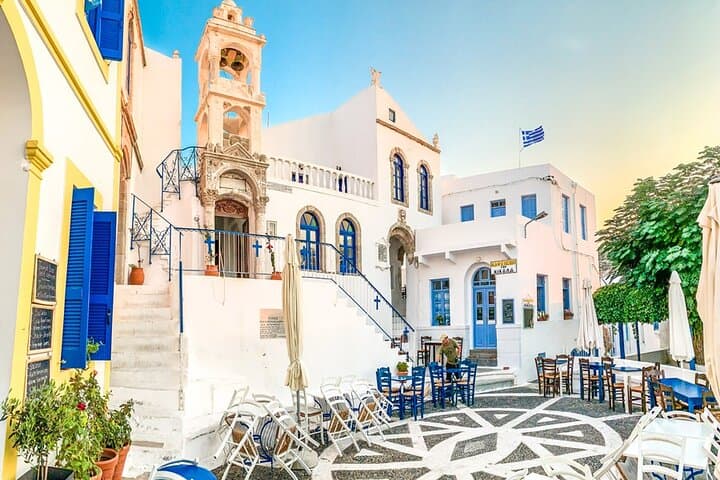
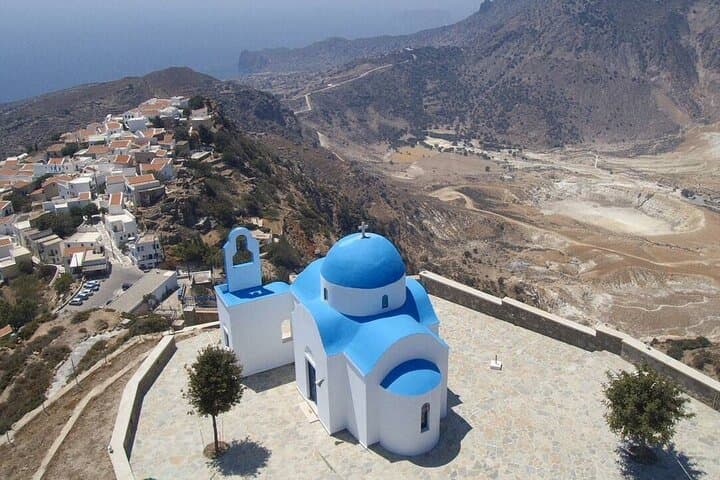
The main draw is a short descent into the active Stefano crater: expect loose volcanic scree, sulphur-tinged air, and broad, raw vistas that change color with light. After the crater, the tour moves through narrow streets to tavernas and cliffside chapels where local cuisine and small-scale fishing anchor daily life.
Practical guidance: wear sturdy closed shoes and sun protection, carry at least 1–1.5 liters of water, and move slowly on uneven volcanic surfaces. Expect heat in summer; early departures and the ferry schedule make timing important. Photography is rewarding but mind the fragile ground near steam vents and stay on marked paths. If you want a quieter experience, explore the church cave at Panagia Spiliani and the small coastal walks around Mandraki after the group returns to the quay.
This is a day of contrasts — raw volcanic terrain, small-village culture, and the steady blue of the Aegean — accessible for most travelers who can manage short hikes and warm weather.
easy.
7–8 hours.
Suitable for most people who can walk short distances on uneven terrain and climb stairs; not strenuous but requires steady balance.
Most tours include a ferry ticket from Kos (Kardamena) to Nisyros; the crossing is about 40–60 minutes depending on service.
The descent is short but on uneven volcanic ground; it’s generally accessible but not recommended for people with serious mobility or heart/back issues.
This tour typically includes ferry transport; temple donations or site-specific fees (if any) are usually separate—check your booking details.
Most day tours operate on a fixed schedule; if you want extra time, arrange independent return transport or a later ferry on your own.
Nisyros formed from repeated volcanic eruptions; monasteries like Panagia Spiliani were established in caves and rock shelters that exploited the island’s porous geology.
Volcanic soils and island vegetation are fragile; stick to trails, avoid collecting rocks, and minimize single-use plastics to protect the local environment.
Pulia Tours operates guided outdoor trips and adventures with an emphasis on safety, stewardship, and memorable experiences.
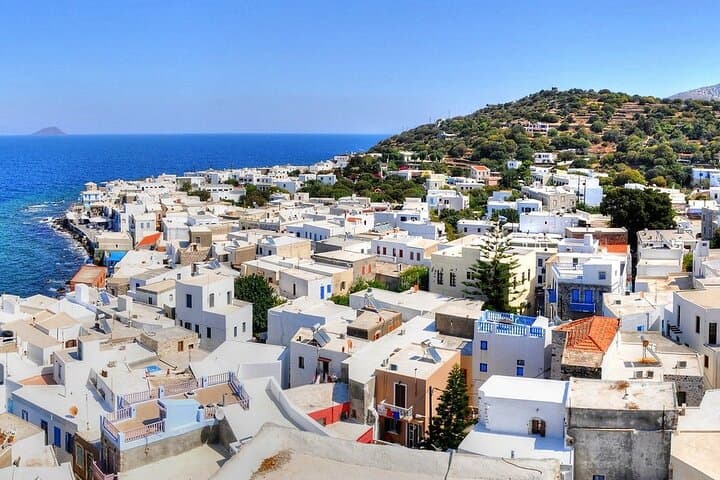
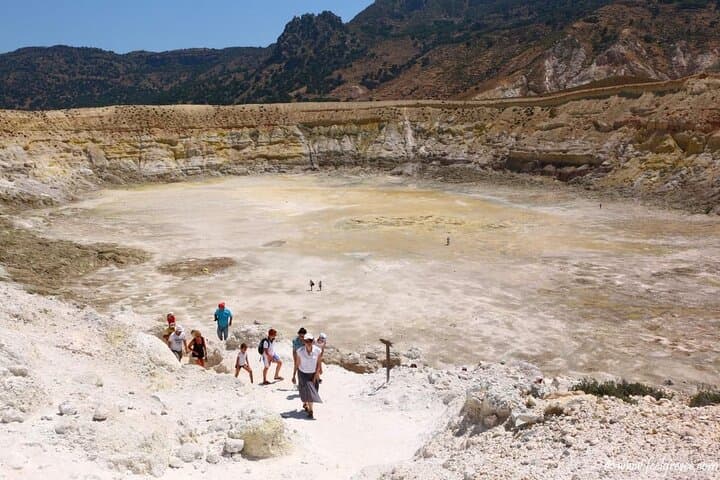
You disembark from the ferry into a white-washed port where wind and sea-salt rearrange your thoughts. The road climbs quickly toward Mandraki and the crater ridge; basalt cliffs and olive trees give way to the gray, open bowl of Polyvotis (Stefanos), where steam and pitted lava make the ground look almost lunar.
You disembark from the ferry into a white-washed port where wind and sea-salt rearrange your thoughts. The road climbs quickly toward Mandraki and the crater ridge; basalt cliffs and olive trees give way to the gray, open bowl of Polyvotis (Stefanos), where steam and pitted lava make the ground look almost lunar.
Nisyros is young by geological standards — a volcanic complex born from Aegean tectonics — and the crater has shaped local life for centuries. Monastic stones at Panagia Spiliani are cut into volcanic rock; village alleys preserve recipes and the almond liqueur soumada that mark island hospitality.
The main draw is a short descent into the active Stefano crater: expect loose volcanic scree, sulphur-tinged air, and broad, raw vistas that change color with light. After the crater, the tour moves through narrow streets to tavernas and cliffside chapels where local cuisine and small-scale fishing anchor daily life.
Practical guidance: wear sturdy closed shoes and sun protection, carry at least 1–1.5 liters of water, and move slowly on uneven volcanic surfaces. Expect heat in summer; early departures and the ferry schedule make timing important. Photography is rewarding but mind the fragile ground near steam vents and stay on marked paths. If you want a quieter experience, explore the church cave at Panagia Spiliani and the small coastal walks around Mandraki after the group returns to the quay.
This is a day of contrasts — raw volcanic terrain, small-village culture, and the steady blue of the Aegean — accessible for most travelers who can manage short hikes and warm weather.