THE ADVENTURE COLLECTIVE® · Independent discovery and booking for outdoor travel

Spend a day swapping Granada’s rooftops for the Mediterranean air of Spain’s Tropical Coast. This guided trip pairs Almuñecar’s ancient shoreline, Nerja’s dramatic Balcón de Europa and the cavernous Cueva de Nerja—home to Paleolithic finds and a 32‑metre stalagmite—for a ten‑hour coastal immersion with lunch.
Spend a day swapping Granada’s rooftops for the Mediterranean air of Spain’s Tropical Coast. This guided trip pairs Almuñecar’s ancient shoreline, Nerja’s dramatic Balcón de Europa and the cavernous Cueva de Nerja—home to Paleolithic finds and a 32‑metre stalagmite—for a ten‑hour coastal immersion with lunch.
A coach slips out of Granada before dawn and the Sierra Nevada recedes into a quilt of olive groves and terraced orchards. By midmorning the Mediterranean appears—a sudden blue that the driver jokes is the region’s shorthand for ‘holiday’—and the coast opens into a string of white-sand bays and low cliffs. The day trip moves at a steady, considered pace: a stroll through Almuñecar’s seaside gardens, a walk around San Miguel Castle’s stone ramparts, and then into the dim hush of the Cueva de Nerja, where the past keeps its own clock.
Verified experiences and guided adventures in the surrounding area.
Operated by GRANAVISION - Movviendo Tourism Group · Nerja, Andalusia
A coach slips out of Granada before dawn and the Sierra Nevada recedes into a quilt of olive groves and terraced orchards. By midmorning the Mediterranean appears—a sudden blue that the driver jokes is the region’s shorthand for ‘holiday’—and the coast opens into a string of white-sand bays and low cliffs. The day trip moves at a steady, considered pace: a stroll through Almuñecar’s seaside gardens, a walk around San Miguel Castle’s stone ramparts, and then into the dim hush of the Cueva de Nerja, where the past keeps its own clock.
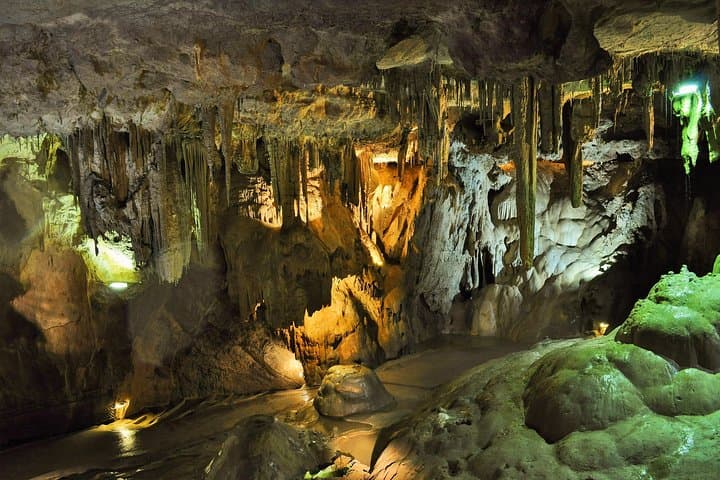
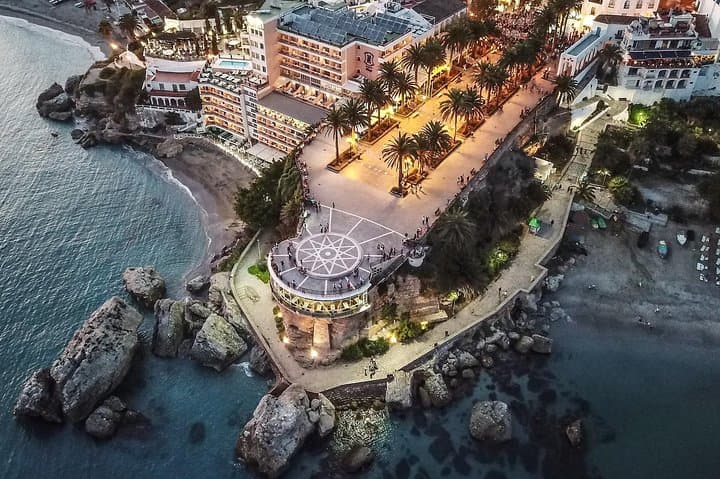
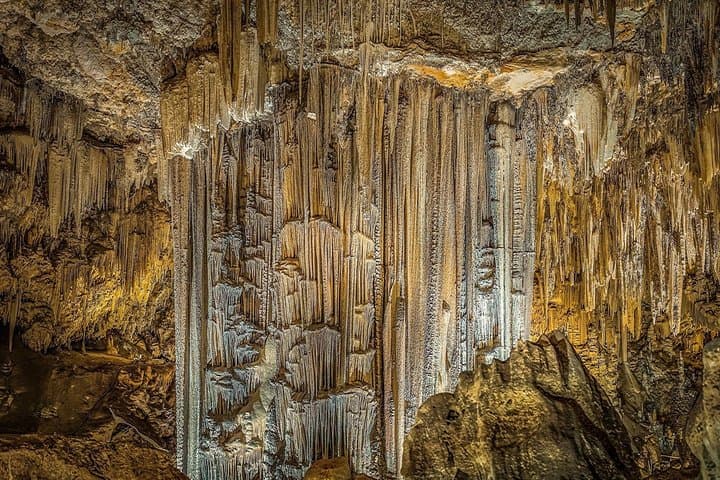
The Cueva de Nerja is the geological headline. Its chambers extend for almost five kilometres and contain a column—often called the world’s largest stalagmite—rising roughly 32 metres. Archaeologists have found human activity in these caverns going back more than 20,000 years: fragments of pottery, bones and Paleolithic paintings that make the underground galleries an archive of climate, fauna and human presence across millennia. Above ground, the towns visited on this route tell a parallel story: Almuñecar, founded by Phoenicians around 1000 B.C., still bears traces of its fish-salting industry in Majuelo Park, while Nerja’s Balcón de Europa perches like a public terrace between village life and the sea.
Geology and culture here are conversational partners. Limestone beds folded and fractured during the formation of the Baetic ranges, then dissolved by rainwater over eons to carve the cave’s vaulted halls. The coastline’s sheltered microclimate supports subtropical plants that line botanical walks and offer a softer contrast to the caves’ hard rock.
Practically, this is a full-day, guided excursion: expect roughly 10 hours door-to-door from Granada, with hotel pickup included. The tour is paced for general fitness—paths in towns are flat and accessible, while the caves involve descending ramps and steps on uneven surfaces. Wear supportive shoes and bring a lightweight jacket; cave temperatures sit around 18°C (64°F) and can feel cool after the sunlit coast. Carry water, sun protection and a small amount of cash for local vendors or extras at lunch; the provided lunch showcases traditional Andalusian flavors and is a useful pause before the return trip.
Timing matters: mornings and late afternoons soften the light on the Balcón de Europa and reduce coach congestion. The guide adapts the order of stops to traffic and opening hours, so allow flexibility; if a site is closed, the itinerary substitutes another local highlight. Respect the caves’ rules—no touching formations, limited flash photography—and you help preserve a fragile archive. For travelers based in Granada, this day trip condenses the Tropical Coast’s scenery, history and geology into one seamless loop, leaving both the sea and the subterranean halls eager for company on the next visit.
easy.
10 hours.
Suitable for travelers in average physical condition; involves short walks and some stairs in the caves.
The tour runs about 10 hours from Granada and includes guided visits to Almuñecar, Majuelo Park, San Miguel Castle, Nerja Caves admission, lunch and hotel pickup in Granada.
Walking is moderate—flat streets and gardens plus ramps and steps inside the caves; comfortable shoes are recommended.
Photography policies can change; flash and tripods are often restricted to protect formations—follow the guide’s instructions on site.
Yes—infants and small children are allowed (stroller-accessible areas on surface visits) and infant seats are available; caves may be less suitable for very young children due to uneven surfaces.
Yes—pickup is available from Granada hotels (pickup time provided in confirmation); there is also a central meeting point if needed.
The guide will alter the order of visits or substitute another local attraction if a monument is closed or access is restricted.
Almuñecar traces its origins to Phoenician settlers around 1000 B.C., while the Cueva de Nerja contains archaeological evidence of human activity exceeding 20,000 years.
Cave formations are fragile—do not touch stalactites or stalagmites and follow marked paths; support local guides and small-group tours to reduce impact.
GRANAVISION - Movviendo Tourism Group operates guided outdoor trips and adventures with an emphasis on safety, stewardship, and memorable experiences.
A coach slips out of Granada before dawn and the Sierra Nevada recedes into a quilt of olive groves and terraced orchards. By midmorning the Mediterranean appears—a sudden blue that the driver jokes is the region’s shorthand for ‘holiday’—and the coast opens into a string of white-sand bays and low cliffs. The day trip moves at a steady, considered pace: a stroll through Almuñecar’s seaside gardens, a walk around San Miguel Castle’s stone ramparts, and then into the dim hush of the Cueva de Nerja, where the past keeps its own clock.
A coach slips out of Granada before dawn and the Sierra Nevada recedes into a quilt of olive groves and terraced orchards. By midmorning the Mediterranean appears—a sudden blue that the driver jokes is the region’s shorthand for ‘holiday’—and the coast opens into a string of white-sand bays and low cliffs. The day trip moves at a steady, considered pace: a stroll through Almuñecar’s seaside gardens, a walk around San Miguel Castle’s stone ramparts, and then into the dim hush of the Cueva de Nerja, where the past keeps its own clock.
The Cueva de Nerja is the geological headline. Its chambers extend for almost five kilometres and contain a column—often called the world’s largest stalagmite—rising roughly 32 metres. Archaeologists have found human activity in these caverns going back more than 20,000 years: fragments of pottery, bones and Paleolithic paintings that make the underground galleries an archive of climate, fauna and human presence across millennia. Above ground, the towns visited on this route tell a parallel story: Almuñecar, founded by Phoenicians around 1000 B.C., still bears traces of its fish-salting industry in Majuelo Park, while Nerja’s Balcón de Europa perches like a public terrace between village life and the sea.
Geology and culture here are conversational partners. Limestone beds folded and fractured during the formation of the Baetic ranges, then dissolved by rainwater over eons to carve the cave’s vaulted halls. The coastline’s sheltered microclimate supports subtropical plants that line botanical walks and offer a softer contrast to the caves’ hard rock.
Practically, this is a full-day, guided excursion: expect roughly 10 hours door-to-door from Granada, with hotel pickup included. The tour is paced for general fitness—paths in towns are flat and accessible, while the caves involve descending ramps and steps on uneven surfaces. Wear supportive shoes and bring a lightweight jacket; cave temperatures sit around 18°C (64°F) and can feel cool after the sunlit coast. Carry water, sun protection and a small amount of cash for local vendors or extras at lunch; the provided lunch showcases traditional Andalusian flavors and is a useful pause before the return trip.
Timing matters: mornings and late afternoons soften the light on the Balcón de Europa and reduce coach congestion. The guide adapts the order of stops to traffic and opening hours, so allow flexibility; if a site is closed, the itinerary substitutes another local highlight. Respect the caves’ rules—no touching formations, limited flash photography—and you help preserve a fragile archive. For travelers based in Granada, this day trip condenses the Tropical Coast’s scenery, history and geology into one seamless loop, leaving both the sea and the subterranean halls eager for company on the next visit.