THE ADVENTURE COLLECTIVE® · Independent discovery and booking for outdoor travel

Board a stable catamaran from San Cristóbal for a full‑day ferry to Kicker Rock (León Dormido). Snorkel amid rays, sea turtles and the occasional hammerhead, and explore a tuff cone carved into twin towers that host blue‑footed boobies and sea lions.
Board a stable catamaran from San Cristóbal for a full‑day ferry to Kicker Rock (León Dormido). Snorkel amid rays, sea turtles and the occasional hammerhead, and explore a tuff cone carved into twin towers that host blue‑footed boobies and sea lions.
When the sun pricks the horizon off San Cristóbal, the catamaran slips into the Pacific like something that has always belonged to the water. Onboard Galapagos Hopper, the ride is steady — a relief for anyone who remembers rough inflatables — and the crew moves with practiced economy: lunch laid out, masks handed over, eyes already on a dark silhouette rising from the blue.
Verified experiences and guided adventures in the surrounding area.
Operated by Latin Trails · Puerto Baquerizo Moreno, Galápagos
When the sun pricks the horizon off San Cristóbal, the catamaran slips into the Pacific like something that has always belonged to the water. Onboard Galapagos Hopper, the ride is steady — a relief for anyone who remembers rough inflatables — and the crew moves with practiced economy: lunch laid out, masks handed over, eyes already on a dark silhouette rising from the blue.
Kicker Rock, known locally as León Dormido (Sleeping Lion), is a tuff cone split down the middle, a pair of sheer towers carved by wind and wave. From a distance it looks defiant, a fossilized reef daring you to come closer. Geologically, the formation is a reminder of volcanic fury slowed into stone: ash consolidated into rock, then sculpted into twin spires that now host birds, barnacles and the constant churn of the sea.
The itinerary is straightforward: a morning stop at Puerto Grande (or Manglesito/Cerro Brujo depending on the day) for beach time and first snorkeling, then the main event — two to three hours around the Kicker Rock arch where visibility and currents can deliver a parade of marine life. Blue‑footed boobies roost on the cliffs; sea lions sun themselves on nearby rocks; rays and reef fish wheel below; and, if the ocean is in the mood, schooling hammerhead sharks cut through the water like black knives.
This is as much a wildlife encounter as it is a day at sea. The Galápagos is curated by the National Park — visitors float at marked points, carry minimal disturbance, and respect the rhythms of breeding and feeding. San Cristóbal town provides the human frame: sleepy cafes, fishermen mending nets, and a conservation-focused community that greets daily tourism pragmatically.
Practicalities matter. The full day runs roughly nine hours from hotel pickup to return, with two main snorkeling windows. Currents can be strong; basic snorkeling skills and a working mask are important. The vessel supplies equipment and hydration — coffee, teas, water and snacks — and lunch will usually be fish or chicken with vegetables and carbs. Motion‑sickness meds before boarding are a sensible precaution for those who have felt queasy at sea.
For photographers and naturalists, timing and patience pay off: golden light on the rock, close-ups of booby nests, and underwater shots of rays or turtles require quick reactions and waterproof protection. Respect the wildlife: no touching, no chasing. Conservation here isn’t an add‑on; it’s part of the rhythm of the trip.
By afternoon, the catamaran turns back toward San Cristóbal with the kind of quiet energy that follows a day spent in water and wind. You’ll leave with salt in your hair, a sunburn line on your neck, and a memory of two stone towers that continue to test and charm every visitor who answers the ocean’s invitation.
easy.
9 hours.
Light to moderate fitness; ability to enter/exit water and swim short distances is required
The full day is approximately 9 hours including hotel pickup, two snorkeling stops, lunch and return to San Cristóbal.
Yes, snorkeling equipment is provided on board, but bringing your own mask and snorkel can improve fit and comfort.
Beginners can participate, but currents can be strong—notify the crew so they can position you with experienced guides or in calmer spots.
Expect blue‑footed boobies, sea lions, reef fish, rays, sea turtles and, on occasion, hammerhead sharks.
This tour is not recommended for pregnant travelers or those with significant back or heart problems; check the operator’s policy before booking.
Wear a swimsuit, rashguard, hat and non‑slip water shoes; bring reef‑safe sunscreen, a towel, water bottle and ID or park pass if required.
Kicker Rock is a remnant of volcanic activity; its English name comes from 19th‑century sailors while the Spanish name León Dormido refers to the rock’s sleeping‑lion silhouette.
The site is inside Galápagos Marine Reserve — adhere to park rules, avoid single‑use plastics, and use reef‑safe products to minimize impact.
Latin Trails operates guided outdoor trips and adventures with an emphasis on safety, stewardship, and memorable experiences.

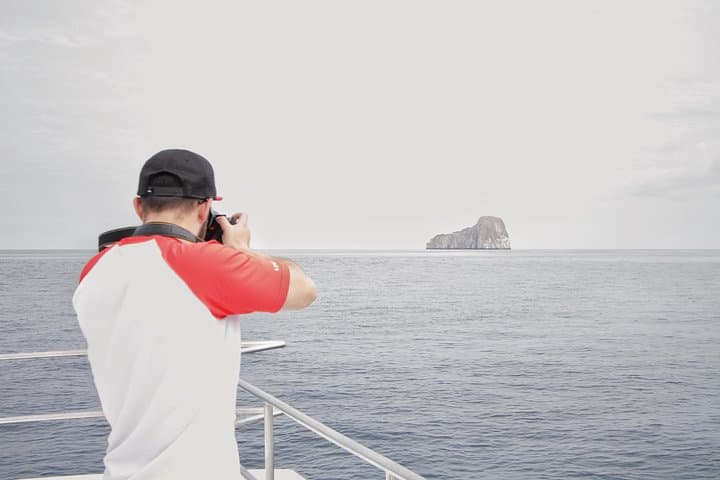
When the sun pricks the horizon off San Cristóbal, the catamaran slips into the Pacific like something that has always belonged to the water. Onboard Galapagos Hopper, the ride is steady — a relief for anyone who remembers rough inflatables — and the crew moves with practiced economy: lunch laid out, masks handed over, eyes already on a dark silhouette rising from the blue.
When the sun pricks the horizon off San Cristóbal, the catamaran slips into the Pacific like something that has always belonged to the water. Onboard Galapagos Hopper, the ride is steady — a relief for anyone who remembers rough inflatables — and the crew moves with practiced economy: lunch laid out, masks handed over, eyes already on a dark silhouette rising from the blue.
Kicker Rock, known locally as León Dormido (Sleeping Lion), is a tuff cone split down the middle, a pair of sheer towers carved by wind and wave. From a distance it looks defiant, a fossilized reef daring you to come closer. Geologically, the formation is a reminder of volcanic fury slowed into stone: ash consolidated into rock, then sculpted into twin spires that now host birds, barnacles and the constant churn of the sea.
The itinerary is straightforward: a morning stop at Puerto Grande (or Manglesito/Cerro Brujo depending on the day) for beach time and first snorkeling, then the main event — two to three hours around the Kicker Rock arch where visibility and currents can deliver a parade of marine life. Blue‑footed boobies roost on the cliffs; sea lions sun themselves on nearby rocks; rays and reef fish wheel below; and, if the ocean is in the mood, schooling hammerhead sharks cut through the water like black knives.
This is as much a wildlife encounter as it is a day at sea. The Galápagos is curated by the National Park — visitors float at marked points, carry minimal disturbance, and respect the rhythms of breeding and feeding. San Cristóbal town provides the human frame: sleepy cafes, fishermen mending nets, and a conservation-focused community that greets daily tourism pragmatically.
Practicalities matter. The full day runs roughly nine hours from hotel pickup to return, with two main snorkeling windows. Currents can be strong; basic snorkeling skills and a working mask are important. The vessel supplies equipment and hydration — coffee, teas, water and snacks — and lunch will usually be fish or chicken with vegetables and carbs. Motion‑sickness meds before boarding are a sensible precaution for those who have felt queasy at sea.
For photographers and naturalists, timing and patience pay off: golden light on the rock, close-ups of booby nests, and underwater shots of rays or turtles require quick reactions and waterproof protection. Respect the wildlife: no touching, no chasing. Conservation here isn’t an add‑on; it’s part of the rhythm of the trip.
By afternoon, the catamaran turns back toward San Cristóbal with the kind of quiet energy that follows a day spent in water and wind. You’ll leave with salt in your hair, a sunburn line on your neck, and a memory of two stone towers that continue to test and charm every visitor who answers the ocean’s invitation.