THE ADVENTURE COLLECTIVE® · Independent discovery and booking for outdoor travel

Spend a day from Kaunas exploring the Curonian Spit’s pine forests, wooden folklore carvings, and the sweeping Parnidis Dune. This full-day tour combines ferry crossings, guided walks, and wildlife viewing at one of Europe’s largest bird colonies.
Spend a day from Kaunas exploring the Curonian Spit’s pine forests, wooden folklore carvings, and the sweeping Parnidis Dune. This full-day tour combines ferry crossings, guided walks, and wildlife viewing at one of Europe’s largest bird colonies.
A salt wind meets the bus as it pulls away from Kaunas and the low hills flatten into long agricultural fields; by midmorning you’re crossing the Curonian Lagoon by ferry and the landscape hushes into pine forest and sand. In Juodkrantė, the water laps quietly at wooden villas while the shore pines lean and seem to watch the procession of boats and fishermen.
Verified experiences and guided adventures in the surrounding area.
Operated by Discover Lithuania · Nida, Klaipėda County
A salt wind meets the bus as it pulls away from Kaunas and the low hills flatten into long agricultural fields; by midmorning you’re crossing the Curonian Lagoon by ferry and the landscape hushes into pine forest and sand. In Juodkrantė, the water laps quietly at wooden villas while the shore pines lean and seem to watch the procession of boats and fishermen.
The Curonian Spit is a narrow sandbar shaped by Baltic currents and strong northerly winds; designated a UNESCO World Heritage site, it bears both shifting dunes and century-old fishing traditions. The Hill of Witches trail punctuates the forest with roughly 80 wooden carvings that recount Lithuanian folklore, while Parnidis Dune near Nida rises above the sea—an active drift dune offering panoramic views and a granite sundial at its crest. The Cormorant observation platform reveals one of Europe’s denser bird colonies, where nests cling to branches and calls ripple across the lagoon.
Expect paved and sandy surfaces, short walking loops of 30–60 minutes at several stops, and a longer 2–3 hour exploration window in Nida to climb dunes and visit the Thomas Mann museum. The tour runs about 12 hours round-trip from Kaunas, with ferry transfers across the lagoon.
Pack layers for wind, sturdy shoes for sand and boardwalks, binoculars for bird colonies, and a daypack with water and sun protection. Timing matters: mornings are calmer for ferry crossings and late afternoon brings softer light on the dunes. This one-day route balances cultural stops, accessible nature walks, and clear views of a dynamic Baltic coastline.
easy.
12 hours.
Suitable for most fitness levels; involves short walks (30–180 minutes total at stops) and standing at viewpoints.
Ferry crossings from the Klaipėda area across the Curonian Lagoon take roughly 10–20 minutes depending on the itinerary and boarding point.
Yes—the trail is a short, mostly level walk with carved sculptures and is family-friendly, though some paths can be uneven and may require supervision for small children.
Yes—visitors can climb designated routes on the Parnidis Dune; stick to marked paths to avoid destabilizing the sand and to protect catchment areas.
Nida and Juodkrantė have cafes, basic restaurants, and public restrooms; bring snacks and water for longer stretches between stops.
The Curonian Spit has been shaped by fishing communities and shifting dunes for centuries and was recognized as a UNESCO World Heritage site for its combined natural and cultural landscape.
Visitor impact is managed through marked paths and protected zones; stay on trails, avoid disturbing nesting birds, and carry out waste to protect fragile dune habitats.
Discover Lithuania operates guided outdoor trips and adventures with an emphasis on safety, stewardship, and memorable experiences.
A salt wind meets the bus as it pulls away from Kaunas and the low hills flatten into long agricultural fields; by midmorning you’re crossing the Curonian Lagoon by ferry and the landscape hushes into pine forest and sand. In Juodkrantė, the water laps quietly at wooden villas while the shore pines lean and seem to watch the procession of boats and fishermen.
A salt wind meets the bus as it pulls away from Kaunas and the low hills flatten into long agricultural fields; by midmorning you’re crossing the Curonian Lagoon by ferry and the landscape hushes into pine forest and sand. In Juodkrantė, the water laps quietly at wooden villas while the shore pines lean and seem to watch the procession of boats and fishermen.
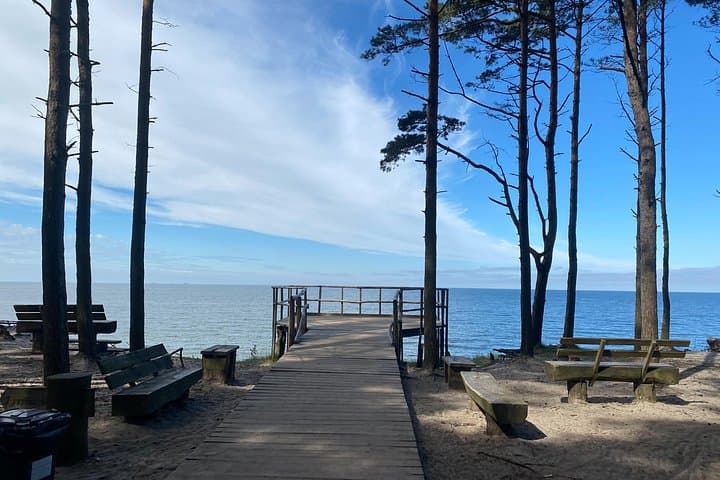
The Curonian Spit is a narrow sandbar shaped by Baltic currents and strong northerly winds; designated a UNESCO World Heritage site, it bears both shifting dunes and century-old fishing traditions. The Hill of Witches trail punctuates the forest with roughly 80 wooden carvings that recount Lithuanian folklore, while Parnidis Dune near Nida rises above the sea—an active drift dune offering panoramic views and a granite sundial at its crest. The Cormorant observation platform reveals one of Europe’s denser bird colonies, where nests cling to branches and calls ripple across the lagoon.
Expect paved and sandy surfaces, short walking loops of 30–60 minutes at several stops, and a longer 2–3 hour exploration window in Nida to climb dunes and visit the Thomas Mann museum. The tour runs about 12 hours round-trip from Kaunas, with ferry transfers across the lagoon.
Pack layers for wind, sturdy shoes for sand and boardwalks, binoculars for bird colonies, and a daypack with water and sun protection. Timing matters: mornings are calmer for ferry crossings and late afternoon brings softer light on the dunes. This one-day route balances cultural stops, accessible nature walks, and clear views of a dynamic Baltic coastline.