THE ADVENTURE COLLECTIVE® · Independent discovery and booking for outdoor travel

Escape Marrakech for a full-day circuit through three High Atlas valleys—Ourika, Oukaïmeden and Asni—visiting Berber houses, argan cooperatives, a waterfall trek and orchard country. Expect varied terrain, cultural exchanges and a 6–8 hour private tour.
Escape Marrakech for a full-day circuit through three High Atlas valleys—Ourika, Oukaïmeden and Asni—visiting Berber houses, argan cooperatives, a waterfall trek and orchard country. Expect varied terrain, cultural exchanges and a 6–8 hour private tour.
A thin ribbon of road unspools out of Marrakech and climbs toward stone villages, almond orchards and scrubby slopes where wind and sun shape the land. By midmorning the city’s heat gives way to cooler air at roughly 1,800 m as you cross the Oukaïmeden ridge; the valleys open below, each with a different character—cascading torrents in Ourika, terraced orchards in Asni and the high, glaciated shoulders of the massif seen from the ski road.
Verified experiences and guided adventures in the surrounding area.
Operated by Enjoy Travel Morocco - all activities in Marrakech · Marrakech, Marrakech-Safi
A thin ribbon of road unspools out of Marrakech and climbs toward stone villages, almond orchards and scrubby slopes where wind and sun shape the land. By midmorning the city’s heat gives way to cooler air at roughly 1,800 m as you cross the Oukaïmeden ridge; the valleys open below, each with a different character—cascading torrents in Ourika, terraced orchards in Asni and the high, glaciated shoulders of the massif seen from the ski road.
The High Atlas has been home to Amazigh (Berber) communities for millennia. Villages of adobe and stone reflect a practical architecture tuned to dry summers and snowy winters; terraces and irrigation channels trace older water-management knowledge. Geologically the range is young and rugged—folded sedimentary and volcanic rock thrust upward by tectonics—so trails can be steep and unexpectedly rocky.
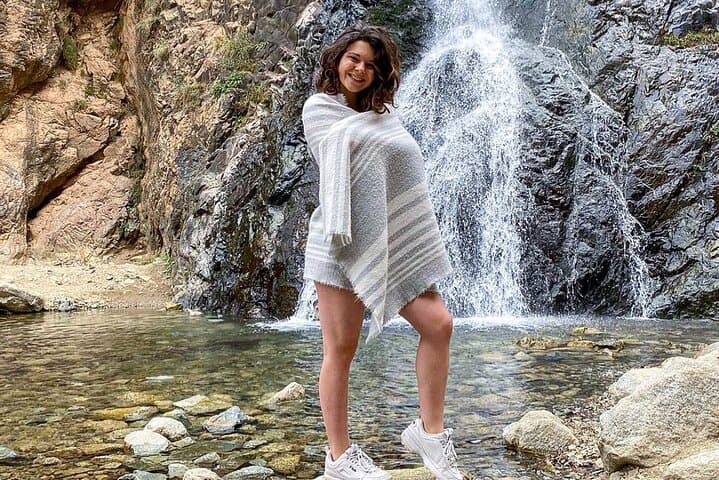
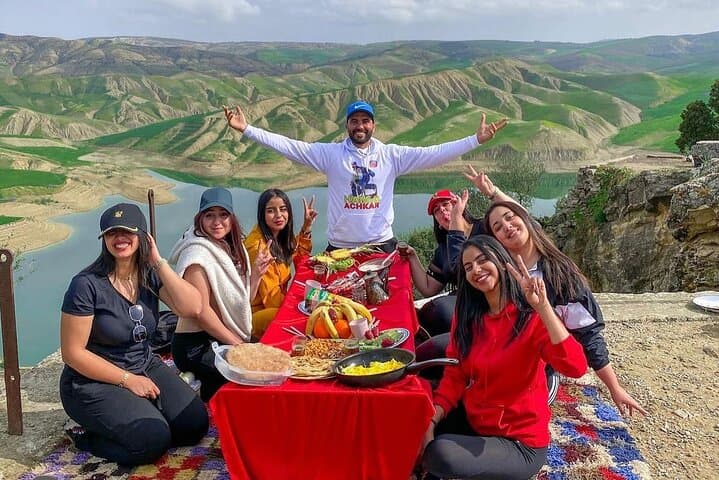
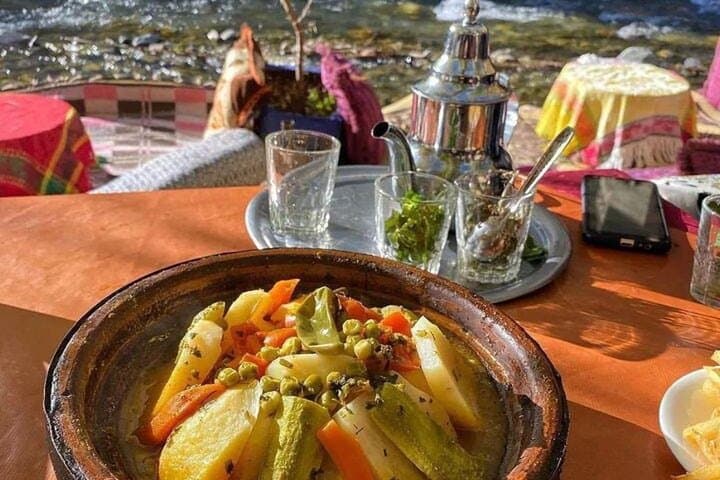
Culturally, expect warm, practical hospitality: a Berber house lunch with tagine and mint tea, an argan oil demonstration by women artisans, and optional camel rides on gentler valley floors. The popular Setti Fatma waterfalls require about 1.5 hours round-trip walking with uneven steps; a local mountain guide is recommended.
Practical guidance: plan for a full 6–8 hour day with private transport and stops, bring layered clothing for changing altitude, sun protection and at least 1.5–2 liters of water. Sturdy footwear is essential for the waterfall trek. Carry local cash for cooperatives and modest tips, and confirm mobility needs in advance—parts of the experience are not suitable for severe back or heart problems.
moderate.
6–8 hours.
Moderate fitness—comfortable walking for 1–2 hours on uneven terrain and ability to handle short steep sections
The walk to the main Setti Fatma waterfalls is about 1–1.5 hours round-trip, depending on fitness and stops; expect uneven steps and some short climbs.
Lunch in a typical Berber house can be arranged and usually includes a tagine, salads, bread and mint tea—inform the operator of dietary restrictions in advance.
Parts of the tour (waterfall paths and stepped village lanes) are not suitable for those with significant mobility, spinal or cardiovascular issues; contact the operator about customization.
Tipping is customary—small amounts for guides, drivers and women at cooperatives are appreciated and directly support local incomes.
Amazigh (Berber) communities have occupied the High Atlas for centuries, shaping terraces, irrigation and village layouts adapted to the mountain climate.
Visitor pressure and seasonal erosion strain fragile terraces and water resources; support local cooperatives, avoid single-use plastic and stick to marked paths to minimize impact.
Enjoy Travel Morocco - all activities in Marrakech operates guided outdoor trips and adventures with an emphasis on safety, stewardship, and memorable experiences.
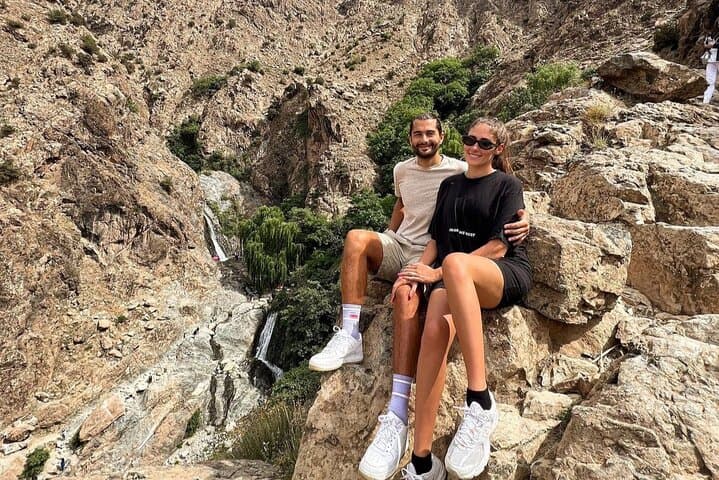
A thin ribbon of road unspools out of Marrakech and climbs toward stone villages, almond orchards and scrubby slopes where wind and sun shape the land. By midmorning the city’s heat gives way to cooler air at roughly 1,800 m as you cross the Oukaïmeden ridge; the valleys open below, each with a different character—cascading torrents in Ourika, terraced orchards in Asni and the high, glaciated shoulders of the massif seen from the ski road.
A thin ribbon of road unspools out of Marrakech and climbs toward stone villages, almond orchards and scrubby slopes where wind and sun shape the land. By midmorning the city’s heat gives way to cooler air at roughly 1,800 m as you cross the Oukaïmeden ridge; the valleys open below, each with a different character—cascading torrents in Ourika, terraced orchards in Asni and the high, glaciated shoulders of the massif seen from the ski road.
The High Atlas has been home to Amazigh (Berber) communities for millennia. Villages of adobe and stone reflect a practical architecture tuned to dry summers and snowy winters; terraces and irrigation channels trace older water-management knowledge. Geologically the range is young and rugged—folded sedimentary and volcanic rock thrust upward by tectonics—so trails can be steep and unexpectedly rocky.
Culturally, expect warm, practical hospitality: a Berber house lunch with tagine and mint tea, an argan oil demonstration by women artisans, and optional camel rides on gentler valley floors. The popular Setti Fatma waterfalls require about 1.5 hours round-trip walking with uneven steps; a local mountain guide is recommended.
Practical guidance: plan for a full 6–8 hour day with private transport and stops, bring layered clothing for changing altitude, sun protection and at least 1.5–2 liters of water. Sturdy footwear is essential for the waterfall trek. Carry local cash for cooperatives and modest tips, and confirm mobility needs in advance—parts of the experience are not suitable for severe back or heart problems.