THE ADVENTURE COLLECTIVE® · Independent discovery and booking for outdoor travel

Spend a day from Seville exploring Ronda’s dramatic Tajo gorge and the rock-woven streets of Setenil de las Bodegas. This private tour pairs geological spectacle and layered history with practical, walkable sightseeing.
Spend a day from Seville exploring Ronda’s dramatic Tajo gorge and the rock-woven streets of Setenil de las Bodegas. This private tour pairs geological spectacle and layered history with practical, walkable sightseeing.
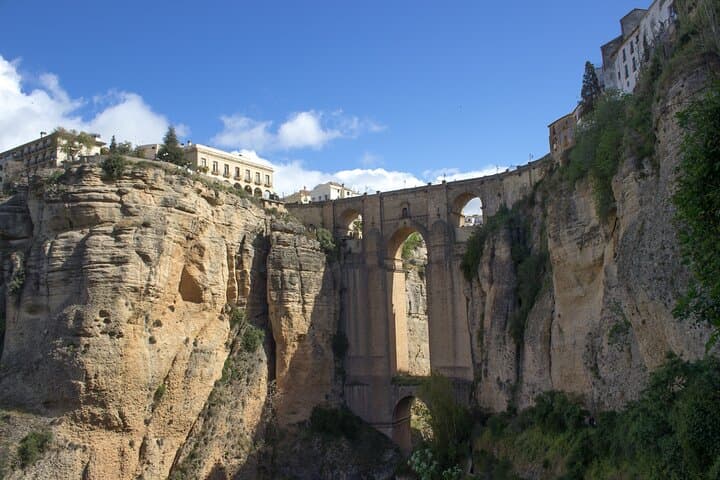
You leave Seville before dawn and the highway unfurls like a ribbon across Andalusia. Low hills roll past olive groves and, as you climb toward the Serranía de Ronda, the air cools; the Tajo gorge appears suddenly, a stone throat cleaving the town of Ronda. From the bridge the gorge feels alive—rock faces daring you to look down, wind pushing at your shoulders.
Verified experiences and guided adventures in the surrounding area.
Operated by Tour Travel & More · Ronda, Andalusia
You leave Seville before dawn and the highway unfurls like a ribbon across Andalusia. Low hills roll past olive groves and, as you climb toward the Serranía de Ronda, the air cools; the Tajo gorge appears suddenly, a stone throat cleaving the town of Ronda. From the bridge the gorge feels alive—rock faces daring you to look down, wind pushing at your shoulders.
Ronda's history is visible in layers: a Roman outpost reorganized under Julius Caesar, later reshaped by eight centuries of Moorish rule. The Puente Nuevo spans the Tajo, a dramatic limestone incision carved by the Guadalevín River and designated a Natural Monument. Setenil de las Bodegas flips the script—houses built into overhanging rock above the Río Guadalporcún, where geology became architecture.
On a four-hour guided walk through Ronda you’ll visit the Plaza de Toros exterior, cross viewpoints over the gorge and thread narrow streets where whitewashed facades meet Moorish arches. In Setenil you stroll under rock canopies and watch shaded cafés hum with local life.
Practical guide: expect 10 hours total including driving; wear sturdy walking shoes for cobbled streets and staircases, bring sunscreen and 1–1.5 L water, and plan lunch in Ronda’s old town—timing matters as services can close midday. The guide travels between towns by car and may not accompany you in your vehicle; confirm pickup 24 hours ahead. Photographers should aim for morning or late afternoon light when the gorge and overhangs reveal texture and contrast. Mobility can be limited in some alleys; notify operators of accessibility needs in advance.
moderate.
10 hours (full day).
Suitable for people who can walk 2–4 miles across uneven cobbles and climb stairs; basic stamina required for a long day.
The drive is about 2 to 2.5 hours each way depending on traffic and your starting point in Seville.
The guide will meet you in Ronda and accompany the walking portions; per operator notes, they may travel between towns in their own car and not sit in your vehicle.
No—there is free time for lunch in Ronda; the guide can recommend local restaurants but meals are at your expense.
Both towns have historic streets and steep sections; accessibility is limited—contact the operator with specific mobility needs before booking.
Ronda began as a Roman settlement, expanded under Moorish rule; its strategic hilltop position shaped its fortress, bridges, and urban layout.
The Tajo gorge is protected as a Natural Monument; visitors are encouraged to stay on paths, avoid littering and support small local businesses to reduce overtourism pressure.
Tour Travel & More operates guided outdoor trips and adventures with an emphasis on safety, stewardship, and memorable experiences.
You leave Seville before dawn and the highway unfurls like a ribbon across Andalusia. Low hills roll past olive groves and, as you climb toward the Serranía de Ronda, the air cools; the Tajo gorge appears suddenly, a stone throat cleaving the town of Ronda. From the bridge the gorge feels alive—rock faces daring you to look down, wind pushing at your shoulders.
You leave Seville before dawn and the highway unfurls like a ribbon across Andalusia. Low hills roll past olive groves and, as you climb toward the Serranía de Ronda, the air cools; the Tajo gorge appears suddenly, a stone throat cleaving the town of Ronda. From the bridge the gorge feels alive—rock faces daring you to look down, wind pushing at your shoulders.
Ronda's history is visible in layers: a Roman outpost reorganized under Julius Caesar, later reshaped by eight centuries of Moorish rule. The Puente Nuevo spans the Tajo, a dramatic limestone incision carved by the Guadalevín River and designated a Natural Monument. Setenil de las Bodegas flips the script—houses built into overhanging rock above the Río Guadalporcún, where geology became architecture.
On a four-hour guided walk through Ronda you’ll visit the Plaza de Toros exterior, cross viewpoints over the gorge and thread narrow streets where whitewashed facades meet Moorish arches. In Setenil you stroll under rock canopies and watch shaded cafés hum with local life.
Practical guide: expect 10 hours total including driving; wear sturdy walking shoes for cobbled streets and staircases, bring sunscreen and 1–1.5 L water, and plan lunch in Ronda’s old town—timing matters as services can close midday. The guide travels between towns by car and may not accompany you in your vehicle; confirm pickup 24 hours ahead. Photographers should aim for morning or late afternoon light when the gorge and overhangs reveal texture and contrast. Mobility can be limited in some alleys; notify operators of accessibility needs in advance.