THE ADVENTURE COLLECTIVE® · Independent discovery and booking for outdoor travel

A single-day circuit from Tunis that combines bustling medina alleys, Roman ruins at Carthage and the cobalt terraces of Sidi Bou Said. Expect 7–8 hours of guided walking, coastal views and local culture.
A single-day circuit from Tunis that combines bustling medina alleys, Roman ruins at Carthage and the cobalt terraces of Sidi Bou Said. Expect 7–8 hours of guided walking, coastal views and local culture.
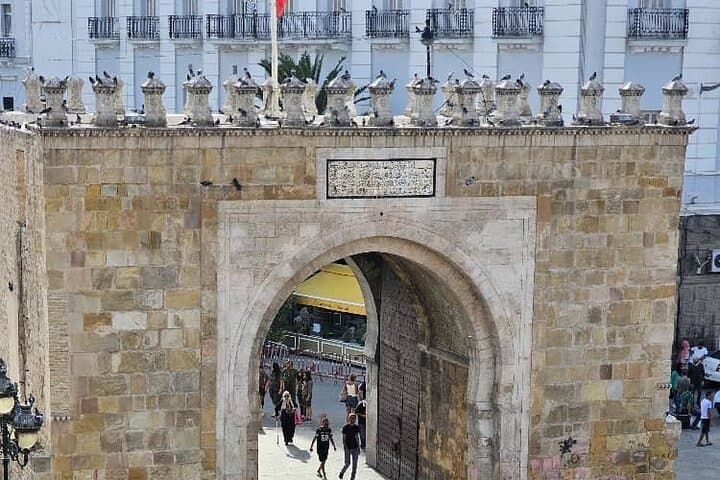
You step out under a wide Mediterranean sky and the city rearranges itself around you: loud market calls folding into narrow lanes of the Tunis medina, a ribbon of coastline where Carthage’s ruins lean toward the sea, and white-and-blue houses of Sidi Bou Said climbing the cliffs above the Gulf of Tunis.
Verified experiences and guided adventures in the surrounding area.
Operated by Discount Travel Services · Tunis, Tunis Governorate
You step out under a wide Mediterranean sky and the city rearranges itself around you: loud market calls folding into narrow lanes of the Tunis medina, a ribbon of coastline where Carthage’s ruins lean toward the sea, and white-and-blue houses of Sidi Bou Said climbing the cliffs above the Gulf of Tunis.
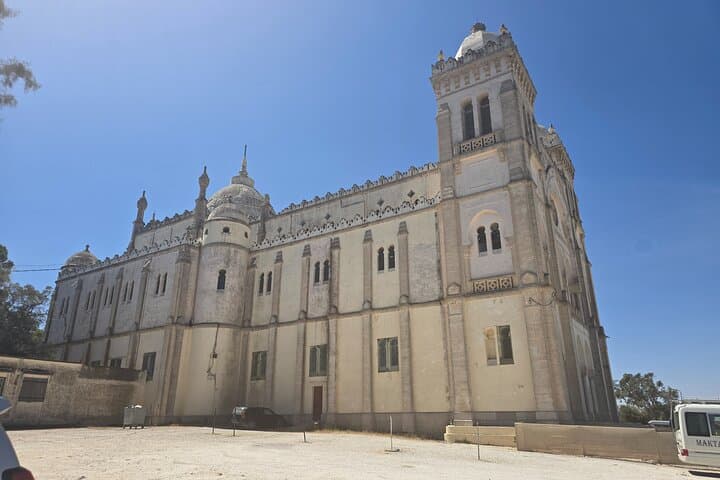
The day moves from Ottoman and Andalusian alleys in Tunis’s medina—where souks sell brass, ceramics and spices—to the Roman remains of Carthage: harbors, baths and carved stones that tell of Phoenician traders, Punic wars and Roman rebuilds. Geology here is simple and sharp: limestone outcrops and coastal terraces shaped by Mediterranean erosion, with low cliffs in Sidi Bou Said offering wide sea views. Culturally, the area has long been a crossroads—French colonial cafés sit beside traditional Tunisian family shops; artists still find light and color in the town’s narrow streets.
Expect city walking on cobbles and stepped streets totaling roughly 5–8 km over the day with modest cumulative elevation (under ~150 m), including stairs in Sidi Bou Said and uneven surfaces at the Carthage archaeological park. The route is largely accessible by air-conditioned vehicle between stops; a local guide typically covers history, practical navigation and shopping tips. Bring comfortable shoes, sun protection, and cash for small purchases. Start early to beat the heat and allow 7–8 hours for a relaxed visit—this is a full-day cultural circuit that balances photo stops, museum time and a seaside lunch.
easy.
7–8 hours.
Suitable for travelers who can walk several kilometres over uneven ground and climb stairs; no special fitness required.
The tour runs about 7–8 hours and typically includes an air‑conditioned vehicle, licensed guide, site entrance fees and lunch.
The vehicle and many areas are accessible, but cobbled alleys and archaeological sites include steps and uneven ground—mobility limitations should be discussed when booking.
Yes; the medina and Sidi Bou Said include open periods for browsing or photographs, though timing is managed by the guide to cover key sites.
Local currency is the Tunisian dinar (TND); carry small notes for markets. Tipping guides and drivers is customary—around 10% for good service or a modest cash amount per person.
Carthage was a major Phoenician trading city later rebuilt by Romans; the region’s layered ruins reflect centuries of Punic, Roman and Islamic influence.
Archaeological sites are fragile—stick to marked paths and avoid touching exposed mosaics. Support local guides and small vendors to help sustain community tourism.
Discount Travel Services operates guided outdoor trips and adventures with an emphasis on safety, stewardship, and memorable experiences.

You step out under a wide Mediterranean sky and the city rearranges itself around you: loud market calls folding into narrow lanes of the Tunis medina, a ribbon of coastline where Carthage’s ruins lean toward the sea, and white-and-blue houses of Sidi Bou Said climbing the cliffs above the Gulf of Tunis.
You step out under a wide Mediterranean sky and the city rearranges itself around you: loud market calls folding into narrow lanes of the Tunis medina, a ribbon of coastline where Carthage’s ruins lean toward the sea, and white-and-blue houses of Sidi Bou Said climbing the cliffs above the Gulf of Tunis.
The day moves from Ottoman and Andalusian alleys in Tunis’s medina—where souks sell brass, ceramics and spices—to the Roman remains of Carthage: harbors, baths and carved stones that tell of Phoenician traders, Punic wars and Roman rebuilds. Geology here is simple and sharp: limestone outcrops and coastal terraces shaped by Mediterranean erosion, with low cliffs in Sidi Bou Said offering wide sea views. Culturally, the area has long been a crossroads—French colonial cafés sit beside traditional Tunisian family shops; artists still find light and color in the town’s narrow streets.
Expect city walking on cobbles and stepped streets totaling roughly 5–8 km over the day with modest cumulative elevation (under ~150 m), including stairs in Sidi Bou Said and uneven surfaces at the Carthage archaeological park. The route is largely accessible by air-conditioned vehicle between stops; a local guide typically covers history, practical navigation and shopping tips. Bring comfortable shoes, sun protection, and cash for small purchases. Start early to beat the heat and allow 7–8 hours for a relaxed visit—this is a full-day cultural circuit that balances photo stops, museum time and a seaside lunch.