THE ADVENTURE COLLECTIVE® · Independent discovery and booking for outdoor travel

A long day trip from Tirana delivers two of the Western Balkans’ highlights: Struga’s Drin source and the UNESCO-listed town of Ohrid. Expect scenic drives, Byzantine churches, and lakeside viewpoints in a compact, history-rich itinerary.
A long day trip from Tirana delivers two of the Western Balkans’ highlights: Struga’s Drin source and the UNESCO-listed town of Ohrid. Expect scenic drives, Byzantine churches, and lakeside viewpoints in a compact, history-rich itinerary.
Morning in Tirana begins with a highway push east—olive groves and limestone ridges blur as the road drops toward North Macedonia. By late morning the landscape opens and Lake Ohrid appears: a long, glassy basin rimmed by steep hills, its surface daring you to slow down and look. The tour pauses first in Struga, where the Drin River springs from rocky pools and locals sip coffee beside the source before the drive up to Ohrid.
Verified experiences and guided adventures in the surrounding area.
Operated by Choose Balkans · Ohrid, Southwestern Region
Morning in Tirana begins with a highway push east—olive groves and limestone ridges blur as the road drops toward North Macedonia. By late morning the landscape opens and Lake Ohrid appears: a long, glassy basin rimmed by steep hills, its surface daring you to slow down and look. The tour pauses first in Struga, where the Drin River springs from rocky pools and locals sip coffee beside the source before the drive up to Ohrid.
Ohrid is ancient—Roman Lychnidos and a formative center of Orthodox learning. The lake itself is a karst basin, one of Europe’s oldest lakes, carving deep, fossil-rich shores and supporting endemic species like the Ohrid trout. Ottoman-era houses climb the hills, narrow alleys lead to stone stairways, and a medieval castle watches over the town and amphitheatre below.
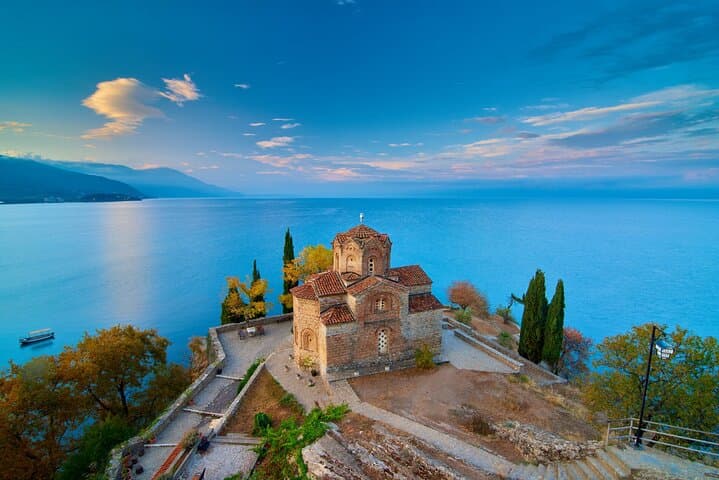
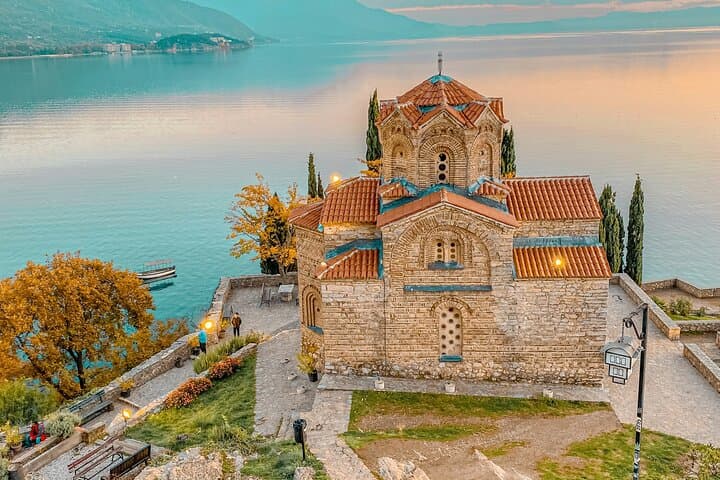
Culturally, the town balances pilgrimage and tourism: markets sell freshwater pearls and smoked trout; churches and mosques sit within a compact historic core. Expect viewpoints—especially the Church of St. John at Kaneo—that frame the lake against distant peaks.
Practically: this is a full 10–12 hour day with about 2.5–3 hours driving each way from Tirana. Border formalities are routine—carry your passport and any required documents. The tour includes transport, a professional guide, and visits to major sites; bring comfortable walking shoes for cobbles and short climbs, sun protection, water, and some local currency for snacks or small purchases. The pace suits travelers who want a packed, history-rich day rather than a slow overnight stay.
moderate.
10–12 hours.
Light to moderate fitness; be prepared for several hours on your feet and short uphill walks.
Yes — the tour crosses from Albania into North Macedonia; bring your passport and check visa requirements for your nationality.
Expect moderate walking: cobbled streets, short stair climbs, and a viewpoint approach—nothing technical, but bring comfortable shoes.
The tour listing indicates entry tickets for the sites to be visited are included; confirm specifics with the operator for any optional extra sites.
Suitable for most ages but the full day and some uphill walking may be tiring; the operator notes it’s appropriate for all fitness levels with hotel pickup available.
Ohrid (ancient Lychnidos) is one of Europe’s oldest continuous settlements and became a key Orthodox center during the Byzantine era; the town and lake were inscribed as UNESCO World Heritage in 1980.
Lake Ohrid supports unique endemic species and faces pressures from development and pollution—travelers are encouraged to minimize waste and support local conservation-minded businesses.
Choose Balkans operates guided outdoor trips and adventures with an emphasis on safety, stewardship, and memorable experiences.
Morning in Tirana begins with a highway push east—olive groves and limestone ridges blur as the road drops toward North Macedonia. By late morning the landscape opens and Lake Ohrid appears: a long, glassy basin rimmed by steep hills, its surface daring you to slow down and look. The tour pauses first in Struga, where the Drin River springs from rocky pools and locals sip coffee beside the source before the drive up to Ohrid.
Morning in Tirana begins with a highway push east—olive groves and limestone ridges blur as the road drops toward North Macedonia. By late morning the landscape opens and Lake Ohrid appears: a long, glassy basin rimmed by steep hills, its surface daring you to slow down and look. The tour pauses first in Struga, where the Drin River springs from rocky pools and locals sip coffee beside the source before the drive up to Ohrid.
Ohrid is ancient—Roman Lychnidos and a formative center of Orthodox learning. The lake itself is a karst basin, one of Europe’s oldest lakes, carving deep, fossil-rich shores and supporting endemic species like the Ohrid trout. Ottoman-era houses climb the hills, narrow alleys lead to stone stairways, and a medieval castle watches over the town and amphitheatre below.
Culturally, the town balances pilgrimage and tourism: markets sell freshwater pearls and smoked trout; churches and mosques sit within a compact historic core. Expect viewpoints—especially the Church of St. John at Kaneo—that frame the lake against distant peaks.
Practically: this is a full 10–12 hour day with about 2.5–3 hours driving each way from Tirana. Border formalities are routine—carry your passport and any required documents. The tour includes transport, a professional guide, and visits to major sites; bring comfortable walking shoes for cobbles and short climbs, sun protection, water, and some local currency for snacks or small purchases. The pace suits travelers who want a packed, history-rich day rather than a slow overnight stay.