THE ADVENTURE COLLECTIVE® · Independent discovery and booking for outdoor travel

Explore Georgia’s layered past on a nine-hour guided circuit from Tbilisi to Mtskheta, Jvari, Gori and Uplistsikhe. See UNESCO churches, a Soviet-era museum and an ancient rock city while walking cobbled streets and cliffside chambers.
Explore Georgia’s layered past on a nine-hour guided circuit from Tbilisi to Mtskheta, Jvari, Gori and Uplistsikhe. See UNESCO churches, a Soviet-era museum and an ancient rock city while walking cobbled streets and cliffside chambers.
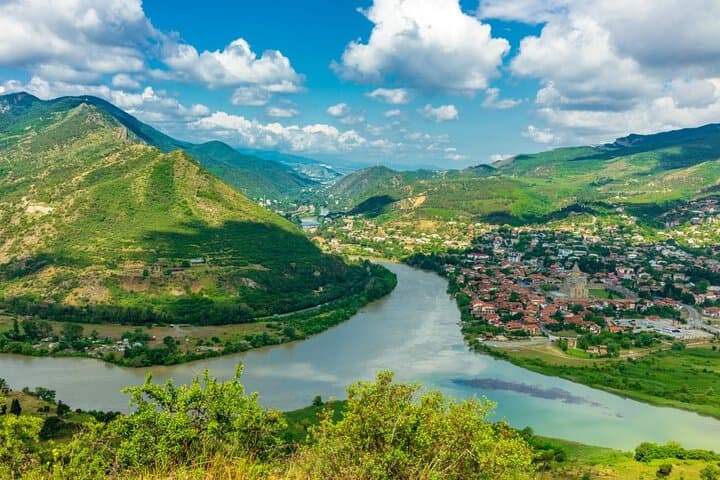
You step out of the air-conditioned minivan onto wind-polished stone above the Mtkvari River and the view takes a practical hold: the rivers meet, a sixth-century church keeps watch, and the hill smells of sun-warmed grass and sheep. That first moment at Jvari makes clear why this circuit has been a spine of Georgian life for millennia.
Verified experiences and guided adventures in the surrounding area.
Operated by Vitis Travel · Tbilisi, Tbilisi
You step out of the air-conditioned minivan onto wind-polished stone above the Mtkvari River and the view takes a practical hold: the rivers meet, a sixth-century church keeps watch, and the hill smells of sun-warmed grass and sheep. That first moment at Jvari makes clear why this circuit has been a spine of Georgian life for millennia.
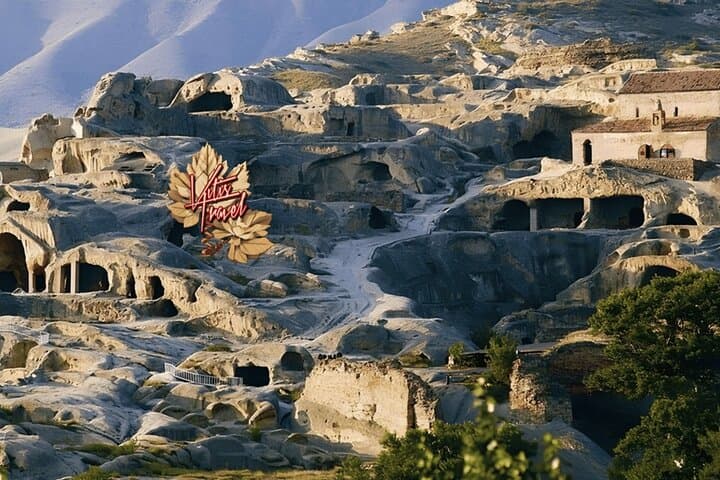
The route threads Roman-era trade routes, medieval Christian sites, Soviet history and cliff-cut cities. Mtskheta’s Svetitskhoveli Cathedral — a UNESCO-listed spiritual heart — anchors the story of Georgia’s conversion to Christianity; Jvari perches where the Aragvi and Mtkvari rivers braid, its quadrangular silhouette a lesson in early medieval architecture. Gori offers a different chapter: Stalin’s childhood home and railway carriage lay out 20th-century geopolitics amid a provincial town. Uplistsikhe, a rock-hewn metropolis, reveals continuous human modification of limestone and sandstone, with wine presses and temples carved into warm cliff faces.
Expect easy walking on cobbles, uneven rock staircases at Uplistsikhe and exposed viewpoints with little shade. The full loop is a nine-hour day with several 60–120 minute stops; entrance fees for some sites (museum and Uplistsikhe) are typically extra. Bring sturdy shoes, water, sun protection and a sense of measured curiosity: the guide supplies context, the landscape supplies the questions.
Practical timing: start early from Tbilisi to avoid midday crowds and heat. The tour is ideal for travelers who want cultural depth with light, outdoor activity — a compact immersion in Georgia’s layered past.
easy.
9 hours (full-day).
Suitable for most fitness levels; comfortable walking ability for short hikes and uneven surfaces is recommended.
The tour lasts about nine hours and includes transportation, an English/Russian-speaking guide, and scheduled stops; some site entrance fees are extra.
Entrance fees for Uplistsikhe and the Stalin Museum are typically extra (about 15 GEL each) and paid locally unless noted otherwise.
The tour is family-friendly for short walks, but cliff sites and cave complexes have uneven terrain; it’s not recommended for travelers with serious spinal or mobility issues.
Guides are provided in English and Russian on this shared group tour; confirm language needs when booking.
Mtskheta was Georgia’s pre-medieval capital and a key religious center after the adoption of Christianity in the 4th century; Uplistsikhe predates Christianization and shows pagan and early Christian layers.
Sites are sensitive to erosion and foot traffic—stay on marked paths, avoid graffiti and support local guides and entrance fees that contribute to maintenance.
Vitis Travel operates guided outdoor trips and adventures with an emphasis on safety, stewardship, and memorable experiences.


You step out of the air-conditioned minivan onto wind-polished stone above the Mtkvari River and the view takes a practical hold: the rivers meet, a sixth-century church keeps watch, and the hill smells of sun-warmed grass and sheep. That first moment at Jvari makes clear why this circuit has been a spine of Georgian life for millennia.
You step out of the air-conditioned minivan onto wind-polished stone above the Mtkvari River and the view takes a practical hold: the rivers meet, a sixth-century church keeps watch, and the hill smells of sun-warmed grass and sheep. That first moment at Jvari makes clear why this circuit has been a spine of Georgian life for millennia.
The route threads Roman-era trade routes, medieval Christian sites, Soviet history and cliff-cut cities. Mtskheta’s Svetitskhoveli Cathedral — a UNESCO-listed spiritual heart — anchors the story of Georgia’s conversion to Christianity; Jvari perches where the Aragvi and Mtkvari rivers braid, its quadrangular silhouette a lesson in early medieval architecture. Gori offers a different chapter: Stalin’s childhood home and railway carriage lay out 20th-century geopolitics amid a provincial town. Uplistsikhe, a rock-hewn metropolis, reveals continuous human modification of limestone and sandstone, with wine presses and temples carved into warm cliff faces.
Expect easy walking on cobbles, uneven rock staircases at Uplistsikhe and exposed viewpoints with little shade. The full loop is a nine-hour day with several 60–120 minute stops; entrance fees for some sites (museum and Uplistsikhe) are typically extra. Bring sturdy shoes, water, sun protection and a sense of measured curiosity: the guide supplies context, the landscape supplies the questions.
Practical timing: start early from Tbilisi to avoid midday crowds and heat. The tour is ideal for travelers who want cultural depth with light, outdoor activity — a compact immersion in Georgia’s layered past.