THE ADVENTURE COLLECTIVE® · Independent discovery and booking for outdoor travel

See three of southern Georgia’s top sights in one long day: Borjomi’s mineral springs, the restored Rabati castle in Akhaltsikhe, and the cliff-cut cave town of Vardzia. This guided tour combines easy walks with a full day of history, geology and regional culture.
See three of southern Georgia’s top sights in one long day: Borjomi’s mineral springs, the restored Rabati castle in Akhaltsikhe, and the cliff-cut cave town of Vardzia. This guided tour combines easy walks with a full day of history, geology and regional culture.
A minibus eases out of Tbilisi as morning light slants across the valley road; trees press close and the air smells faintly of mineral springs. The route moves from cultivated foothills into the dense, green bowl of Borjomi, where water still hisses from public fountains and steam drifts from traditional baths. By midday the silhouette of Rabati castle rises — layered stone, a church bell, a minaret and the glazed tiles of a restored museum area — a place where opposing histories sit side by side.
Verified experiences and guided adventures in the surrounding area.
Operated by TripsInGeo · Borjomi, Samtskhe-Javakheti
A minibus eases out of Tbilisi as morning light slants across the valley road; trees press close and the air smells faintly of mineral springs. The route moves from cultivated foothills into the dense, green bowl of Borjomi, where water still hisses from public fountains and steam drifts from traditional baths. By midday the silhouette of Rabati castle rises — layered stone, a church bell, a minaret and the glazed tiles of a restored museum area — a place where opposing histories sit side by side.
Vardzia arrives last: a ribbed cliff face pierced with doorways, staircases and faded frescoes that look out over the Kura River daring the current below. The cave town was carved in the 12th century during the reign of King Giorgi III and Queen Tamar; its tuff rock and volcanic deposits made the site both defensible and habitable for centuries. Cultural traces here include Orthodox monasteries, Ottoman-era ruins and Soviet-era bathhouses in Borjomi, giving the day a layered historical arc.
Practically speaking, expect an 11–12 hour round trip with multiple short walks on uneven stone and staircases — Vardzia’s passages can be narrow and steep. Bring sturdy shoes, sun protection, and a light daypack; water and a restroom stop are provided on the coach, but small shops at sites accept cash only. Start early to avoid afternoon heat, and allow time for photography and museum visits. This is a long but achievable day that blends geological spectacle, living spa culture and medieval architecture in a single stretch from Tbilisi.
easy.
11–12 hours.
Suitable for most fitness levels; requires standing and short uphill/downhill walks, and negotiating stairs and uneven surfaces.
The full-day tour runs approximately 11–12 hours round-trip, including transfers and site visits.
Yes—admission to the highlighted sites and a professional guide are included in the tour price.
It’s generally family-friendly, but Vardzia involves steep stairs and narrow passages that may be difficult for people with limited mobility.
Lunch is typically not included; the coach will stop for meals at local restaurants where you can pay for food separately.
Vardzia was established in the 12th century under King Giorgi III and Queen Tamar; Rabati castle reflects centuries of changing rulers, with churches, a mosque and a small synagogue within its walls.
The cave frescoes and tuff structures at Vardzia are sensitive to moisture and foot traffic—follow marked paths and avoid touching painted surfaces; support local guides who promote sustainable visitor practices.
TripsInGeo operates guided outdoor trips and adventures with an emphasis on safety, stewardship, and memorable experiences.


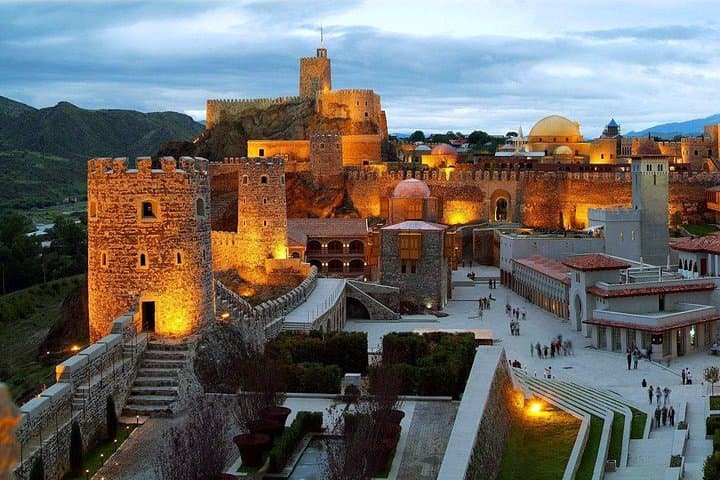
A minibus eases out of Tbilisi as morning light slants across the valley road; trees press close and the air smells faintly of mineral springs. The route moves from cultivated foothills into the dense, green bowl of Borjomi, where water still hisses from public fountains and steam drifts from traditional baths. By midday the silhouette of Rabati castle rises — layered stone, a church bell, a minaret and the glazed tiles of a restored museum area — a place where opposing histories sit side by side.
A minibus eases out of Tbilisi as morning light slants across the valley road; trees press close and the air smells faintly of mineral springs. The route moves from cultivated foothills into the dense, green bowl of Borjomi, where water still hisses from public fountains and steam drifts from traditional baths. By midday the silhouette of Rabati castle rises — layered stone, a church bell, a minaret and the glazed tiles of a restored museum area — a place where opposing histories sit side by side.
Vardzia arrives last: a ribbed cliff face pierced with doorways, staircases and faded frescoes that look out over the Kura River daring the current below. The cave town was carved in the 12th century during the reign of King Giorgi III and Queen Tamar; its tuff rock and volcanic deposits made the site both defensible and habitable for centuries. Cultural traces here include Orthodox monasteries, Ottoman-era ruins and Soviet-era bathhouses in Borjomi, giving the day a layered historical arc.
Practically speaking, expect an 11–12 hour round trip with multiple short walks on uneven stone and staircases — Vardzia’s passages can be narrow and steep. Bring sturdy shoes, sun protection, and a light daypack; water and a restroom stop are provided on the coach, but small shops at sites accept cash only. Start early to avoid afternoon heat, and allow time for photography and museum visits. This is a long but achievable day that blends geological spectacle, living spa culture and medieval architecture in a single stretch from Tbilisi.