THE ADVENTURE COLLECTIVE® · Independent discovery and booking for outdoor travel

Spend a day exploring Chefchaouen’s blue streets and hiking to Akchour’s waterfalls and God’s Bridge. This practical guide outlines what to expect on the trail, cultural context, and how to prepare for the day’s terrain and weather.
Spend a day exploring Chefchaouen’s blue streets and hiking to Akchour’s waterfalls and God’s Bridge. This practical guide outlines what to expect on the trail, cultural context, and how to prepare for the day’s terrain and weather.
You step out of the air-conditioned van into Chefchaouen’s steep blue alleys, the air bright with citrus and frying spices. Stone steps climb toward a mirador; behind the town the Rif Mountains press close, their ridgelines slicing the sky. Later the trail to Akchour threads cedar and holm-oak, a rocky ribbon guiding you toward cool plunge pools and the graceful span of God’s Bridge where water keeps carving the limestone.
Verified experiences and guided adventures in the surrounding area.
Operated by Tangier Day Tours · Chefchaouen, Tanger-Tetouan-Al Hoceima
You step out of the air-conditioned van into Chefchaouen’s steep blue alleys, the air bright with citrus and frying spices. Stone steps climb toward a mirador; behind the town the Rif Mountains press close, their ridgelines slicing the sky. Later the trail to Akchour threads cedar and holm-oak, a rocky ribbon guiding you toward cool plunge pools and the graceful span of God’s Bridge where water keeps carving the limestone.
Chefchaouen was founded in the 15th century by Andalusian refugees and retains strong Moroccan-Andalusian craft traditions; its indigo walls reflect a local aesthetic and an economy built on textiles, leather, and tourism. Geologically the Rif is composed of folded limestone and marl, so expect loose scree on some approaches and sharp, exposed rock at viewpoints. Culture here moves at a deliberate pace—souqs, small cafes, and kasbah terraces provide a human counterpoint to the landscape’s big gestures.
Practical guidance: this full-day excursion runs about 5–6 hours including transport. The Akchour walk is roughly 4–6 km round-trip with 150–300 m cumulative elevation gain depending on route choice; terrain alternates packed dirt, stone steps, and exposed rock. Wear sturdy shoes, carry 1–2 liters of water, sun protection, and a small towel if you plan to swim. Start early to beat heat and crowds, respect modest dress in the medina, and move carefully after rain—the trails can be slippery. Guides often share quick historical anecdotes.
moderate.
5–6 hours.
Moderate fitness; able to handle uneven ground, short uphill sections, and several flights of stone steps.
The main route to the waterfalls is about 4–6 km round-trip with 150–300 m cumulative elevation gain depending on how far you explore past God’s Bridge.
Yes—many segments are family-friendly but expect stairs and uneven surfaces; private transport and guide support make it accessible for most fitness levels.
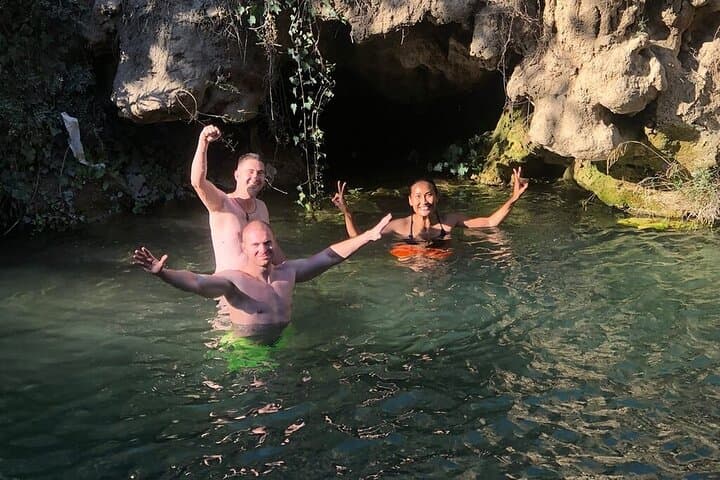
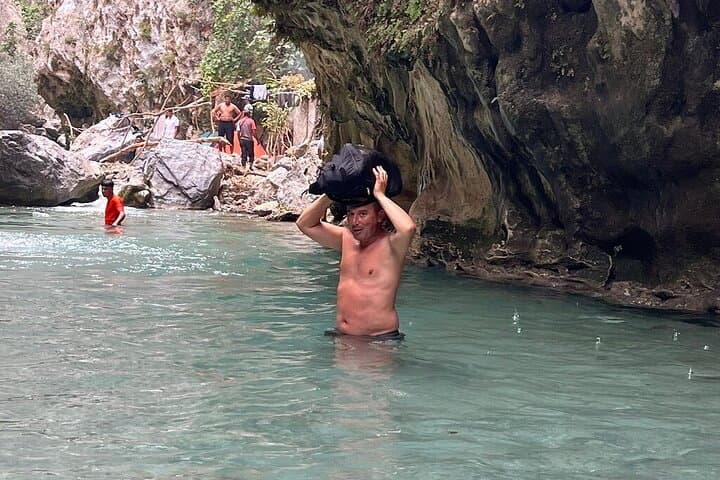
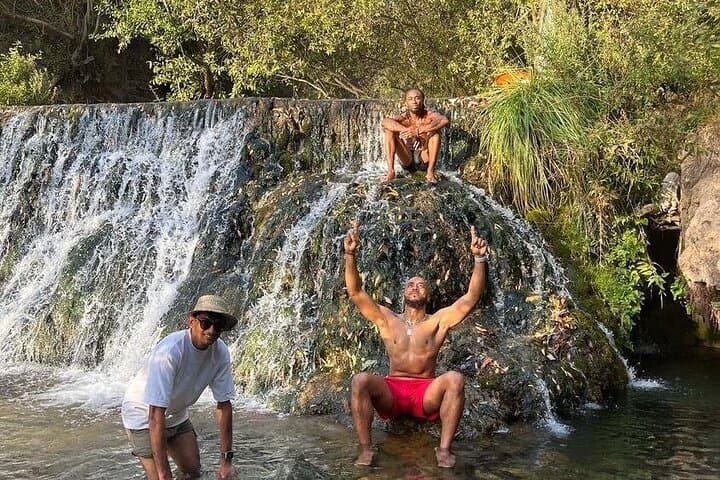
Yes in warm months—pools are popular for a quick dip; water is cool year-round and currents near edges can be strong, so use caution.
The full-day itinerary allocates 2–3 hours in Chefchaouen including key viewpoints, the kasbah area, and some market exploration, but not extensive shopping time.
Chefchaouen was founded in 1471 as a fortress by Morisco and Andalusian exiles; its architecture and crafts retain that Iberian influence.
Trails around Akchour are vulnerable to erosion and litter; use local guides, pack out trash, and avoid trampling vegetation to reduce impact.
Tangier Day Tours operates guided outdoor trips and adventures with an emphasis on safety, stewardship, and memorable experiences.
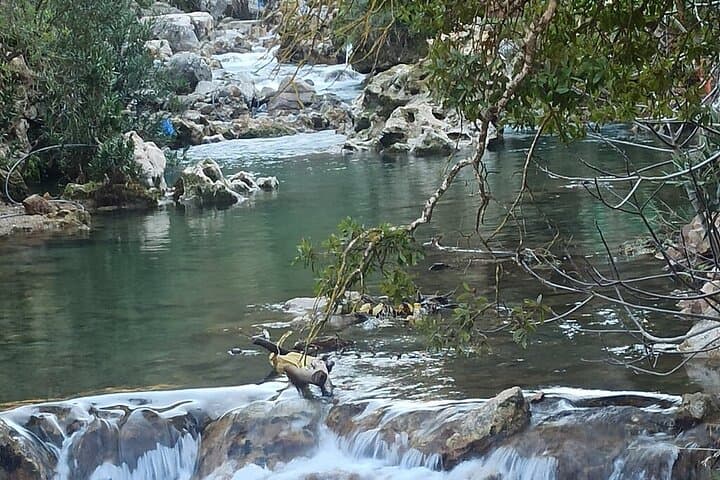
You step out of the air-conditioned van into Chefchaouen’s steep blue alleys, the air bright with citrus and frying spices. Stone steps climb toward a mirador; behind the town the Rif Mountains press close, their ridgelines slicing the sky. Later the trail to Akchour threads cedar and holm-oak, a rocky ribbon guiding you toward cool plunge pools and the graceful span of God’s Bridge where water keeps carving the limestone.
You step out of the air-conditioned van into Chefchaouen’s steep blue alleys, the air bright with citrus and frying spices. Stone steps climb toward a mirador; behind the town the Rif Mountains press close, their ridgelines slicing the sky. Later the trail to Akchour threads cedar and holm-oak, a rocky ribbon guiding you toward cool plunge pools and the graceful span of God’s Bridge where water keeps carving the limestone.
Chefchaouen was founded in the 15th century by Andalusian refugees and retains strong Moroccan-Andalusian craft traditions; its indigo walls reflect a local aesthetic and an economy built on textiles, leather, and tourism. Geologically the Rif is composed of folded limestone and marl, so expect loose scree on some approaches and sharp, exposed rock at viewpoints. Culture here moves at a deliberate pace—souqs, small cafes, and kasbah terraces provide a human counterpoint to the landscape’s big gestures.
Practical guidance: this full-day excursion runs about 5–6 hours including transport. The Akchour walk is roughly 4–6 km round-trip with 150–300 m cumulative elevation gain depending on route choice; terrain alternates packed dirt, stone steps, and exposed rock. Wear sturdy shoes, carry 1–2 liters of water, sun protection, and a small towel if you plan to swim. Start early to beat heat and crowds, respect modest dress in the medina, and move carefully after rain—the trails can be slippery. Guides often share quick historical anecdotes.