THE ADVENTURE COLLECTIVE® · Independent discovery and booking for outdoor travel

A full-day loop from Sarajevo that pairs medieval history with karst lakes: see Jajce’s central waterfall, ride a small electric boat on Pliva, and visit centuries-old oak watermills in a landscape shaped by limestone currents.
A full-day loop from Sarajevo that pairs medieval history with karst lakes: see Jajce’s central waterfall, ride a small electric boat on Pliva, and visit centuries-old oak watermills in a landscape shaped by limestone currents.
You set out from Sarajevo before dawn, the road unspooling through forested karst ridges as the Bosna River drops away to your right. By mid-morning the town of Jajce announces itself with a sudden vertical line of white—its 17-meter waterfall plunging through the center of town—while further on the Pliva Lakes lie flat and deep like a challenge daring you to slow down.
Verified experiences and guided adventures in the surrounding area.
Operated by Private Driver Guide Bosnia & Herzegovina Sarajevo · Jajce, Central Bosnia
You set out from Sarajevo before dawn, the road unspooling through forested karst ridges as the Bosna River drops away to your right. By mid-morning the town of Jajce announces itself with a sudden vertical line of white—its 17-meter waterfall plunging through the center of town—while further on the Pliva Lakes lie flat and deep like a challenge daring you to slow down.
Jajce was a medieval Bosnian seat of power; Travnik later became an Ottoman administrative center. That layered history is visible in the stone of Jajce Fortress, the Ottoman-era Sulejmanija (Šarena) Mosque in Travnik, and the working Mliniči—400-year-old oak watermills that once ground grain for surrounding villages.
Geology here is classic Dinaric karst: limestone, springs and tufa-forming streams that build terraces and lakes. The Pliva Lakes and the wooden mills are an example of human craft adapted to those currents; the mills themselves are an architectural curiosity worth studying up close.
Practical guidance: this is a long, full-day loop — expect about 10 hours on a shared vehicle with several short walks on uneven cobbles and lakeshore paths. Wear grippy shoes, bring layered clothing for river breezes, sun protection and insect repellent. Bring some local currency for snacks and a small souvenir; the tour includes a light lunch and bottled water, but swimming or boat rental at Pliva is optional and pay-as-you-go.
Timing tip: photos are best early at the Jajce fall or late afternoon at the Pliva watermills to avoid the midday light and crowds. Respect the mills and fragile shore vegetation: stick to paths and leave no trace.
easy.
10 hours.
Suitable for most fitness levels; requires several short walks (10–30 minutes) on uneven ground and steps.
The tour runs about 10 hours from Sarajevo with early morning pickup; exact pickup times depend on your hotel and operator schedule.
Yes—Pliva Lakes offer swimming and pedal boats at your own expense; bring swimwear and a towel if you plan to enter the water.
The tour lists some admissions as included, but small site fees or optional boat rides may require extra payment—confirm with the operator ahead of time.
Inform the operator at booking about dietary restrictions; they typically provide sandwiches and snacks and can adjust when notified in advance.
Jajce was a medieval Bosnian royal seat in the 14th–15th centuries; Travnik later served as an Ottoman provincial capital and retains Ottoman-era mosques and houses.
The Pliva Lakes and watermills are sensitive to shoreline erosion and water quality; stick to marked paths and avoid littering to protect wooden structures and aquatic habitats.
Private Driver Guide Bosnia & Herzegovina Sarajevo operates guided outdoor trips and adventures with an emphasis on safety, stewardship, and memorable experiences.
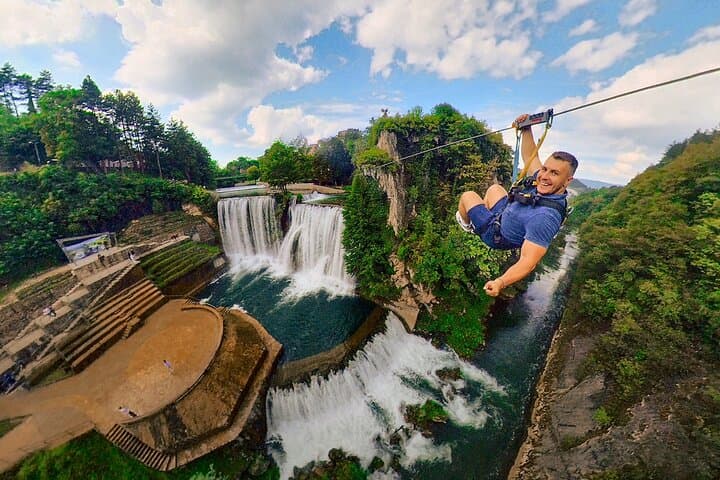

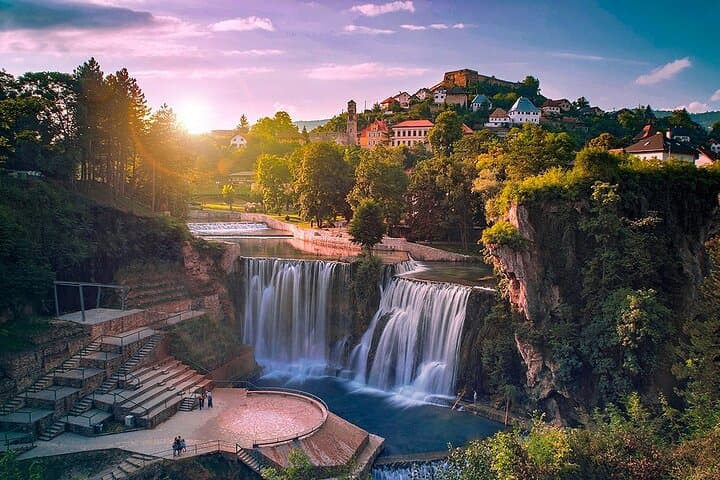

You set out from Sarajevo before dawn, the road unspooling through forested karst ridges as the Bosna River drops away to your right. By mid-morning the town of Jajce announces itself with a sudden vertical line of white—its 17-meter waterfall plunging through the center of town—while further on the Pliva Lakes lie flat and deep like a challenge daring you to slow down.
You set out from Sarajevo before dawn, the road unspooling through forested karst ridges as the Bosna River drops away to your right. By mid-morning the town of Jajce announces itself with a sudden vertical line of white—its 17-meter waterfall plunging through the center of town—while further on the Pliva Lakes lie flat and deep like a challenge daring you to slow down.
Jajce was a medieval Bosnian seat of power; Travnik later became an Ottoman administrative center. That layered history is visible in the stone of Jajce Fortress, the Ottoman-era Sulejmanija (Šarena) Mosque in Travnik, and the working Mliniči—400-year-old oak watermills that once ground grain for surrounding villages.
Geology here is classic Dinaric karst: limestone, springs and tufa-forming streams that build terraces and lakes. The Pliva Lakes and the wooden mills are an example of human craft adapted to those currents; the mills themselves are an architectural curiosity worth studying up close.
Practical guidance: this is a long, full-day loop — expect about 10 hours on a shared vehicle with several short walks on uneven cobbles and lakeshore paths. Wear grippy shoes, bring layered clothing for river breezes, sun protection and insect repellent. Bring some local currency for snacks and a small souvenir; the tour includes a light lunch and bottled water, but swimming or boat rental at Pliva is optional and pay-as-you-go.
Timing tip: photos are best early at the Jajce fall or late afternoon at the Pliva watermills to avoid the midday light and crowds. Respect the mills and fragile shore vegetation: stick to paths and leave no trace.