THE ADVENTURE COLLECTIVE® · Independent discovery and booking for outdoor travel

Take a private full‑day from Prague to the Bastei Bridge in Saxon Switzerland and the historic city of Dresden. This active day blends short sandstone hikes and a focused city walking tour for history and geology in one trip.
Take a private full‑day from Prague to the Bastei Bridge in Saxon Switzerland and the historic city of Dresden. This active day blends short sandstone hikes and a focused city walking tour for history and geology in one trip.
You leave Prague on a road that eases into the Saxon countryside, and the rush of the city is replaced by cliffs that loom like weathered fortresses. The Bastei Bridge juts across a seam of sandstone, and the Elbe below threads the valley—water and rock testing each other’s patience over millennia.
Verified experiences and guided adventures in the surrounding area.
Operated by Thomas Travel · Rathen, Saxony
You leave Prague on a road that eases into the Saxon countryside, and the rush of the city is replaced by cliffs that loom like weathered fortresses. The Bastei Bridge juts across a seam of sandstone, and the Elbe below threads the valley—water and rock testing each other’s patience over millennia.
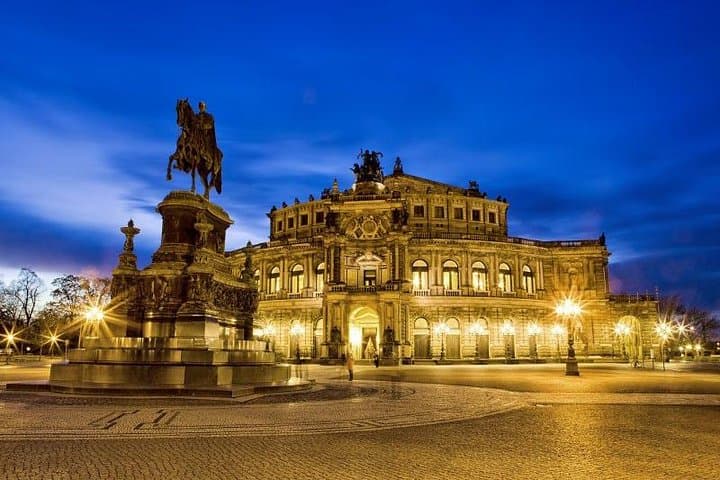
Geology here is plain and honest: wind, rain and the slow chemistry of sandstone carved towers and narrow gorges. The Bastei itself is part of the Elbe Sandstone Mountains, shaped in the Mesozoic and popular with 19th‑century Romantic painters who turned these raw forms into cultural icons. Southward, Dresden reads like a European history book—baroque facades, the rebuilt Frauenkirche, and the Zwinger’s art collections that catalog centuries of taste, loss and revival.
Expect an active but accessible day: a roughly 3 km loop at Bastei with 100–200 m of cumulative elevation gain on stone steps and compact paths, followed by a 2–4 km walking tour through Dresden’s historic core over cobbles. Trails can be narrow; wind can be a factor on exposed viewpoints.
Practical edge: wear grippy shoes, layer for quick temperature shifts, bring a valid ID for cross‑border travel, and plan for an 11‑hour day including transfers. Bottled water is commonly provided on private tours, but bring snacks if you prefer local pastries for a riverside break.
Timing matters—early departures avoid crowds at the bridge and give you more daylight for Dresden’s museums and galleries.
easy.
11 hours.
Light to moderate fitness: able to walk several kilometers and navigate stairs; suitable for most active travelers.
Private transportation is listed among the inclusions—confirm the pickup point at booking and expect central Prague pickup options.
Some itinerary items list admission as included and others not applicable; confirm which museum entries are covered when you book to avoid surprises.
The Bastei viewpoint involves a short loop of around 3 km with stone steps and roughly 100–200 m cumulative elevation gain—active but accessible for most visitors.
The tour notes stroller accessibility and infant seats; however, some Bastei paths have stairs where a carrier may be more practical than a wheeled stroller.
Saxon Switzerland became a center for 19th‑century Romantic art and climbing; Dresden’s baroque centre was largely rebuilt after WWII and now houses major European art collections.
Stick to marked paths—sandstone is vulnerable to erosion and many rock faces are protected; support local conservation by staying on trails and carrying out waste.
Thomas Travel operates guided outdoor trips and adventures with an emphasis on safety, stewardship, and memorable experiences.
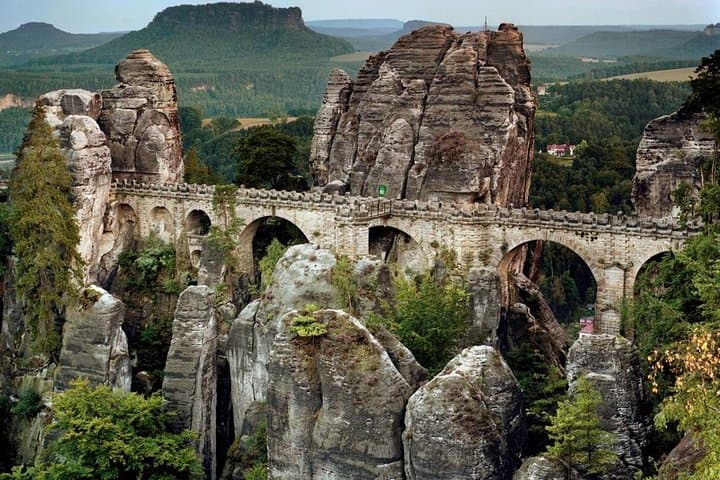


You leave Prague on a road that eases into the Saxon countryside, and the rush of the city is replaced by cliffs that loom like weathered fortresses. The Bastei Bridge juts across a seam of sandstone, and the Elbe below threads the valley—water and rock testing each other’s patience over millennia.
You leave Prague on a road that eases into the Saxon countryside, and the rush of the city is replaced by cliffs that loom like weathered fortresses. The Bastei Bridge juts across a seam of sandstone, and the Elbe below threads the valley—water and rock testing each other’s patience over millennia.
Geology here is plain and honest: wind, rain and the slow chemistry of sandstone carved towers and narrow gorges. The Bastei itself is part of the Elbe Sandstone Mountains, shaped in the Mesozoic and popular with 19th‑century Romantic painters who turned these raw forms into cultural icons. Southward, Dresden reads like a European history book—baroque facades, the rebuilt Frauenkirche, and the Zwinger’s art collections that catalog centuries of taste, loss and revival.
Expect an active but accessible day: a roughly 3 km loop at Bastei with 100–200 m of cumulative elevation gain on stone steps and compact paths, followed by a 2–4 km walking tour through Dresden’s historic core over cobbles. Trails can be narrow; wind can be a factor on exposed viewpoints.
Practical edge: wear grippy shoes, layer for quick temperature shifts, bring a valid ID for cross‑border travel, and plan for an 11‑hour day including transfers. Bottled water is commonly provided on private tours, but bring snacks if you prefer local pastries for a riverside break.
Timing matters—early departures avoid crowds at the bridge and give you more daylight for Dresden’s museums and galleries.