THE ADVENTURE COLLECTIVE® · Independent discovery and booking for outdoor travel

Leave Paris for a full-day private van tour to Utah Beach and Sainte-Mère-Église, where dunes, bunkers and quiet cemeteries tell the story of June 6, 1944. This guided experience mixes museum exhibits with on-the-ground battlefield stops and easy coastal walks.
Leave Paris for a full-day private van tour to Utah Beach and Sainte-Mère-Église, where dunes, bunkers and quiet cemeteries tell the story of June 6, 1944. This guided experience mixes museum exhibits with on-the-ground battlefield stops and easy coastal walks.
You pull away from Paris before dawn; the city lights shrink while the van hums west across highways toward the Cotentin peninsula. Salt air and low Normandy skies replace the metropolis — by late morning you stand on a wide pale beach where history presses at your feet: dunes, concrete bunkers half-swallowed by sand, and distant horizons where armadas once gathered.
Verified experiences and guided adventures in the surrounding area.
Operated by ADRIAN ROADS · Sainte-Marie-du-Mont, Normandy
You pull away from Paris before dawn; the city lights shrink while the van hums west across highways toward the Cotentin peninsula. Salt air and low Normandy skies replace the metropolis — by late morning you stand on a wide pale beach where history presses at your feet: dunes, concrete bunkers half-swallowed by sand, and distant horizons where armadas once gathered.
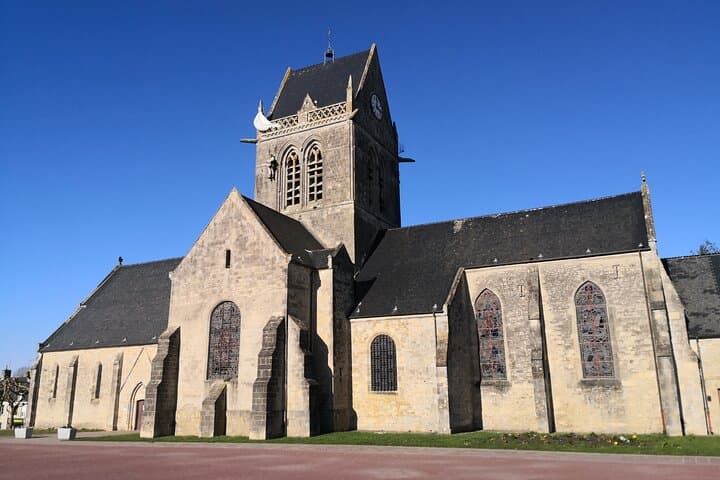
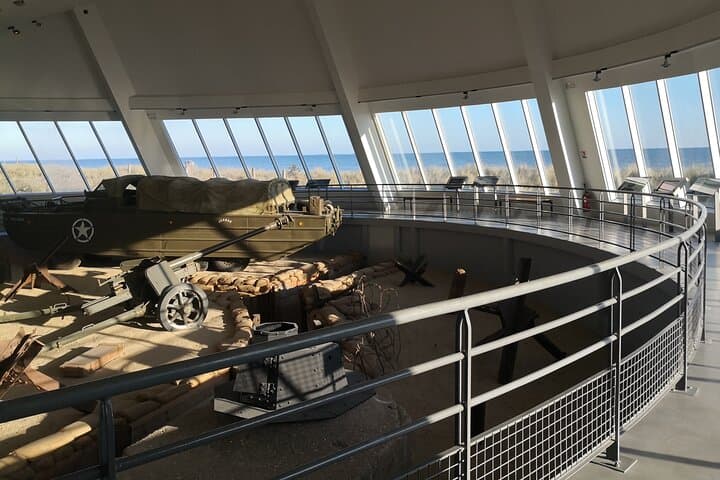
This route threads key D-Day places: Utah Beach, the Utah Beach Museum with its rare B-26 bomber, Sainte-Marie-du-Mont and Sainte-Mère-Église with its famous church steeple, and the Normandy American Cemetery overlooking Omaha Beach. Geologically, the beaches are broad, sandy strands backed by low dunes and marshes carved by tidal flows and historic drainage projects. Culturally this coastline retains small fishing villages, pastoral bocage, and towns that preserved wartime memory through monuments and stained glass.
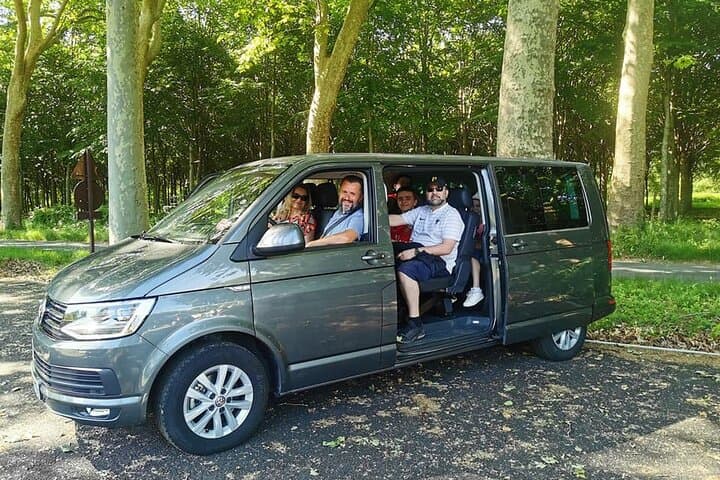
Expect a day paced by short walks, museum time, and photo stops. A driver-guide narrates tactical choices — why Utah was chosen to reach Cherbourg, how airborne units opened corridors — while pointing out surviving bunkers and memorials.
Practical guidance: it’s a long day (about 13–14 hours) in a small private van; wear sturdy shoes for walking on sand and grass, bring layered clothing for coastal wind, and pack water and snacks for the gaps between towns. In sacred places, follow cemetery rules: low voices, no climbing on headstones. If you want more context, ask your guide for recommended reading or the best vantage points for sunset along the shore.
easy.
13–14 hours.
Suitable for travelers of most fitness levels; expect multiple short walks on sand and grass, mostly low-impact.
Yes — the tour includes admission to the Utah Beach Museum as listed in the inclusions.
The tour offers hotel pickup and drop-off in central Paris; exact pickup location is confirmed at booking.
The itinerary is rated easy and appropriate for most ages, but it involves a long day in the van and some walking on sand; inform the operator of mobility needs when booking.
Photography is allowed at most outdoor sites; at the American Cemetery, be respectful and avoid photographing mourners and close-up shots of headstones without permission.
These beaches were part of Operation Overlord on June 6, 1944; Utah Beach was assaulted by the U.S. 4th Infantry Division supported by airborne units, chosen to secure a route to Cherbourg.
The sites balance public access with preservation—stay on marked paths, avoid touching fragile artifacts, and support local museums that fund conservation and interpretation.
ADRIAN ROADS operates guided outdoor trips and adventures with an emphasis on safety, stewardship, and memorable experiences.

You pull away from Paris before dawn; the city lights shrink while the van hums west across highways toward the Cotentin peninsula. Salt air and low Normandy skies replace the metropolis — by late morning you stand on a wide pale beach where history presses at your feet: dunes, concrete bunkers half-swallowed by sand, and distant horizons where armadas once gathered.
You pull away from Paris before dawn; the city lights shrink while the van hums west across highways toward the Cotentin peninsula. Salt air and low Normandy skies replace the metropolis — by late morning you stand on a wide pale beach where history presses at your feet: dunes, concrete bunkers half-swallowed by sand, and distant horizons where armadas once gathered.
This route threads key D-Day places: Utah Beach, the Utah Beach Museum with its rare B-26 bomber, Sainte-Marie-du-Mont and Sainte-Mère-Église with its famous church steeple, and the Normandy American Cemetery overlooking Omaha Beach. Geologically, the beaches are broad, sandy strands backed by low dunes and marshes carved by tidal flows and historic drainage projects. Culturally this coastline retains small fishing villages, pastoral bocage, and towns that preserved wartime memory through monuments and stained glass.
Expect a day paced by short walks, museum time, and photo stops. A driver-guide narrates tactical choices — why Utah was chosen to reach Cherbourg, how airborne units opened corridors — while pointing out surviving bunkers and memorials.
Practical guidance: it’s a long day (about 13–14 hours) in a small private van; wear sturdy shoes for walking on sand and grass, bring layered clothing for coastal wind, and pack water and snacks for the gaps between towns. In sacred places, follow cemetery rules: low voices, no climbing on headstones. If you want more context, ask your guide for recommended reading or the best vantage points for sunset along the shore.