THE ADVENTURE COLLECTIVE® · Independent discovery and booking for outdoor travel

A 2.5–3 hour drive from Marrakech opens into the thunder of the Ouzoud Waterfalls—three cascading tiers dropping 110 meters through olive groves and Berber villages. This day trip blends easy viewpoints, a riverside descent, and an optional boat ride for anyone seeking a close-up of Morocco’s most dramatic falls.
A 2.5–3 hour drive from Marrakech opens into the thunder of the Ouzoud Waterfalls—three cascading tiers dropping 110 meters through olive groves and Berber villages. This day trip blends easy viewpoints, a riverside descent, and an optional boat ride for anyone seeking a close-up of Morocco’s most dramatic falls.
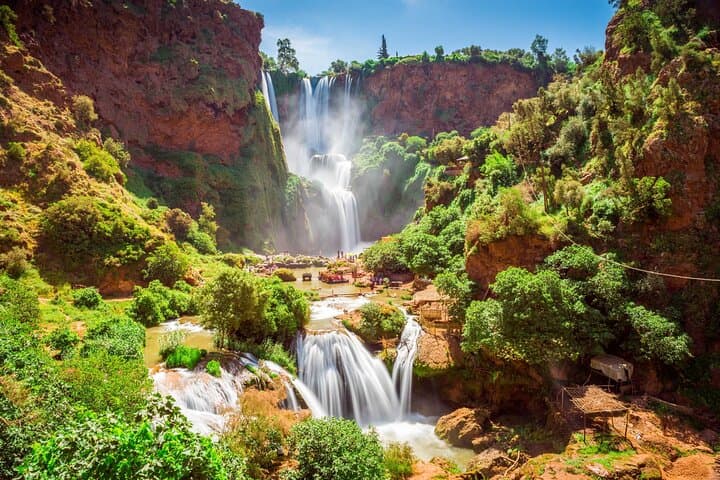
You arrive before the crowds, the minibus easing away from Marrakech's ochre light and into the slow rhythm of the Atlas foothills. The road unfurls through scrub and olive terraces; the air cools and the first distant roar of water announces itself long before the canyon appears. At the Ouzoud Waterfalls the world compresses into sound and spray—three tiers plunging a combined 110 meters into a green gorge, mist lifting in sheets so persistent it seems the cliffs are breathing.
Verified experiences and guided adventures in the surrounding area.
Operated by City Tours Sahara · Ouzoud, Béni Mellal-Khénifra
You arrive before the crowds, the minibus easing away from Marrakech's ochre light and into the slow rhythm of the Atlas foothills. The road unfurls through scrub and olive terraces; the air cools and the first distant roar of water announces itself long before the canyon appears. At the Ouzoud Waterfalls the world compresses into sound and spray—three tiers plunging a combined 110 meters into a green gorge, mist lifting in sheets so persistent it seems the cliffs are breathing.
The falls sit in a landscape shaped by human hands and geologic patience. These cliffs are limestone carved by seasonal torrents, while terraces of olive groves and small Berber villages cling to the slopes—centuries of hillside agriculture that feed local communities and frame the view. The name Ouzoud comes from the Amazigh word for 'olive', and the groves around the cascades still produce oil pressed much as they have for generations.
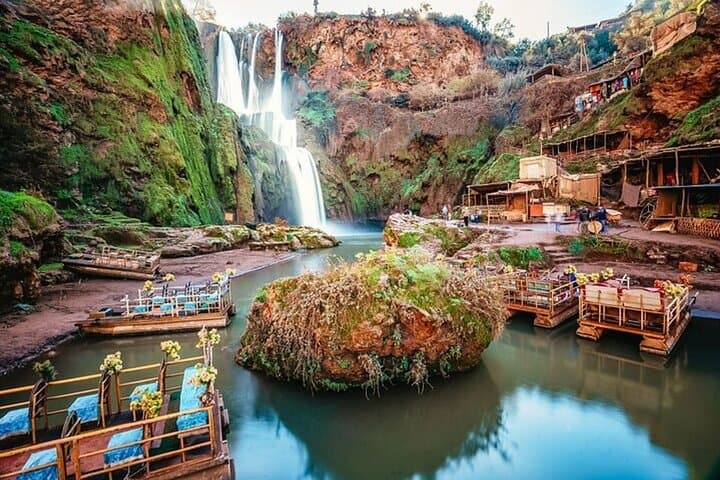
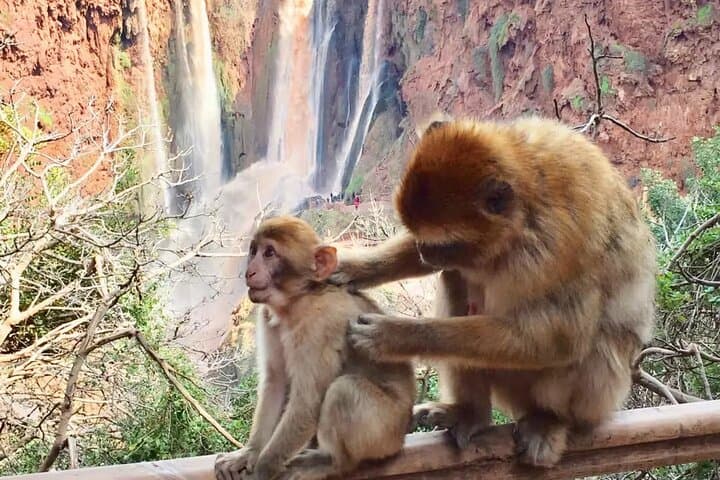
History and daily life happen along the trail. Stone paths lead past cafés where locals brew mint tea, and children sometimes ferry small bundles of wood. Barbary macaques, the wild monkeys that have made the cliffs their home, move with uncanny familiarity between visitors and branches; they are charismatic but unpredictable—watch, photograph, and keep a respectful distance.
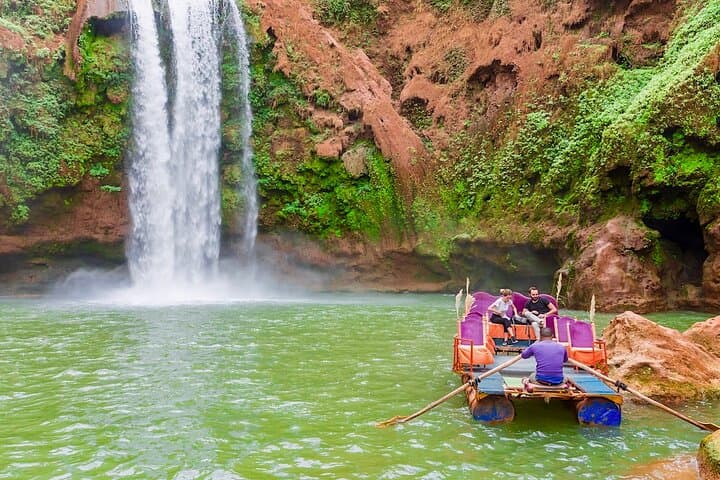
The route around the falls is flexible: panoramic viewpoints that demand only a short walk, a steeper descent to river level for a close-up perspective, and an optional motorized pirogue that takes you near the base for a spray-drenched thrill. Terrain is uneven—rock steps, packed dirt, and occasional slick flagstones—so the experience is light to moderate on fitness but firm footwear is non-negotiable.
Plan for a full day from Marrakech: roughly 2.5–3 hours each way by car depending on traffic, plus 2–4 hours on site. Photographers will chase the soft light in the morning and the golden backlight late afternoon; midday is busiest and wettest. Bring water, a quick-dry layer, and small change for local vendors and boat operators. Respect local rules: no feeding wildlife, pack out plastics, and keep to marked paths to protect fragile vegetation and the river's course.
Ouzoud is an accessible encounter with Morocco's wild side—where geology, agriculture, and village life meet in a single, roaring frame. It's an easy adventure to reach from Marrakech that rewards curiosity: listen for the river daring you to come closer, and let the falls set the pace for the day.
moderate.
8–10 hours (including travel from Marrakech).
Suitable for most people with normal fitness; involves several short steep sections and many stairs.
The falls sit about 150 km northeast of Marrakech; expect roughly 2.5–3 hours by car each way depending on traffic.
There is no formal national park fee, but a modest admission may be charged at certain viewpoints or for parking; guided tour pricing often includes any local access fees.
Yes—small motorized boats run in the river to bring visitors close to the base; rides are optional, typically charged locally, and can get you wet.
Yes—families frequent the site, but children should be supervised near edges, stairs, and when monkeys are present.
Swimming is possible in some calmer pools but is not widely advised due to strong currents and variable water quality; use caution and local advice.
No—the main viewpoints are reachable but the descent to river level involves steep, uneven steps that are not accessible for wheelchairs or strollers.
The area has long been worked by Amazigh (Berber) communities; the name Ouzoud references the surrounding olive groves that have sustained local agriculture for generations.
Local initiatives encourage responsible tourism—avoid feeding wildlife, bring reusable water bottles, and stick to trails to protect the gorge's vegetation and water quality.
City Tours Sahara operates guided outdoor trips and adventures with an emphasis on safety, stewardship, and memorable experiences.
You arrive before the crowds, the minibus easing away from Marrakech's ochre light and into the slow rhythm of the Atlas foothills. The road unfurls through scrub and olive terraces; the air cools and the first distant roar of water announces itself long before the canyon appears. At the Ouzoud Waterfalls the world compresses into sound and spray—three tiers plunging a combined 110 meters into a green gorge, mist lifting in sheets so persistent it seems the cliffs are breathing.
You arrive before the crowds, the minibus easing away from Marrakech's ochre light and into the slow rhythm of the Atlas foothills. The road unfurls through scrub and olive terraces; the air cools and the first distant roar of water announces itself long before the canyon appears. At the Ouzoud Waterfalls the world compresses into sound and spray—three tiers plunging a combined 110 meters into a green gorge, mist lifting in sheets so persistent it seems the cliffs are breathing.
The falls sit in a landscape shaped by human hands and geologic patience. These cliffs are limestone carved by seasonal torrents, while terraces of olive groves and small Berber villages cling to the slopes—centuries of hillside agriculture that feed local communities and frame the view. The name Ouzoud comes from the Amazigh word for 'olive', and the groves around the cascades still produce oil pressed much as they have for generations.
History and daily life happen along the trail. Stone paths lead past cafés where locals brew mint tea, and children sometimes ferry small bundles of wood. Barbary macaques, the wild monkeys that have made the cliffs their home, move with uncanny familiarity between visitors and branches; they are charismatic but unpredictable—watch, photograph, and keep a respectful distance.
The route around the falls is flexible: panoramic viewpoints that demand only a short walk, a steeper descent to river level for a close-up perspective, and an optional motorized pirogue that takes you near the base for a spray-drenched thrill. Terrain is uneven—rock steps, packed dirt, and occasional slick flagstones—so the experience is light to moderate on fitness but firm footwear is non-negotiable.
Plan for a full day from Marrakech: roughly 2.5–3 hours each way by car depending on traffic, plus 2–4 hours on site. Photographers will chase the soft light in the morning and the golden backlight late afternoon; midday is busiest and wettest. Bring water, a quick-dry layer, and small change for local vendors and boat operators. Respect local rules: no feeding wildlife, pack out plastics, and keep to marked paths to protect fragile vegetation and the river's course.
Ouzoud is an accessible encounter with Morocco's wild side—where geology, agriculture, and village life meet in a single, roaring frame. It's an easy adventure to reach from Marrakech that rewards curiosity: listen for the river daring you to come closer, and let the falls set the pace for the day.