THE ADVENTURE COLLECTIVE® · Independent discovery and booking for outdoor travel

Escape Marrakech for a wind-shaped Atlantic town: Essaouira’s ramparts, fishing port, and argan groves are within a comfortable private day trip. This guide covers history, geology, what to expect on the drive, and how to plan your time ashore.
Escape Marrakech for a wind-shaped Atlantic town: Essaouira’s ramparts, fishing port, and argan groves are within a comfortable private day trip. This guide covers history, geology, what to expect on the drive, and how to plan your time ashore.
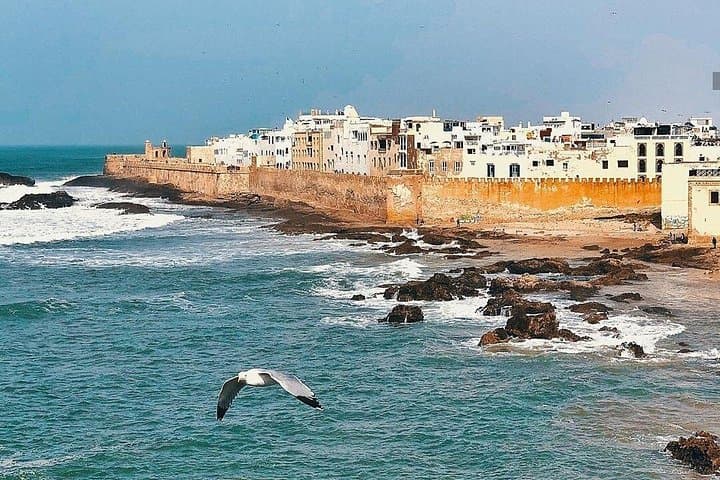
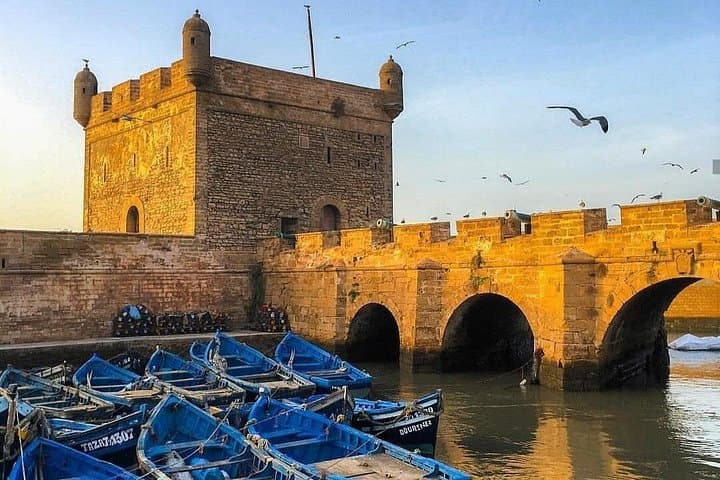
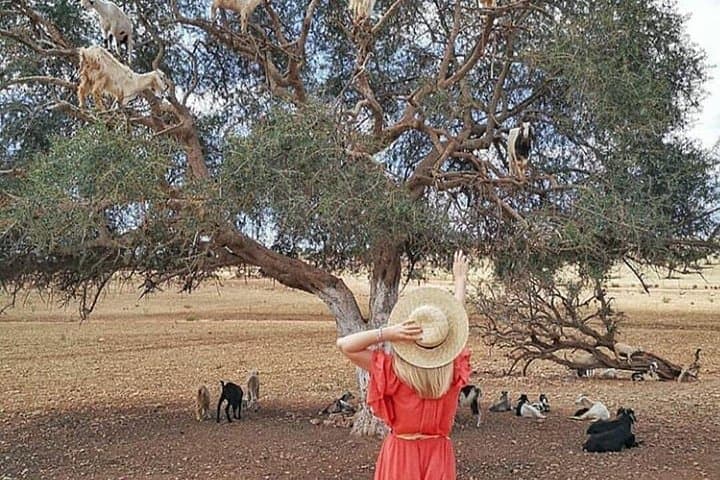
The road opens like an atlas — red-earth highways folding toward the Atlantic, argan trees lining the shoulder as the ocean’s scent first reaches the windows. Travelers arrive in Essaouira to wind and salt on the face of the old port, whitewashed walls punctuated by blue doors and the low cry of fishermen hauling nets.
Verified experiences and guided adventures in the surrounding area.
Operated by Marrakech day Trip · Essaouira, Marrakesh-Safi
The road opens like an atlas — red-earth highways folding toward the Atlantic, argan trees lining the shoulder as the ocean’s scent first reaches the windows. Travelers arrive in Essaouira to wind and salt on the face of the old port, whitewashed walls punctuated by blue doors and the low cry of fishermen hauling nets.
Essaouira, once called Mogador by European traders, carries layers of history: a 18th-century Portuguese-style rampart, a 19th-century Moroccan medina reworked into a UNESCO-protected urban plan, and a fishing culture that still sets the day’s rhythm. Geologically the town perches on coastal limestone and sand, where winds carve dunes down to the long beach. The art scene—with galleries and carved-wood workshops—grew from that seafaring trade, while nearby argan forests host cooperatives that have shaped local women's economies.
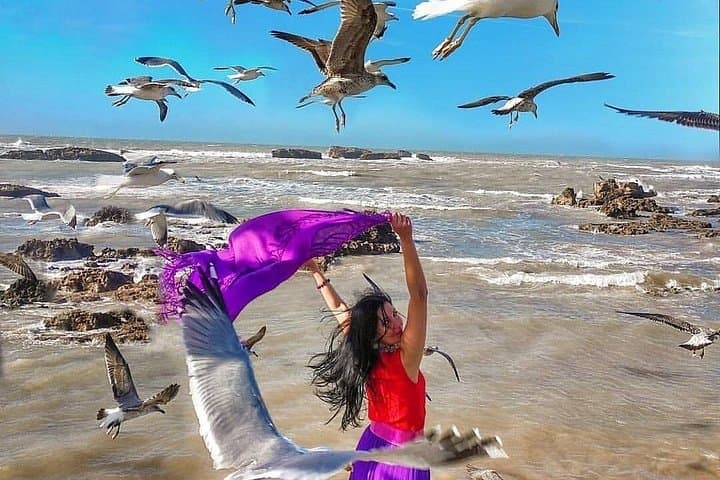
Visitors will wander the medina’s grids, watch seabirds wheel above the fortified sea walls, and sample seafood at the port stalls. The wind often pushes kites across the beach and can make the coastline feel vast and active; town alleys, by contrast, feel calm and human-scaled.
Practical guidance: expect a 2.5–3 hour drive each way from Marrakech, about 10 hours total including stops. Pack a windproof layer, sunscreen, and sturdy shoes for cobbled streets. Plan for cash for market purchases and allow time for a cooperative visit to learn about argan oil production. The private transfer model keeps the day flexible: set pick-up from your riad, choose your lunch spot, and meet the driver back at the agreed port point for the afternoon return.
easy.
10 hours (approx.).
Minimal fitness required for walking on cobbles and short climbs; comfortable mobility helps for exploring the medina.
The drive typically takes 2.5–3 hours each way depending on traffic and stops along the route.
Lunch is not included; you will have free time to choose a seaside restaurant or market stall in Essaouira.
Yes; most operators stop at a local women’s cooperative where you can see argan oil production and sample products.
Yes; the operator notes stroller accessibility and infant seats are available, but cobbled streets can be uneven.
Essaouira (formerly Mogador) developed as a fortified Atlantic port in the 18th century and has long been a crossroads of Berber, Arab, European and Jewish cultures.
Argan forests are managed through cooperatives that support sustainable harvesting; visitors should avoid trampling dunes and choose responsible craft sellers.
Marrakech day Trip operates guided outdoor trips and adventures with an emphasis on safety, stewardship, and memorable experiences.
The road opens like an atlas — red-earth highways folding toward the Atlantic, argan trees lining the shoulder as the ocean’s scent first reaches the windows. Travelers arrive in Essaouira to wind and salt on the face of the old port, whitewashed walls punctuated by blue doors and the low cry of fishermen hauling nets.
The road opens like an atlas — red-earth highways folding toward the Atlantic, argan trees lining the shoulder as the ocean’s scent first reaches the windows. Travelers arrive in Essaouira to wind and salt on the face of the old port, whitewashed walls punctuated by blue doors and the low cry of fishermen hauling nets.
Essaouira, once called Mogador by European traders, carries layers of history: a 18th-century Portuguese-style rampart, a 19th-century Moroccan medina reworked into a UNESCO-protected urban plan, and a fishing culture that still sets the day’s rhythm. Geologically the town perches on coastal limestone and sand, where winds carve dunes down to the long beach. The art scene—with galleries and carved-wood workshops—grew from that seafaring trade, while nearby argan forests host cooperatives that have shaped local women's economies.
Visitors will wander the medina’s grids, watch seabirds wheel above the fortified sea walls, and sample seafood at the port stalls. The wind often pushes kites across the beach and can make the coastline feel vast and active; town alleys, by contrast, feel calm and human-scaled.
Practical guidance: expect a 2.5–3 hour drive each way from Marrakech, about 10 hours total including stops. Pack a windproof layer, sunscreen, and sturdy shoes for cobbled streets. Plan for cash for market purchases and allow time for a cooperative visit to learn about argan oil production. The private transfer model keeps the day flexible: set pick-up from your riad, choose your lunch spot, and meet the driver back at the agreed port point for the afternoon return.