THE ADVENTURE COLLECTIVE® · Independent discovery and booking for outdoor travel

A long day that pairs a coastal drive with a UNESCO medina, Essaouira delivers seaport views, artisan lanes, and wide beaches. This shared tour from Marrakech is a practical way to see the city in a single, scenic day.
A long day that pairs a coastal drive with a UNESCO medina, Essaouira delivers seaport views, artisan lanes, and wide beaches. This shared tour from Marrakech is a practical way to see the city in a single, scenic day.
Sea salt and Atlantic wind meet the medina’s stone as the minivan pulls into Essaouira’s port: fishing boats creak, gulls thread across the low clouds, and the harbor’s wooden jetties set the tempo for the day. Strolling from the ramparts toward the market, visitors encounter a compact city built at sea level where every lane ends in a shore view or a painted door.
Verified experiences and guided adventures in the surrounding area.
Operated by Tours Around Morocco · Essaouira, Marrakesh-Safi
Sea salt and Atlantic wind meet the medina’s stone as the minivan pulls into Essaouira’s port: fishing boats creak, gulls thread across the low clouds, and the harbor’s wooden jetties set the tempo for the day. Strolling from the ramparts toward the market, visitors encounter a compact city built at sea level where every lane ends in a shore view or a painted door.
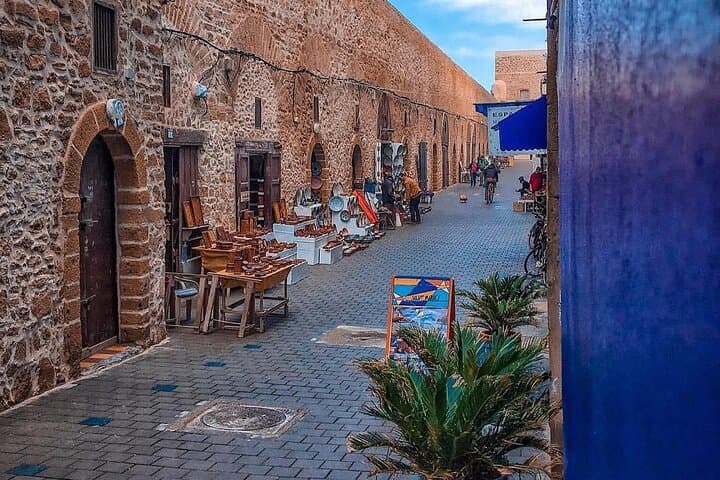
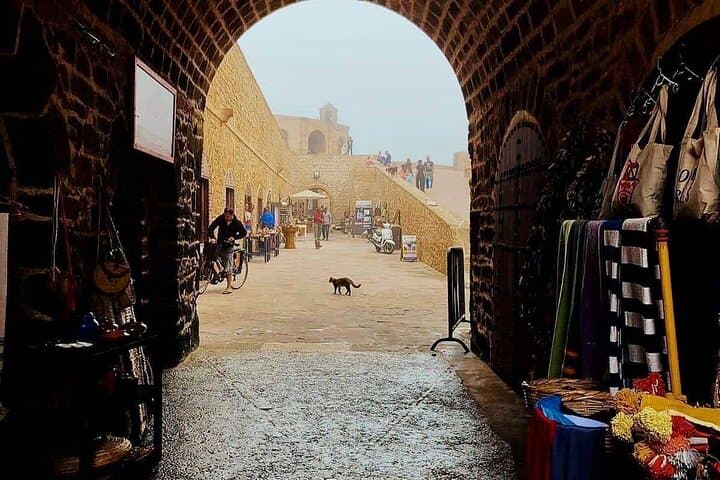
Essaouira’s current shape comes from layered histories — a fortified 18th-century port with earlier Portuguese outposts — and geology of sand, wind-polished limestone, and broad beaches that shape how the town functions. The medina is a UNESCO World Heritage site; its narrow streets house woodworkers, argan-oil cooperatives, and cafes where Gnawa rhythms still pulse.
The tour typically includes a scenic drive from Marrakech (about 2.5–3 hours each way through argan forests), guided time inside the medina, a walk along the Skala ramparts, and a seaside break. Terrain is easy: paved roads, cobbles in the medina, and flat sandy beach; expect brief bursts of walking and standing.
Practical guidance: leave early to avoid afternoon winds, carry a refillable water bottle and sun protection, and wear sturdy walking shoes for cobbles. Bring cash for small purchases and plan for an 11-hour day including transit. Respect working docks and ask before photographing fishermen. If mobility is a concern, confirm pickup logistics and note that some medina streets are narrow for wheelchairs.
Essaouira is a coastal day that balances cultural immersion with simple terrain — a straightforward, sensory introduction to Morocco’s Atlantic edge.
easy.
10–11 hours.
Suitable for travelers comfortable with several hours of walking and standing; minimal elevation change
Expect about 2.5–3 hours each way depending on traffic; the full tour is roughly 10–11 hours including stops.
Some main areas and the beachfront are accessible, but many narrow medina lanes have cobbles and steps; confirm accessibility options with the operator.
Yes — shared day tours usually include guided highlights plus several hours of free time for markets, museums, or a beach walk.
Moroccan dirhams (MAD) are recommended for markets and small purchases; credit cards work at larger shops and restaurants.
Essaouira developed as a strategic Atlantic port in the 18th century and later became a hub for timber and trade between Morocco and Europe; its medina is UNESCO-listed.
Argan woodlands along the route are under pressure from development and grazing; support local argan cooperatives and minimize single-use plastics to reduce impact.
Tours Around Morocco operates guided outdoor trips and adventures with an emphasis on safety, stewardship, and memorable experiences.
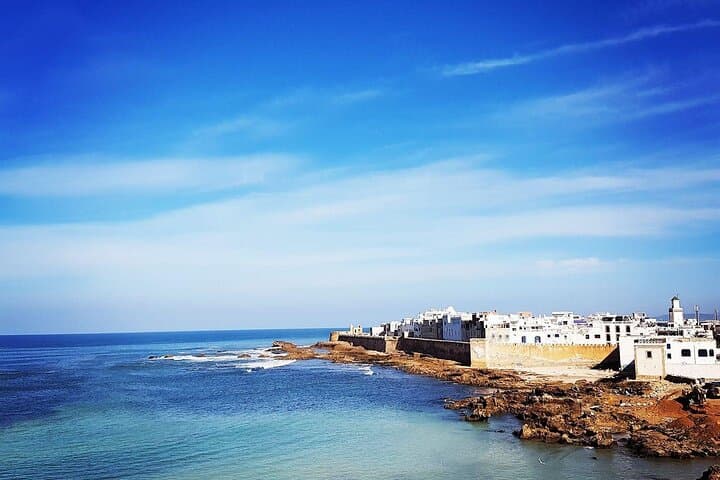
Sea salt and Atlantic wind meet the medina’s stone as the minivan pulls into Essaouira’s port: fishing boats creak, gulls thread across the low clouds, and the harbor’s wooden jetties set the tempo for the day. Strolling from the ramparts toward the market, visitors encounter a compact city built at sea level where every lane ends in a shore view or a painted door.
Sea salt and Atlantic wind meet the medina’s stone as the minivan pulls into Essaouira’s port: fishing boats creak, gulls thread across the low clouds, and the harbor’s wooden jetties set the tempo for the day. Strolling from the ramparts toward the market, visitors encounter a compact city built at sea level where every lane ends in a shore view or a painted door.
Essaouira’s current shape comes from layered histories — a fortified 18th-century port with earlier Portuguese outposts — and geology of sand, wind-polished limestone, and broad beaches that shape how the town functions. The medina is a UNESCO World Heritage site; its narrow streets house woodworkers, argan-oil cooperatives, and cafes where Gnawa rhythms still pulse.
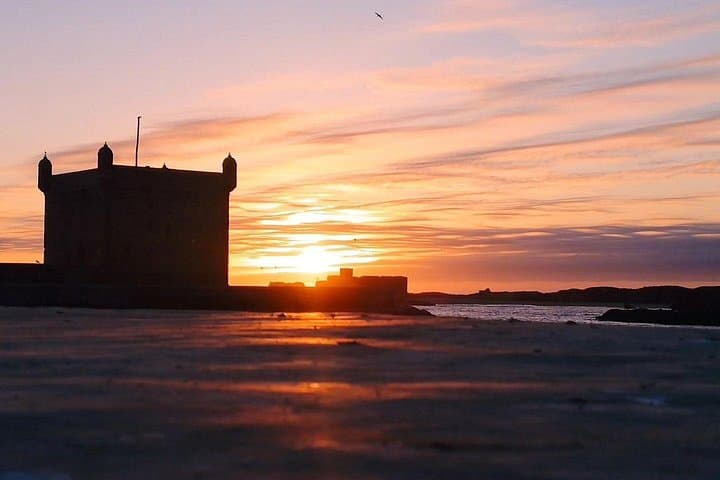
The tour typically includes a scenic drive from Marrakech (about 2.5–3 hours each way through argan forests), guided time inside the medina, a walk along the Skala ramparts, and a seaside break. Terrain is easy: paved roads, cobbles in the medina, and flat sandy beach; expect brief bursts of walking and standing.
Practical guidance: leave early to avoid afternoon winds, carry a refillable water bottle and sun protection, and wear sturdy walking shoes for cobbles. Bring cash for small purchases and plan for an 11-hour day including transit. Respect working docks and ask before photographing fishermen. If mobility is a concern, confirm pickup logistics and note that some medina streets are narrow for wheelchairs.
Essaouira is a coastal day that balances cultural immersion with simple terrain — a straightforward, sensory introduction to Morocco’s Atlantic edge.