THE ADVENTURE COLLECTIVE® · Independent discovery and booking for outdoor travel

Escape Marrakech for a 10‑hour coastal day trip to Essaouira. Explore the fortified medina, panoramic Skala du Port, and a women’s argan cooperative while enjoying Atlantic views and local seafood.
Escape Marrakech for a 10‑hour coastal day trip to Essaouira. Explore the fortified medina, panoramic Skala du Port, and a women’s argan cooperative while enjoying Atlantic views and local seafood.
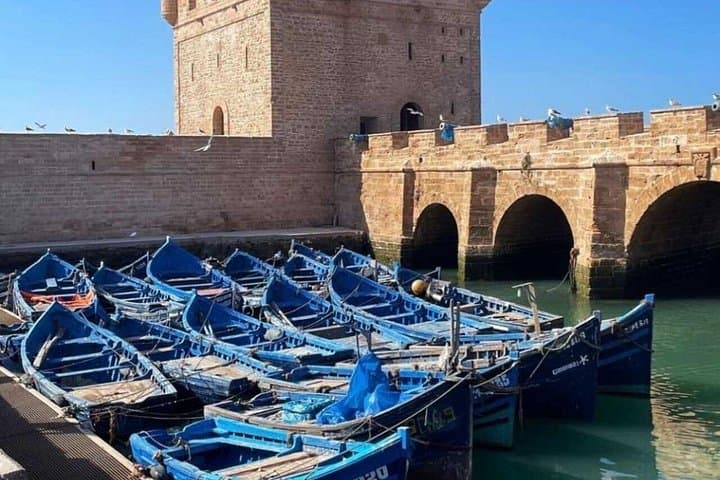
You arrive with the Atlantic air before you see the sea: the van eases down toward low white buildings, the wind tugging at scarves and the bay opening like a cool hand. Essaouira’s ramparts rise in short, weathered walls; gulls wheel above the port and fishermen call across the quays.
Verified experiences and guided adventures in the surrounding area.
Operated by morocco travel holidays · Essaouira, Marrakesh-Safi
You arrive with the Atlantic air before you see the sea: the van eases down toward low white buildings, the wind tugging at scarves and the bay opening like a cool hand. Essaouira’s ramparts rise in short, weathered walls; gulls wheel above the port and fishermen call across the quays.
Once called Mogador, Essaouira bears layers of history — Phoenician contact, a fortified 18th‑century port remodeled under Sultan Mohammed ben Abdallah, and a long trading life that shaped its blue-and-white facades. Geologically the coast is a western Atlantic shelf of sand, shale and exposed limestone; the plain between Marrakech and the sea hosts endemic argan groves that give both the landscape and local economy a distinct profile.
Culturally the medina is compact: craftsmen, spice stalls and the Skala du Port’s cannon‑lined esplanade offer sweeping ocean panoramas. Visit a women’s argan cooperative to see pressed oil used for food and cosmetics, and watch how local fishing traditions still set the rhythm of the port.
Practical guidance: the drive from Marrakech is roughly 170–190 km (about 2.5–3 hours each way) with a few short stops for photos and co‑ops; expect a 10‑hour day. Terrain in Essaouira is flat to gently sloped—plenty of cobbles—so wear comfortable walking shoes and bring sun protection. Bring cash for small purchases and a reusable water bottle; schedule your visit early to avoid the strongest winds and the busiest lunch hours.
This day trip blends seaside breathing space with tangible culture: an easy, scenic escape from the city that rewards curiosity and practical planning.
easy.
10 hours.
Suitable for travelers in average fitness; mostly walking on flat to cobbled surfaces.
Yes—most small-group departures include hotel or riad pickup and drop-off in Marrakech; confirm your pickup point when booking.
No—lunch is typically on your own so you can choose fresh seafood at the port or a café in the medina.
Yes—stops at women’s cooperatives are common and optional; purchases support local producers but are not required.
Parts of Essaouira’s medina and the port are accessible, but many streets are narrow and cobbled—wheelchair access is limited in some areas.
Essaouira (historically Mogador) was fortified and redesigned in the 18th century to serve Atlantic trade and naval needs under Sultan Mohammed ben Abdallah.
Argan forests are protected and many cooperatives practice sustainable harvesting; coastal erosion and responsible tourism are ongoing local concerns.
morocco travel holidays operates guided outdoor trips and adventures with an emphasis on safety, stewardship, and memorable experiences.
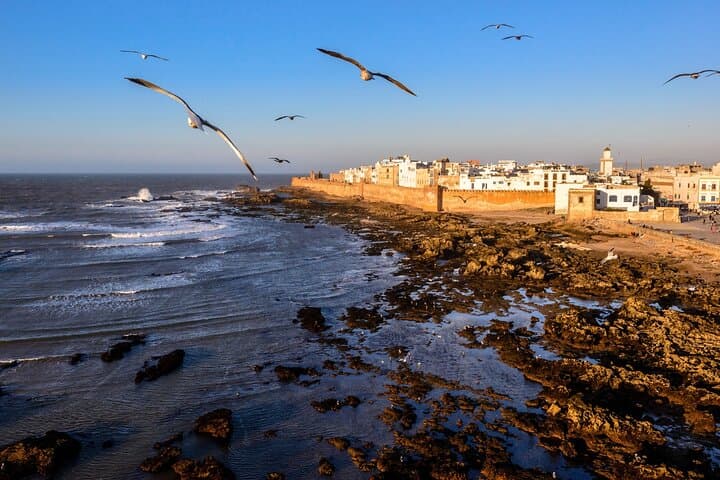
You arrive with the Atlantic air before you see the sea: the van eases down toward low white buildings, the wind tugging at scarves and the bay opening like a cool hand. Essaouira’s ramparts rise in short, weathered walls; gulls wheel above the port and fishermen call across the quays.
You arrive with the Atlantic air before you see the sea: the van eases down toward low white buildings, the wind tugging at scarves and the bay opening like a cool hand. Essaouira’s ramparts rise in short, weathered walls; gulls wheel above the port and fishermen call across the quays.
Once called Mogador, Essaouira bears layers of history — Phoenician contact, a fortified 18th‑century port remodeled under Sultan Mohammed ben Abdallah, and a long trading life that shaped its blue-and-white facades. Geologically the coast is a western Atlantic shelf of sand, shale and exposed limestone; the plain between Marrakech and the sea hosts endemic argan groves that give both the landscape and local economy a distinct profile.
Culturally the medina is compact: craftsmen, spice stalls and the Skala du Port’s cannon‑lined esplanade offer sweeping ocean panoramas. Visit a women’s argan cooperative to see pressed oil used for food and cosmetics, and watch how local fishing traditions still set the rhythm of the port.
Practical guidance: the drive from Marrakech is roughly 170–190 km (about 2.5–3 hours each way) with a few short stops for photos and co‑ops; expect a 10‑hour day. Terrain in Essaouira is flat to gently sloped—plenty of cobbles—so wear comfortable walking shoes and bring sun protection. Bring cash for small purchases and a reusable water bottle; schedule your visit early to avoid the strongest winds and the busiest lunch hours.
This day trip blends seaside breathing space with tangible culture: an easy, scenic escape from the city that rewards curiosity and practical planning.